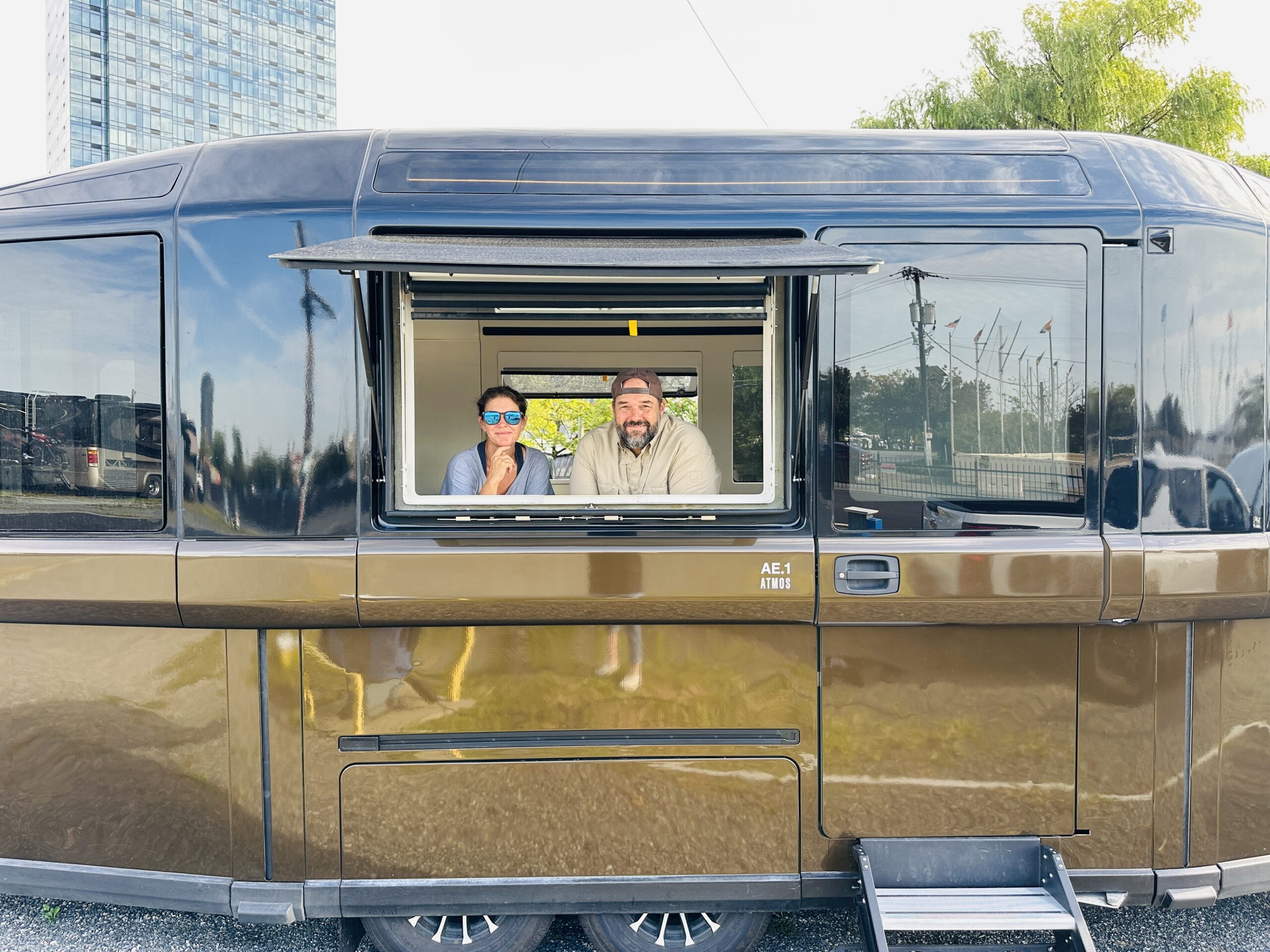
Rather than approaching the experience as a product demonstration, we approached it the same way we would evaluate any RV: Who is this built for? Does it accomplish what it’s trying to accomplish? And what is it actually like to spend a night inside?
It made for one of the most fascinating RV experiences we’ve had in quite some time.
To listen to Jeremy and Stephanie talk about their night in the Lightship AE.1 please click on the media player above–or subscribe to The RV Atlas wherever you get your favorite shows!
A Different Kind of RV Review
Before diving into the trailer itself, it’s worth explaining the context.
As evaluators for Good Housekeeping, we weren’t paid by Lightship, nor were we participating in a sponsored promotion. We were simply invited to test the trailer as part of Good Housekeeping’s annual travel awards evaluations—a process that involved actually spending the night in the RV, using the kitchen, stocking the refrigerator, sleeping in it, and evaluating the overall experience the same way a potential owner would.
That mindset shaped our entire conversation.
Rather than asking, “Would we buy this?” we kept returning to a better question:
Who is this RV actually designed for?
That’s a much more useful lens for evaluating any new product—especially one that’s pushing the boundaries of RV technology.
What Makes the Lightship AE.1 Different?
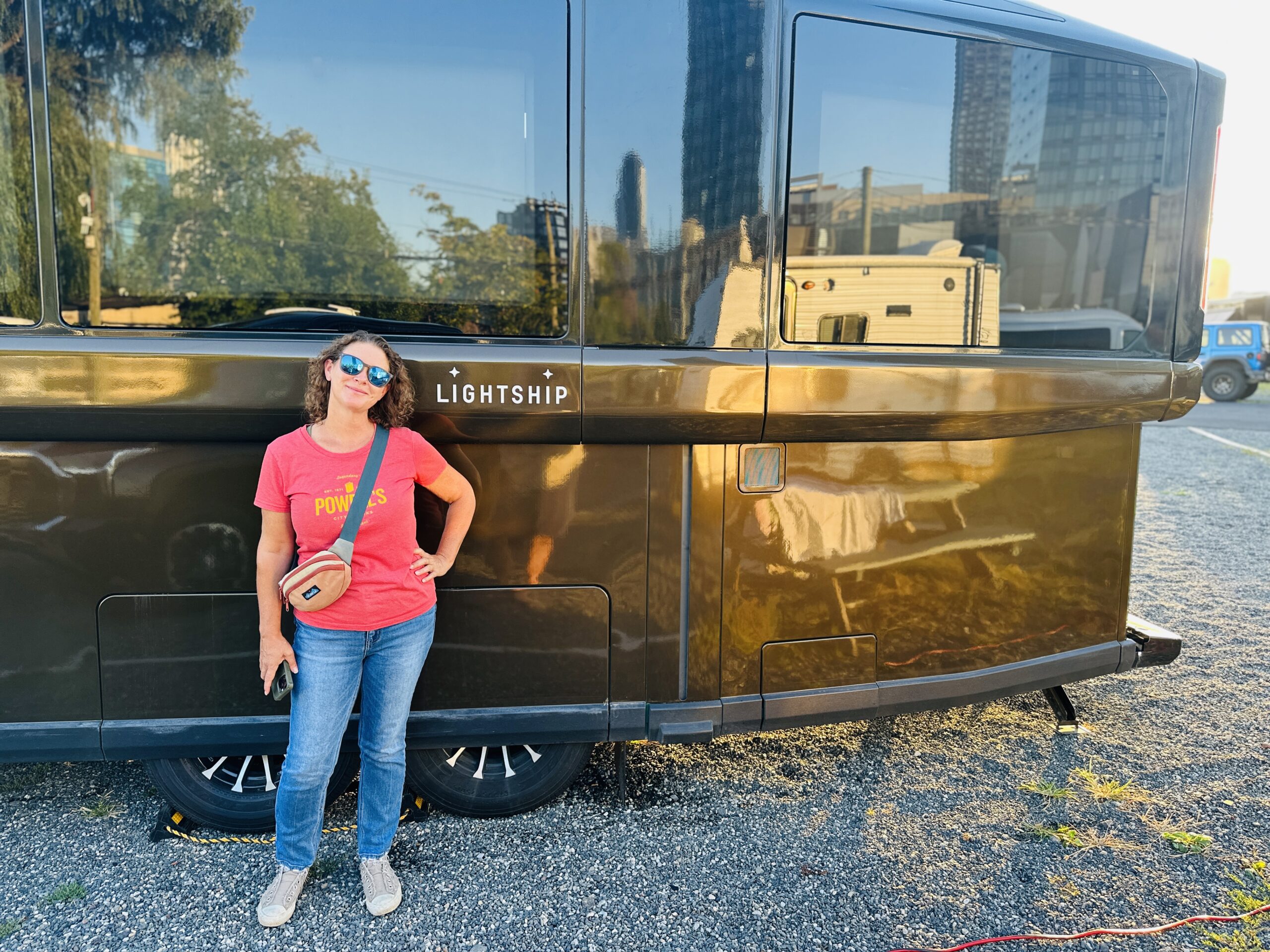
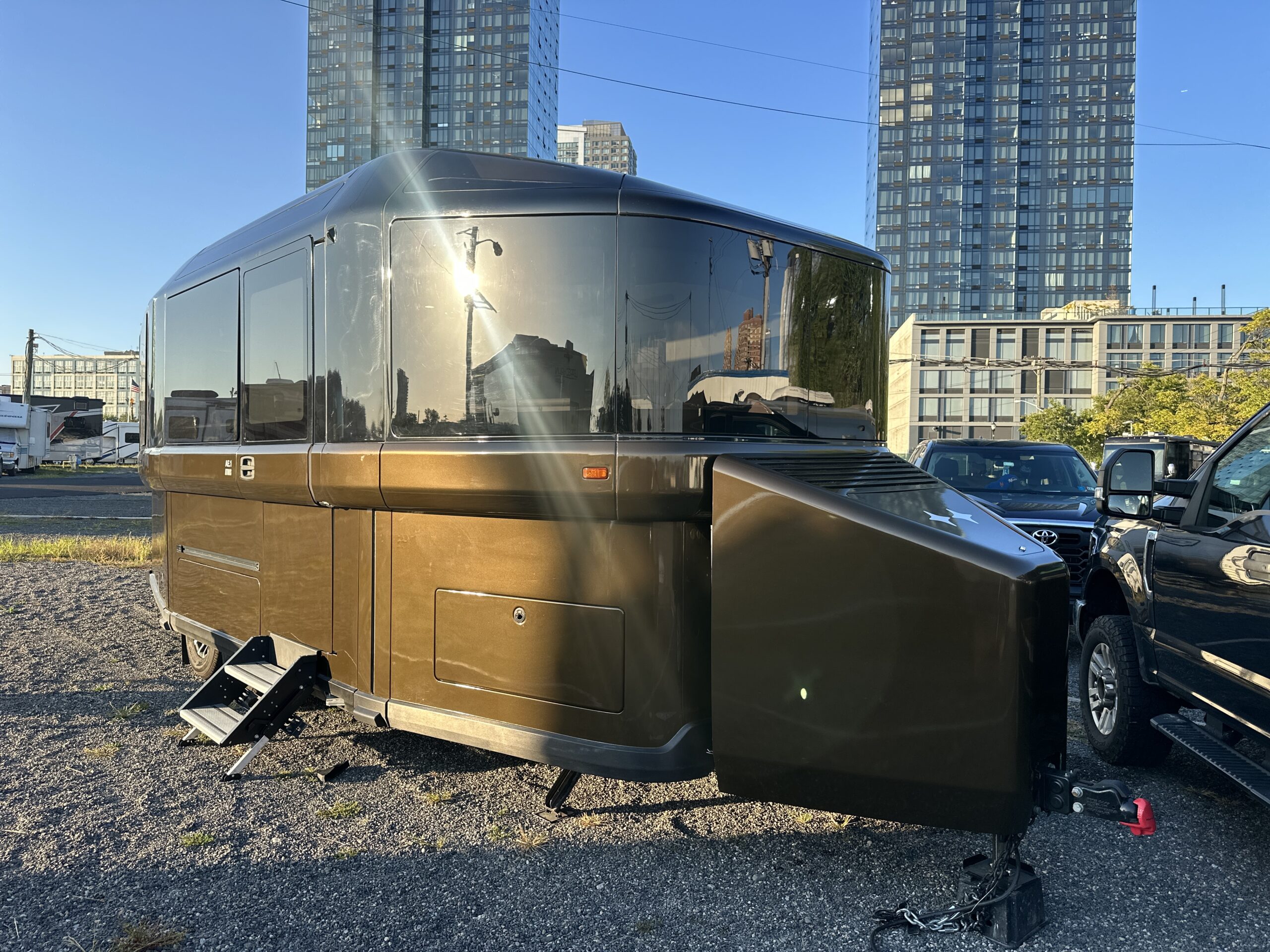
At first glance, the Lightship AE.1 doesn’t look like a conventional travel trailer.
When it’s being towed, the trailer sits in Road Mode, lowering the roof to create a much more aerodynamic profile.
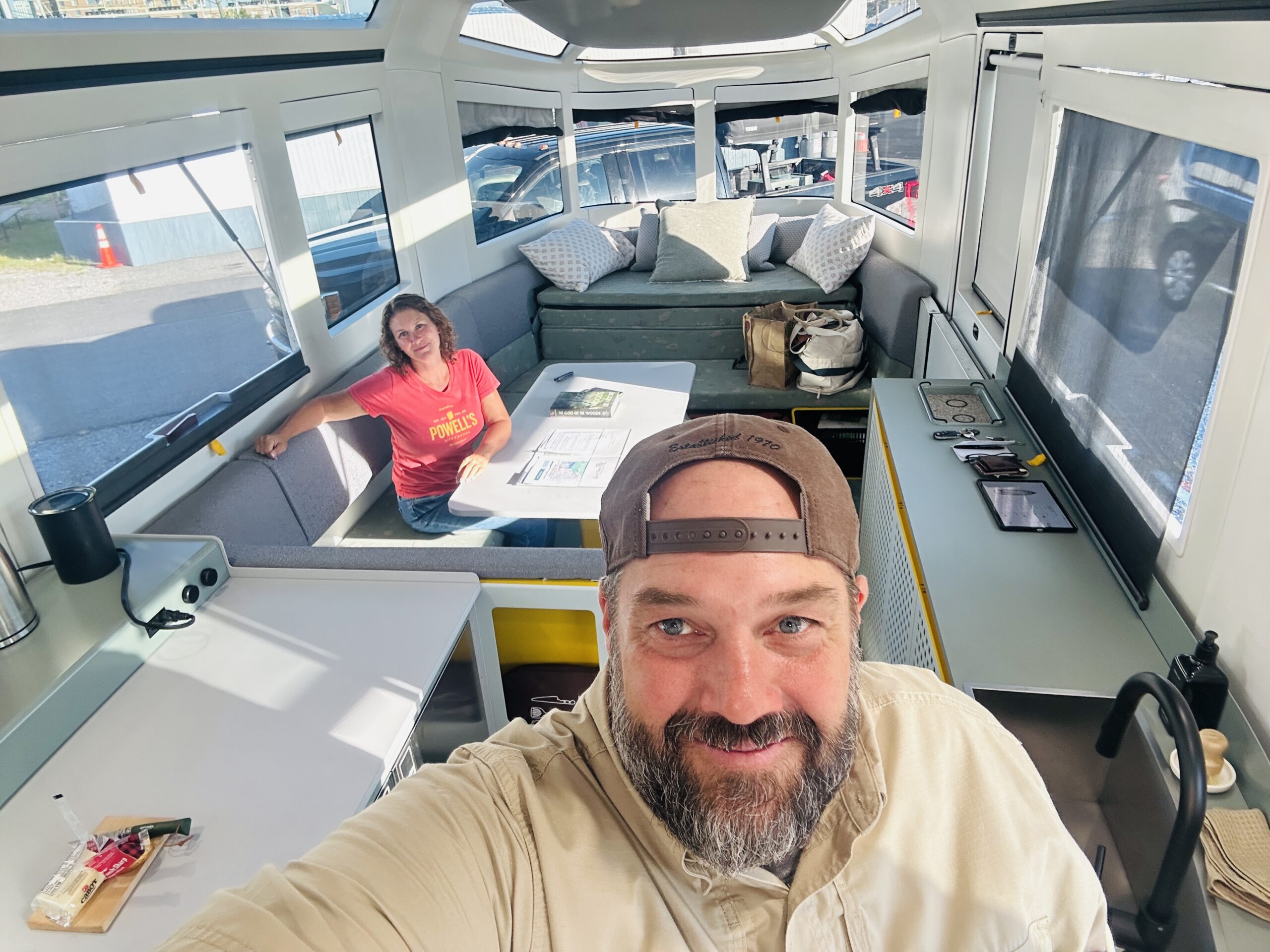
Once you arrive at camp, the trailer transforms into Camp Mode, where the entire roof raises electronically to create a dramatically more open living space with panoramic 270-degree windows.
The effect is striking.
Instead of feeling enclosed, the interior has an openness that reminded us more of camping in a pop-up than a traditional travel trailer—but with all the comforts of a modern luxury RV. It creates one of the brightest, airiest interiors we’ve ever experienced.
The Technology Everyone Is Talking About
Of course, the biggest conversation surrounding the Lightship isn’t the floor plan.
It’s the technology underneath it.
The AE.1 features Lightship’s TrekDrive system, which actively powers the trailer’s wheels while towing. The goal is to dramatically reduce the extra energy normally required to pull a travel trailer, helping electric tow vehicles maintain much of their normal driving range.
For anyone following the evolution of electric RVs, this is one of the industry’s most significant developments.
Range anxiety has long been one of the biggest obstacles preventing widespread EV towing. While electric trucks continue to improve, towing a heavy trailer has traditionally reduced range substantially.
The TrekDrive system represents one possible solution—and one that we’re genuinely excited to watch develop over the coming years.
We aren’t suggesting that every RVer should rush out and buy an electric trailer tomorrow. Rather, we think it’s fascinating to watch where the technology is headed and how companies like Lightship are tackling some of the biggest challenges facing electric RV travel.
Who Is the Lightship Really For?
One of the most interesting conversations we had during our overnight stay had very little to do with batteries or solar panels.
Instead, we talked about the future owner.
Our instinct is that many early Lightship buyers won’t be longtime RV owners upgrading from another trailer.
Instead, they’re likely to be early adopters—people who are fascinated by emerging technology, electric vehicles, sustainability, and innovation.
These are the kinds of people who enjoy experimenting with new systems and being among the first to experience what’s next.
As we discussed on the podcast, that’s very different from how we personally approach RV ownership.
We appreciate technology that quietly makes camping better—things like reliable solar power or endless hot water—but we generally prefer it to fade into the background once everything is working.
The Lightship, at least today, feels more like participating in the next chapter of RV innovation than simply purchasing another camper.
A Floor Plan That Gets the Basics Right
Beyond the technology, what impressed us most was something much simpler:
The floor plan.
For a first-generation product, Lightship did an outstanding job creating a layout that feels both spacious and practical.
The 27-foot trailer features:
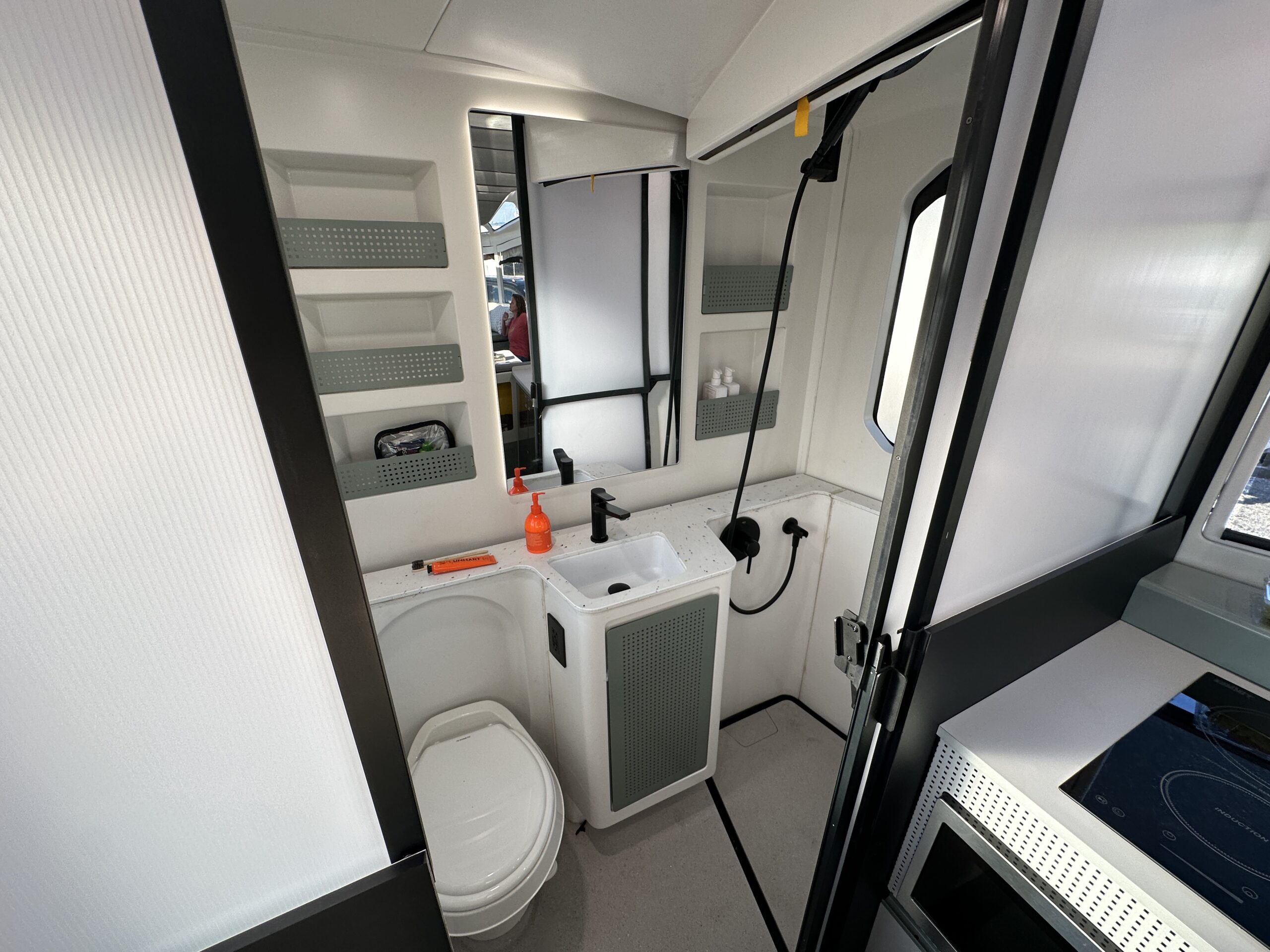
- A full-width rear bathroom
- Separate shower and toilet
- A split galley kitchen
- Extensive counter space
- Generous storage
- A large front lounge that converts into multiple sleeping configurations
Placing the bathroom across the entire rear of the trailer immediately opens the living area and eliminates the “pinch point” that many travel trailers create in the middle of the floor plan.
It’s a layout we’ve long appreciated in conventional RVs, and it works exceptionally well here.
A Kitchen Designed for Real Cooking
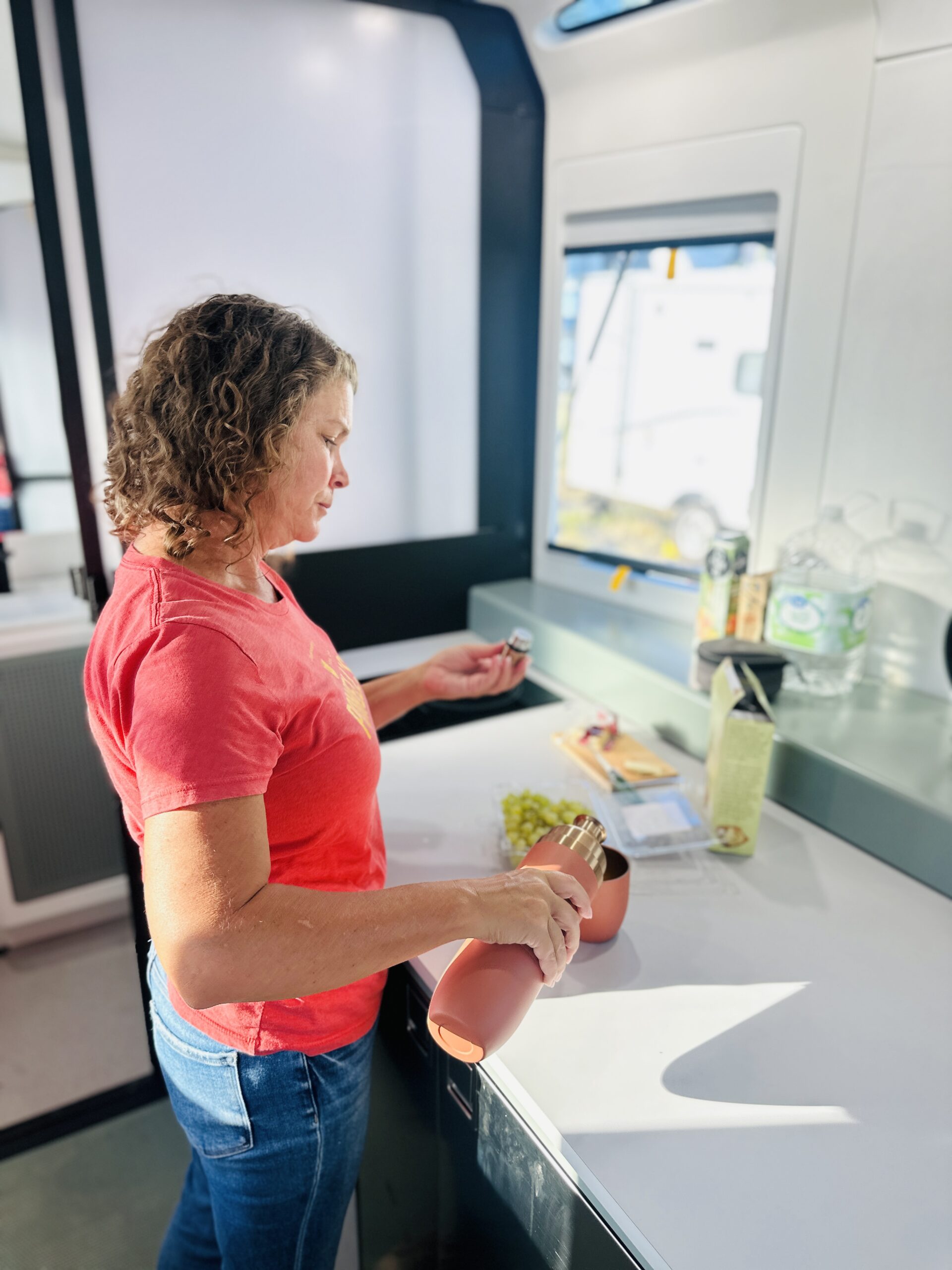
One pleasant surprise was how functional the kitchen felt.
The galley is divided across both sides of the trailer, allowing two people to work comfortably at the same time—a rarity in a 27-foot RV.
We found ourselves preparing snacks together without constantly bumping into one another.
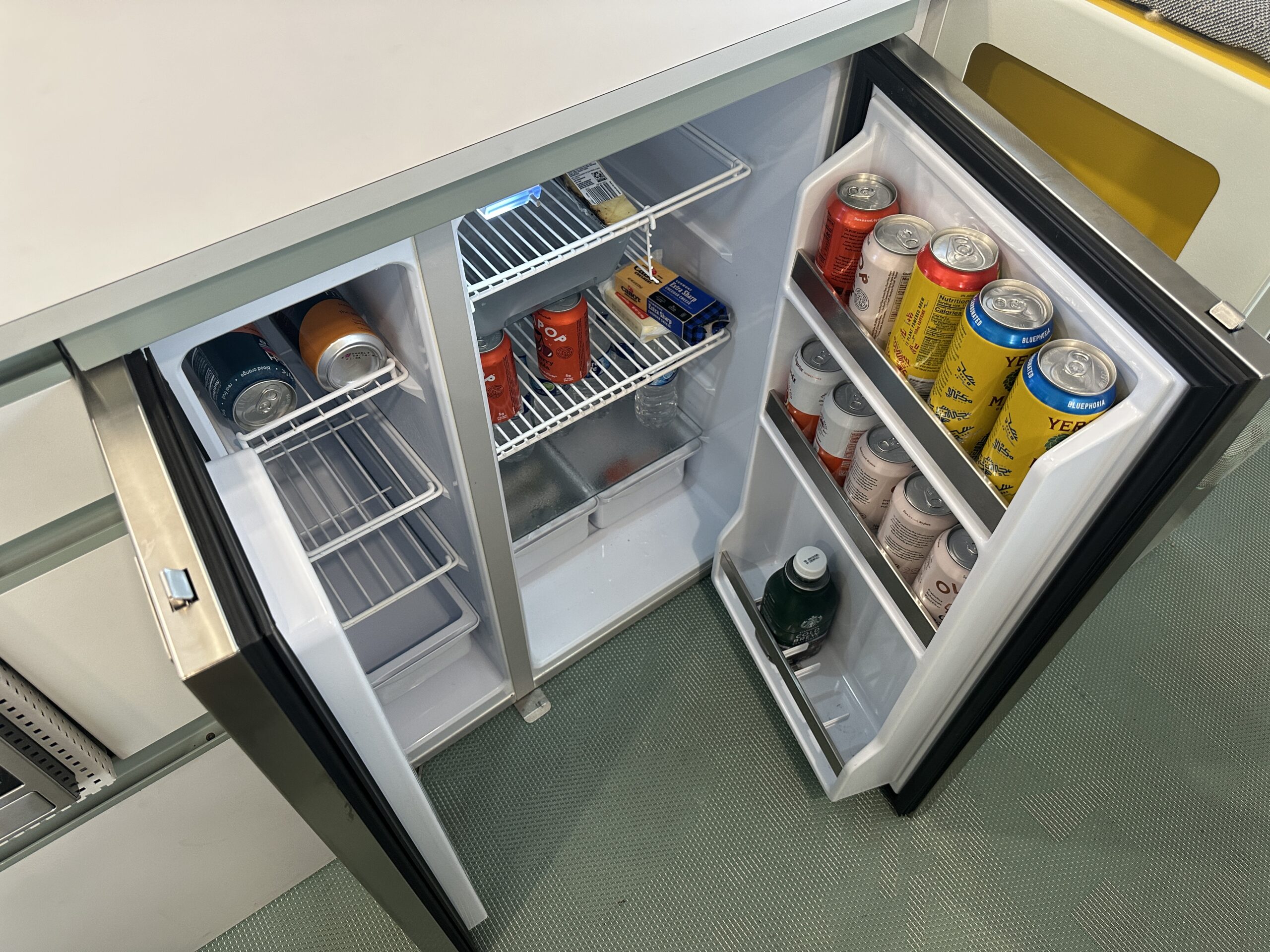
The generous countertops, abundant cabinetry, dishwasher, electric cooktop, and thoughtful storage all contributed to a kitchen that feels designed for actual use rather than simply checking feature boxes.
The open storage areas also leave plenty of room for owners to personalize the organization system with accessories that match their own camping style.
A Living Space That Feels Different
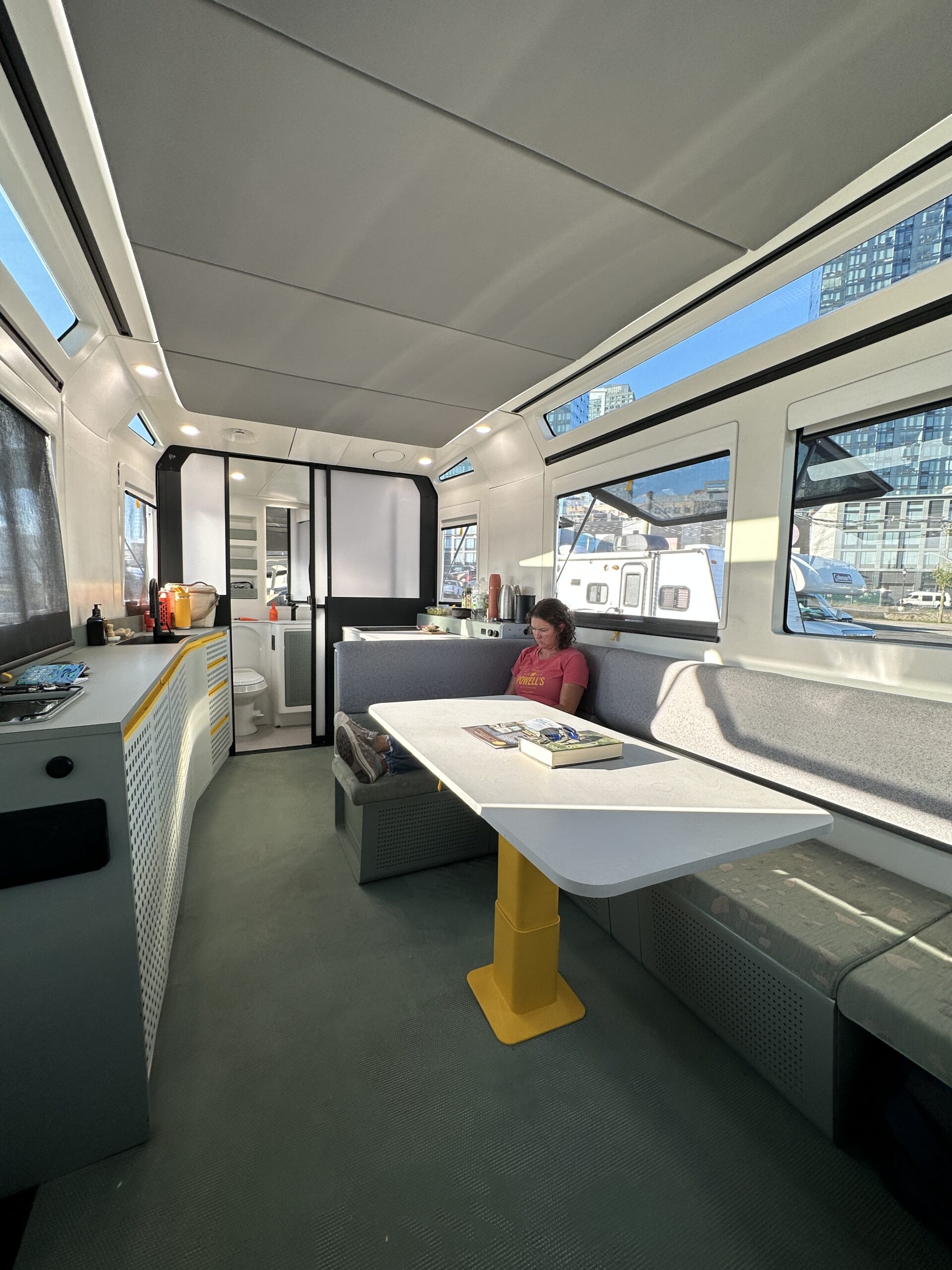
The most memorable part of the interior wasn’t a specific appliance or gadget.
It was simply how pleasant it felt to spend time inside.
The large U-shaped lounge, expansive windows, and raised roof create a calm, open atmosphere that encourages you to slow down and enjoy the space.
Normally, RVs are all about getting outside.
Ironically, this trailer makes spending time indoors just as enjoyable.
It reminded us of some of the best design elements we’ve admired in Airstreams and other thoughtfully designed travel trailers—comfortable places where you’d happily read a book, share a meal, or simply watch the scenery outside.
An Unexpected Bonus: Camping in New York Harbor
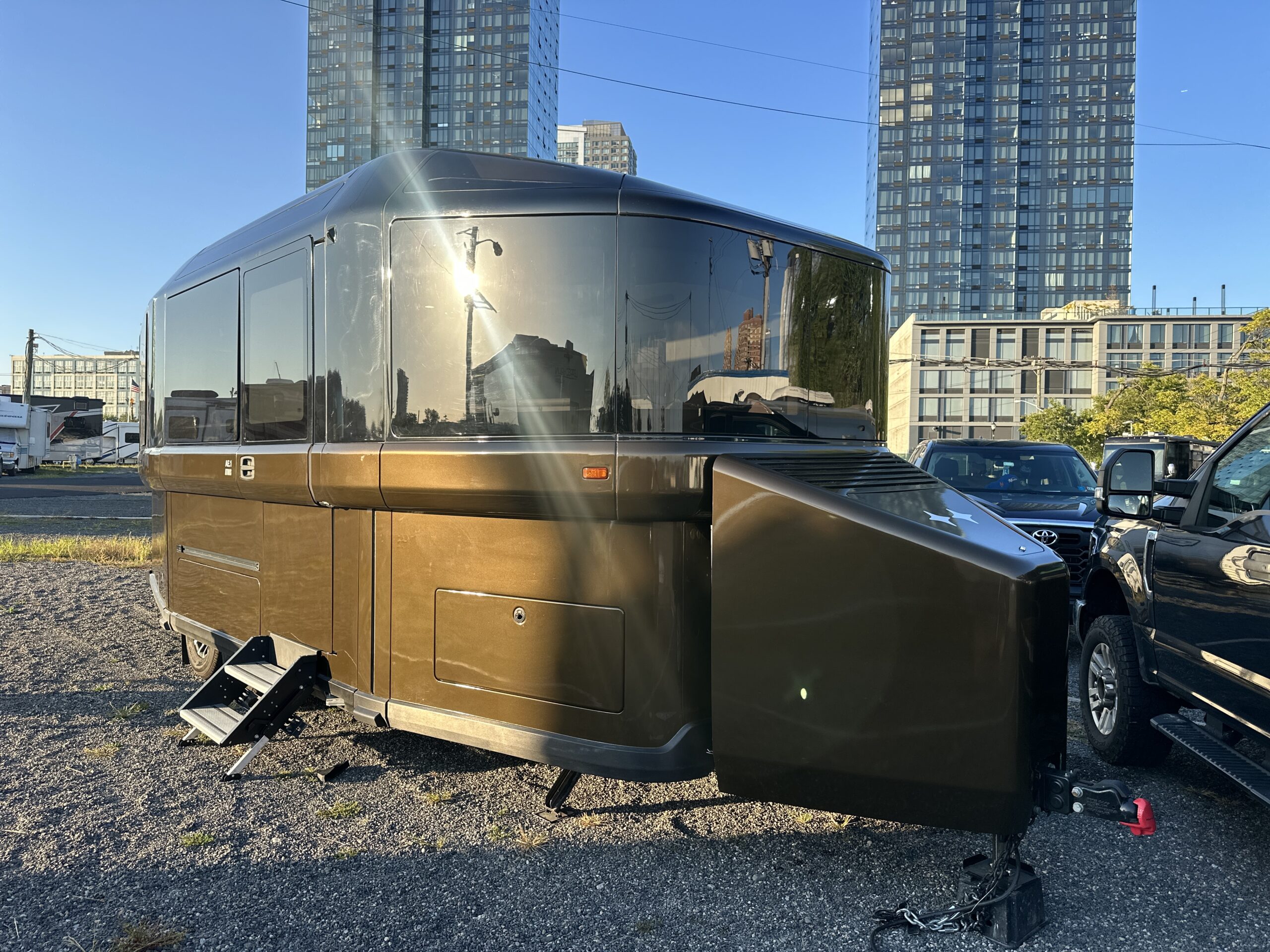
The setting made the experience even more memorable.
We’ve recommended Liberty Harbor RV Park for years, but this overnight reminded us why it’s still one of America’s most unique RV destinations.
Yes, you’re camping in the middle of one of the country’s largest metropolitan areas.
But from your campsite you can enjoy remarkable views of the Statue of Liberty, easy access to Manhattan, waterfront walks, and one of the most unusual urban camping experiences anywhere in North America.
On the evening of our visit, we watched the sun set behind the harbor while relaxing inside the Lightship with its panoramic windows framing the skyline.
Urban camping certainly isn’t for everyone.
But if you’re comfortable with city environments and want to experience New York without driving an RV through Manhattan, Liberty Harbor remains one of our favorite recommendations.
Beyond Recreation: Where This Technology Could Go
One point Stephanie raised during the conversation is that innovations like this aren’t limited to recreational camping.
Highly efficient solar systems, large battery banks, and all-electric operation could eventually prove valuable in emergency response, disaster relief, mobile medical units, and other applications where independent power is essential.
It’s another reminder that advancements in RV technology often find uses well beyond campgrounds.
Final Thoughts about the Lightship AE.1
The Lightship AE.1 isn’t trying to be just another travel trailer.
It’s an ambitious look at what RVing might become over the next decade.
Will every camper want an all-electric trailer?
Probably not.
Will every RVer be interested in experimenting with cutting-edge technology?
Definitely not.
But that’s okay.
Every major innovation starts somewhere.
After spending the night inside the Lightship AE.1, we came away impressed—not because we think every RVer should buy one today, but because it’s exciting to see companies rethinking what’s possible in RV design.
Pair that experience with a memorable overnight at Liberty Harbor RV Park overlooking the Statue of Liberty, and it made for one of the most unique camping experiences we’ve had in years.
We’ll see you at the campground.