Some RV trips are about the destination. Others are about the drive. And then there are those rare adventures where every single part of the journey feels like the destination. That is exactly what happened during the second leg of Gretchen Holcombe’s epic Western Canada RV trip.
In Part One of this three-part series, we followed Gretchen and her family through Calgary and Banff National Park. This week, the adventure continues north along the Icefields Parkway to Jasper National Park, then back south to the Lake Louise area of Banff National Park, with an unforgettable side trip into Yoho National Park.
This is the kind of RV trip that belongs on a bucket list. There are glacier-fed lakes, waterfalls, wildlife encounters, mountain hikes, incredible campgrounds, surprisingly good food, and some very important lessons about towing an RV through the Canadian Rockies.
And while Banff may get more attention, Gretchen surprised us by admitting that if she could return to only one of the two parks, she might choose Jasper. It felt more relaxed, more rugged, and less crowded—and she left feeling like there was still plenty she hadn’t had time to see.
To listen to our interview with Gretchen please click on the media player above or subscribe to the RV Atlas podcast wherever you get your favorite shows!
Driving the Icefields Parkway With an RV
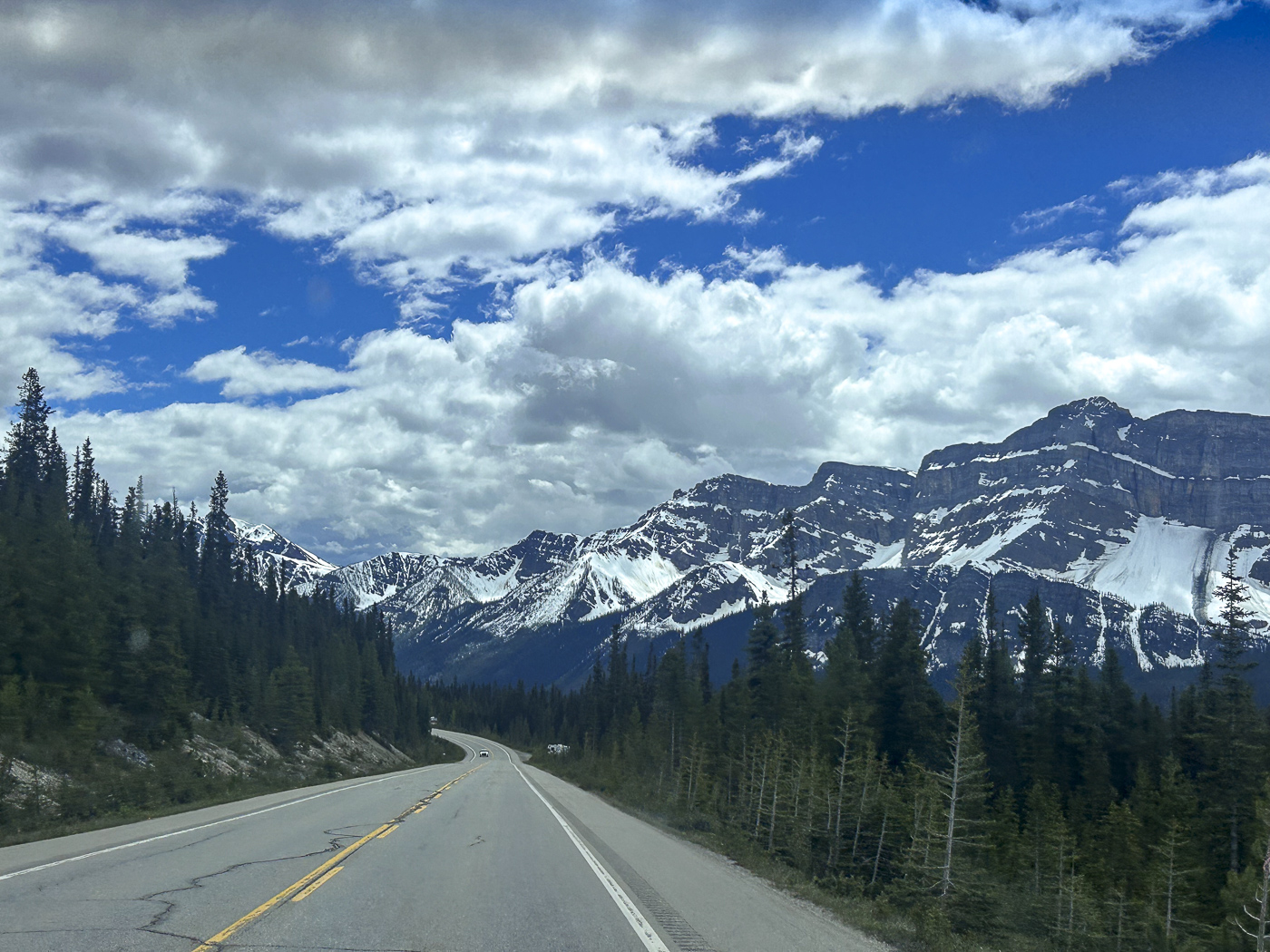
The Icefields Parkway connects the Lake Louise area of Banff National Park with Jasper National Park.
The drive is about 144 miles, but this is absolutely not a road you should think of simply as transportation between two destinations.
The Icefields Parkway is an attraction all its own. Towering mountains surround the road almost continuously. There are glacier views, waterfalls, alpine lakes, hiking trails, and scenic overlooks scattered along the route.
Gretchen’s best advice is simple:
Do not rush it.
Many travelers devote an entire day to the drive, stopping frequently for scenery and short hikes along the way.
The Challenge of Scenic Pullouts With a Larger RV
There is one significant downside if you’re towing a bigger travel trailer or driving a large motorhome.
Not every scenic pullout is particularly RV friendly.
Gretchen and her husband frequently found themselves looking at a turnout and debating whether they could safely fit.
Sometimes they decided to keep driving.
A Class B van or smaller RV will give you much more flexibility along this route. If you’re traveling with a bigger setup, be prepared to pass some of the smaller overlooks and concentrate on the larger stops.
One of the easiest major stops is the Columbia Icefield Discovery Centre, which has a large parking area with dedicated RV parking.
The family stopped there for lunch and enjoyed views of the Athabasca Glacier from the visitor complex. It’s also the departure point for the popular glacier tours that carry visitors onto the ice.
Don’t Underestimate the Mountain Driving
Here is one piece of advice Gretchen wished she had heard more clearly before the trip:
The Icefields Parkway is still mountain driving.
The road is well maintained and large RVs travel it every day, but there are substantial grades.
Gretchen had actually worried more about other mountain passes later in their Western Canada journey. Instead, one long grade just past the Columbia Icefield Discovery Centre caught her off guard.
She estimated that portions reached around a 12% grade.
Their 2003 van handled the route, but they manually downshifted and found themselves using the brakes more than they normally would on mountain roads.
Her advice for other RVers is not to avoid the Icefields Parkway. Quite the opposite.
Just arrive prepared.
Know how your tow vehicle performs on steep grades, understand how to downshift appropriately, and don’t assume that beautiful scenery means an effortless drive.
Jasper National Park Feels Different From Banff
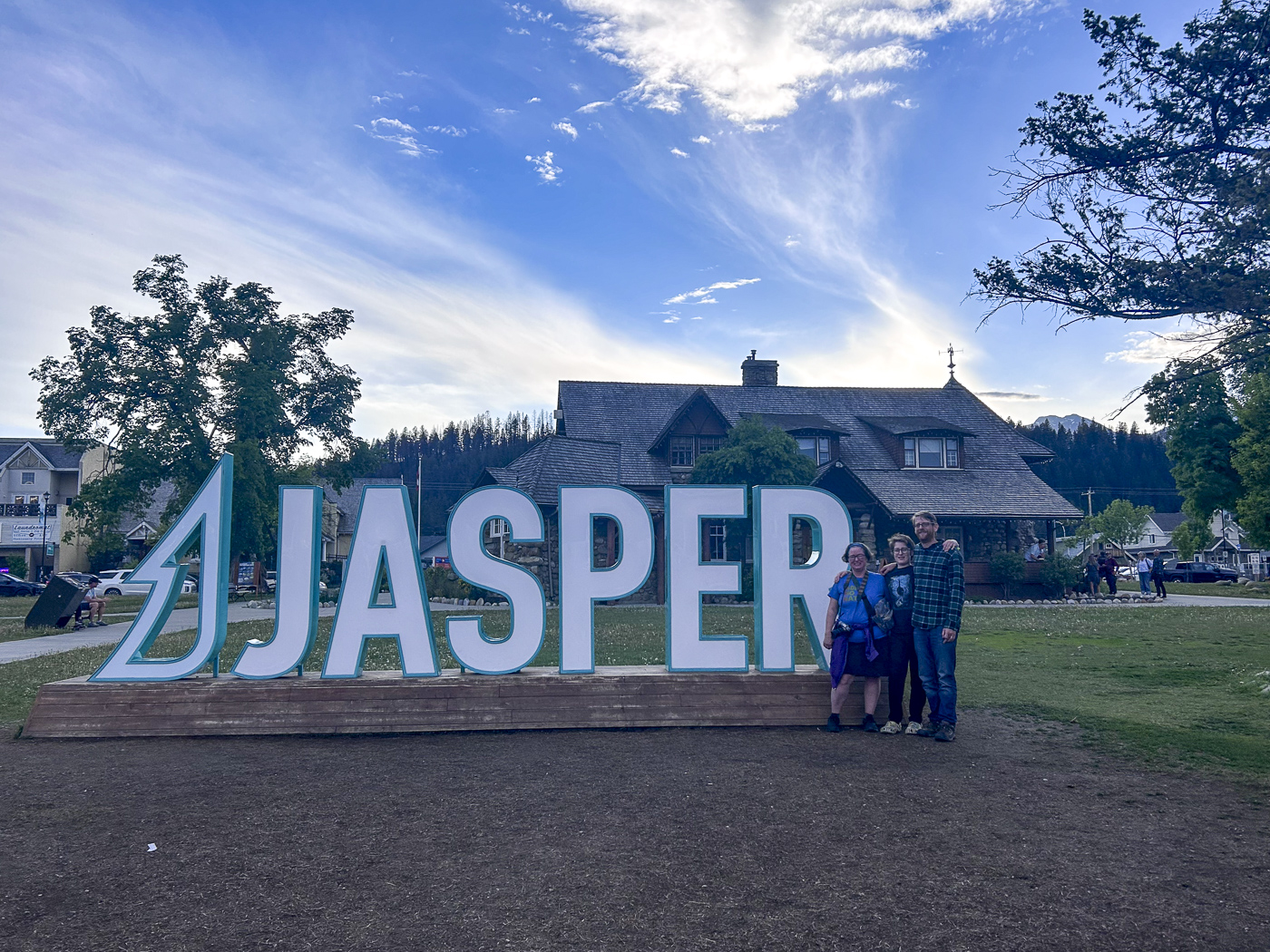
Both Banff and Jasper showcase the spectacular scenery of the Canadian Rockies, but they have very different personalities.
Banff is easier to access from Calgary and receives considerably more visitors. Jasper is more remote.
That extra distance means fewer crowds and a noticeably different atmosphere.
Gretchen found Jasper more relaxed and rugged. The town felt less touristy, and the logistics of their stay were easier because they were camping just outside downtown.
Both parks are absolutely worth visiting.
But when Jeremy asked Gretchen which one she would choose if she could only return to one, she picked Jasper.
Camping at Whistlers Campground in Jasper National Park
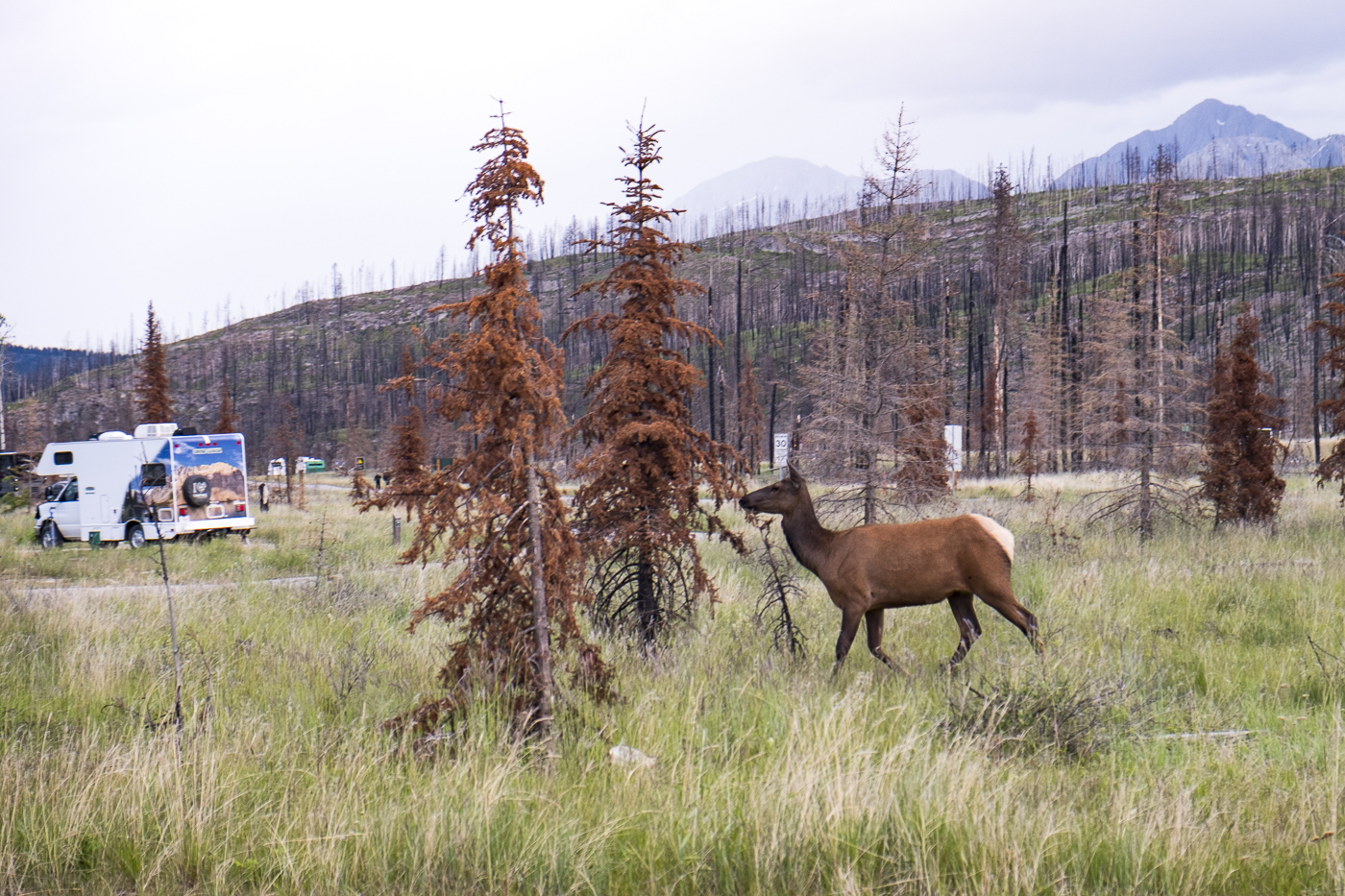
One of the biggest victories of this leg of the trip was getting a reservation at Whistlers Campground.
After missing out on a national park campsite in Banff, Gretchen was able to reserve three nights at Whistlers, located only about five minutes outside the town of Jasper.
And it became one of the family’s favorite campgrounds of the trip.
Whistlers is enormous, with roughly 780 campsites, but it doesn’t necessarily feel that large because the campground is divided into smaller loops.
Some loops offer full hookups, and Gretchen recommends being online as soon as reservations open if those sites are important to you.
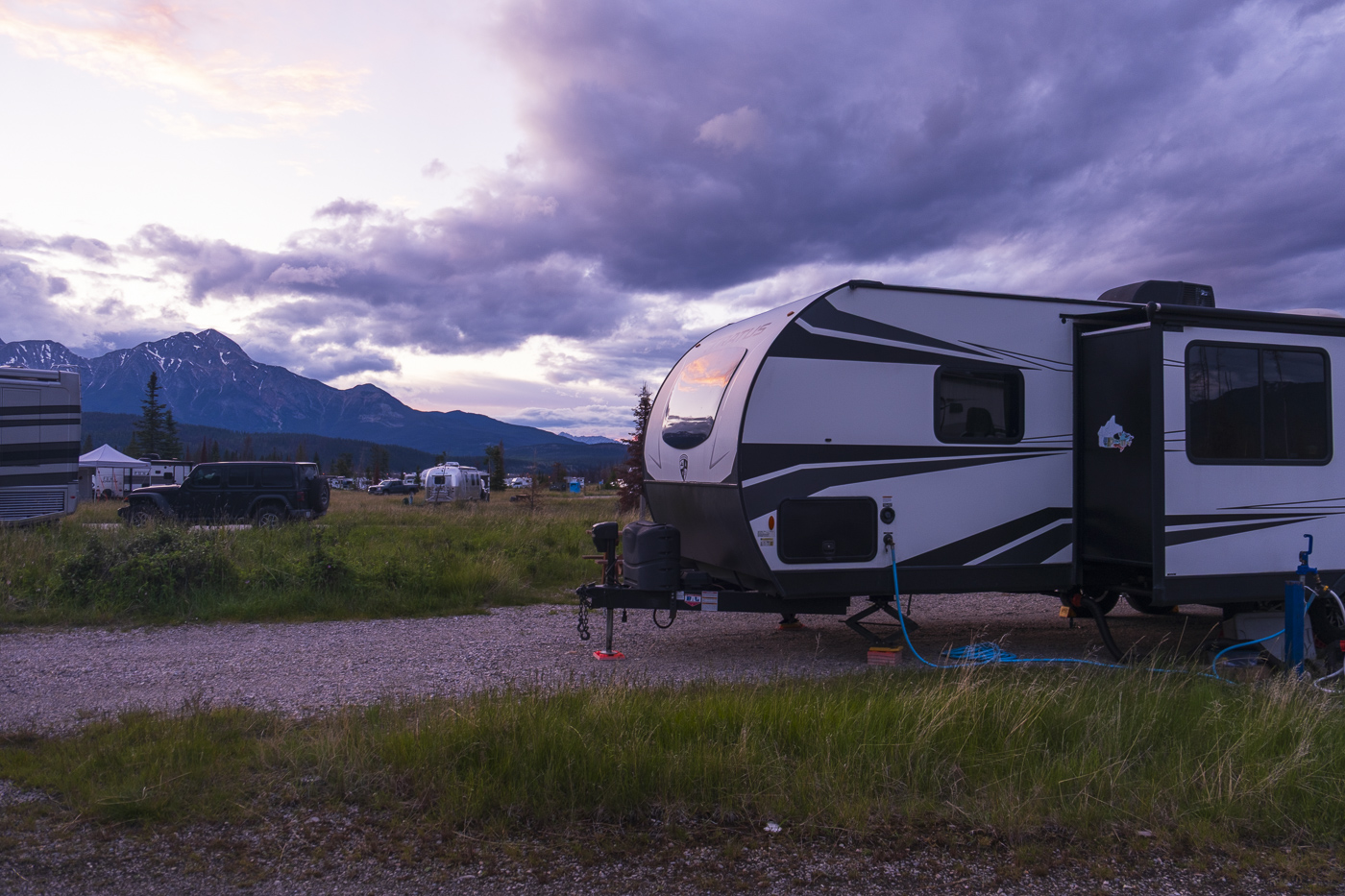
Their pull-through site was spacious and comfortable, and the campground’s mountain setting made a huge impression.
Every direction seemed to offer another mountain view.
Surprisingly Nice Bathhouses
The bathhouses were another pleasant surprise.
They appeared very new, were extremely clean, featured murals inside, and offered free showers.
That last detail was especially noteworthy because free campground showers were not common during this portion of the trip.
One amenity Whistlers did not have was laundry.
Gretchen found campground laundry facilities surprisingly difficult to come by throughout the Canadian Rockies, so travelers planning a longer itinerary may want to think ahead about where they’ll handle that chore.
Coffee at the Campground
Another unexpected perk?
A local coffee shop operated a small trailer at Whistlers where campers could buy coffee, tea, and pastries.
It’s a simple amenity, but there is something especially wonderful about waking up in a national park campground surrounded by the Canadian Rockies and being able to walk over for a fresh cup of coffee.
Wildlife Is Not Just a Possibility at Whistlers
Wildlife sightings weren’t something Gretchen’s family had to go looking for.
The wildlife came to them.
They visited during elk calving season, when female elk can be especially protective.
Campground staff gave plenty of warnings about keeping a safe distance.
And those warnings were not theoretical.
Elk regularly wandered right through the campground. One evening, Gretchen had to quickly bring the dog inside after he noticed an elk standing very close to their campsite.
Then things got even more interesting.
One morning, a neighboring campground loop was evacuated after a grizzly bear wandered through the area and spent some time investigating picnic tables.
Food Storage Matters
Campers were allowed to cook and eat outside, but food and cooking equipment could not simply be left unattended.
Gretchen’s family would cook on the Blackstone, eat outside, and then immediately pack everything away into the RV or vehicle.
In a place like Jasper, wildlife safety needs to become part of your normal camping routine.
You don’t leave the grill sitting outside because you’ll “come back to it later.”
You clean up.
You store food properly.
And you pay attention.
Exploring Downtown Jasper
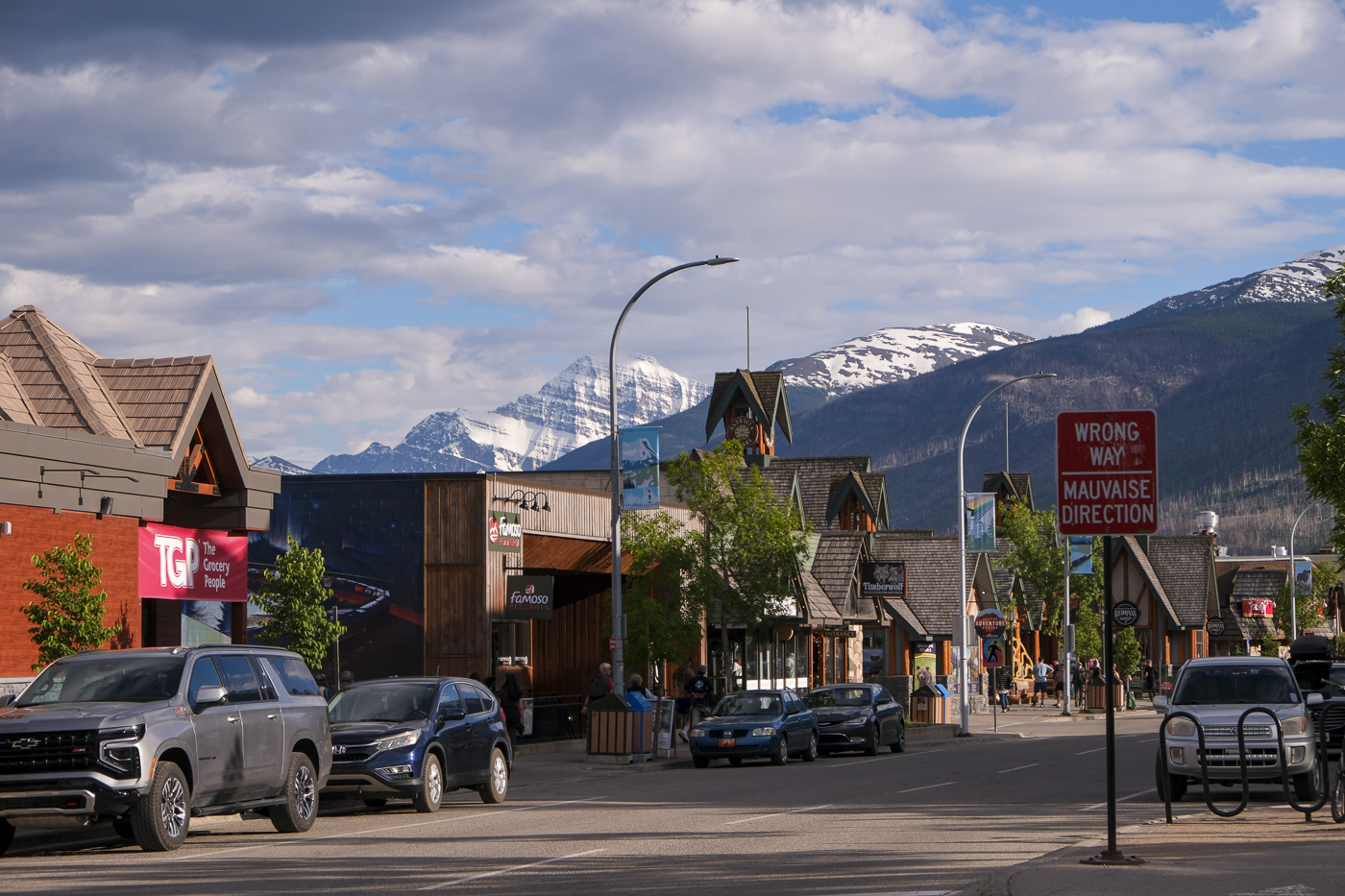
Whistlers Campground’s location makes downtown Jasper incredibly easy to visit.
Gretchen estimates the drive at roughly five minutes, and there’s also a bike path connecting the campground with town.
They enjoyed wandering downtown, browsing shops, and eating at Jasper Brewing Company, where they sat outside and watched people pass by.
One practical tip: extremely long freight trains regularly pass through Jasper.
The family quickly learned to use an alternate route into town that avoided crossing the tracks whenever possible.
Don’t Miss From Jasper With Love
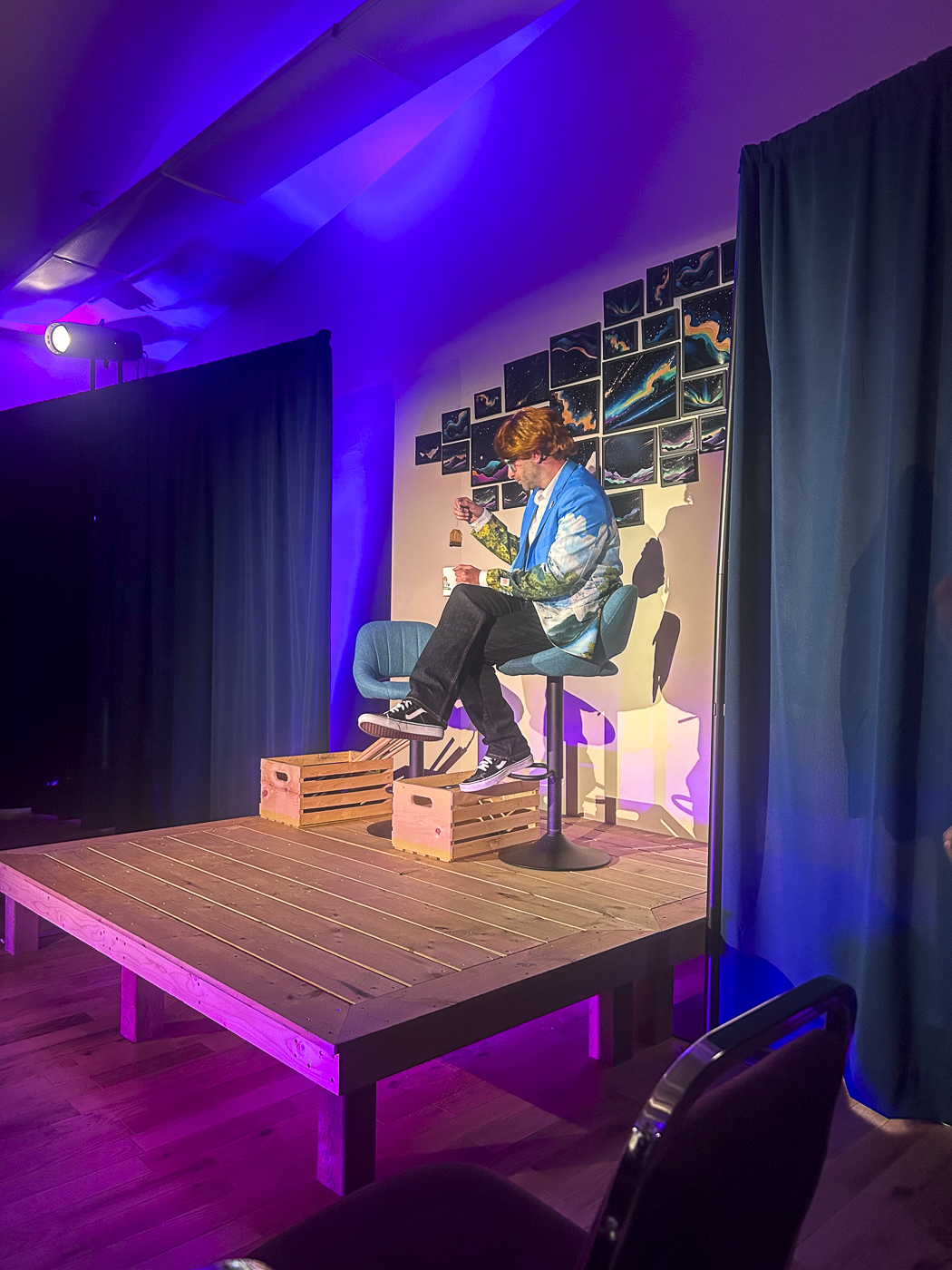
One of the most unexpected recommendations from the entire episode is a show called From Jasper With Love.
Gretchen booked tickets on a rainy day without expecting too much.
It became a surprise highlight.
The two-man sketch comedy show is built around life in Jasper, poking fun at the town, the wildlife, and the experience of visiting the Canadian Rockies.
One recurring character is Eddie the Elk, who is hilariously offended that bears and moose get all the attention while elk barely make it onto the souvenirs.
The show is family friendly and worked especially well with Gretchen’s 13-year-old.
If rain interrupts your hiking plans—or if you simply need a break from nonstop outdoor sightseeing—this is exactly the kind of quirky local experience that can make a trip more memorable.
Valley of the Five Lakes Trail
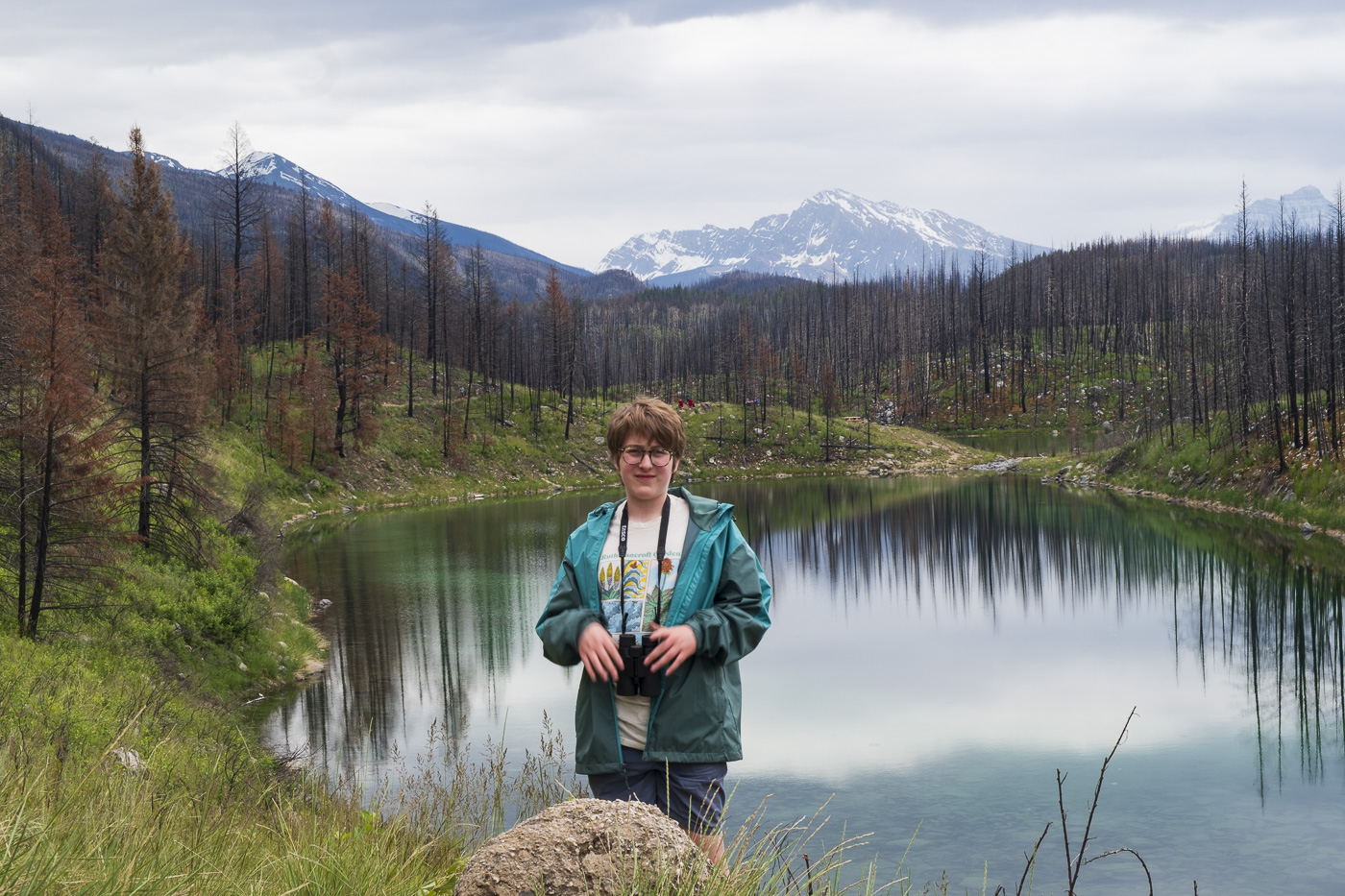
If Gretchen had to choose one personal highlight from Jasper, she picked the Valley of the Five Lakes Trail.
The trail had been closed due to wildfire damage but reopened after extensive work, including reconstructed boardwalks.
The family completed a roughly 3.5-mile loop with moderate elevation changes.
The trail passes a series of colorful mountain lakes and areas where the landscape is already beginning to recover from wildfire.
This is one of those hikes where the combination of scenery and variety keeps things interesting without demanding an all-day commitment.
A Quick Shout-Out to Canadian National Park Bathrooms
This may be the first RV Atlas article where we’ve enthusiastically recommended pit toilets.
But here we are.
Gretchen repeatedly noticed how clean and well maintained the facilities were throughout the Canadian national parks.
Even pit toilets were surprisingly impressive.
She saw maintenance crews regularly servicing and cleaning them, and the overall experience stood out enough that it became a legitimate topic of conversation during the episode.
It might sound like a small thing.
But clean restrooms, maintained trails, and visible staff presence can dramatically improve the visitor experience.
And Gretchen felt Canadian national parks were doing an excellent job in that regard.
Athabasca Falls
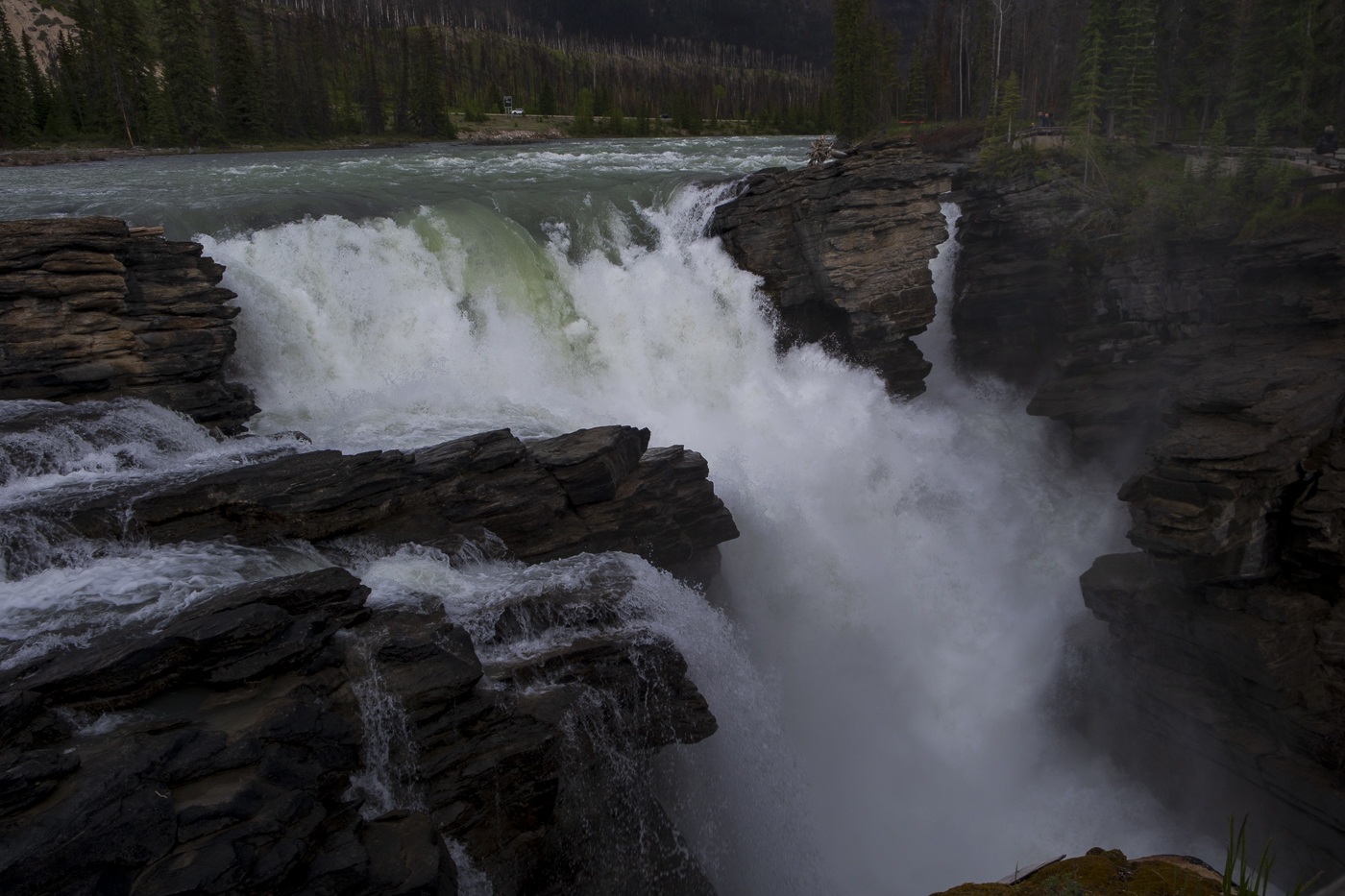
Another easy Jasper-area recommendation is Athabasca Falls.
The falls are accessible through a system of boardwalks and short trails that showcase not only the waterfall itself but also the canyons and rock formations carved by the water.
You can make this a very quick roadside stop or spend around half an hour exploring the network of paths.
For Gretchen’s family, it was absolutely worth the short detour back down the Icefields Parkway.
Pyramid Island
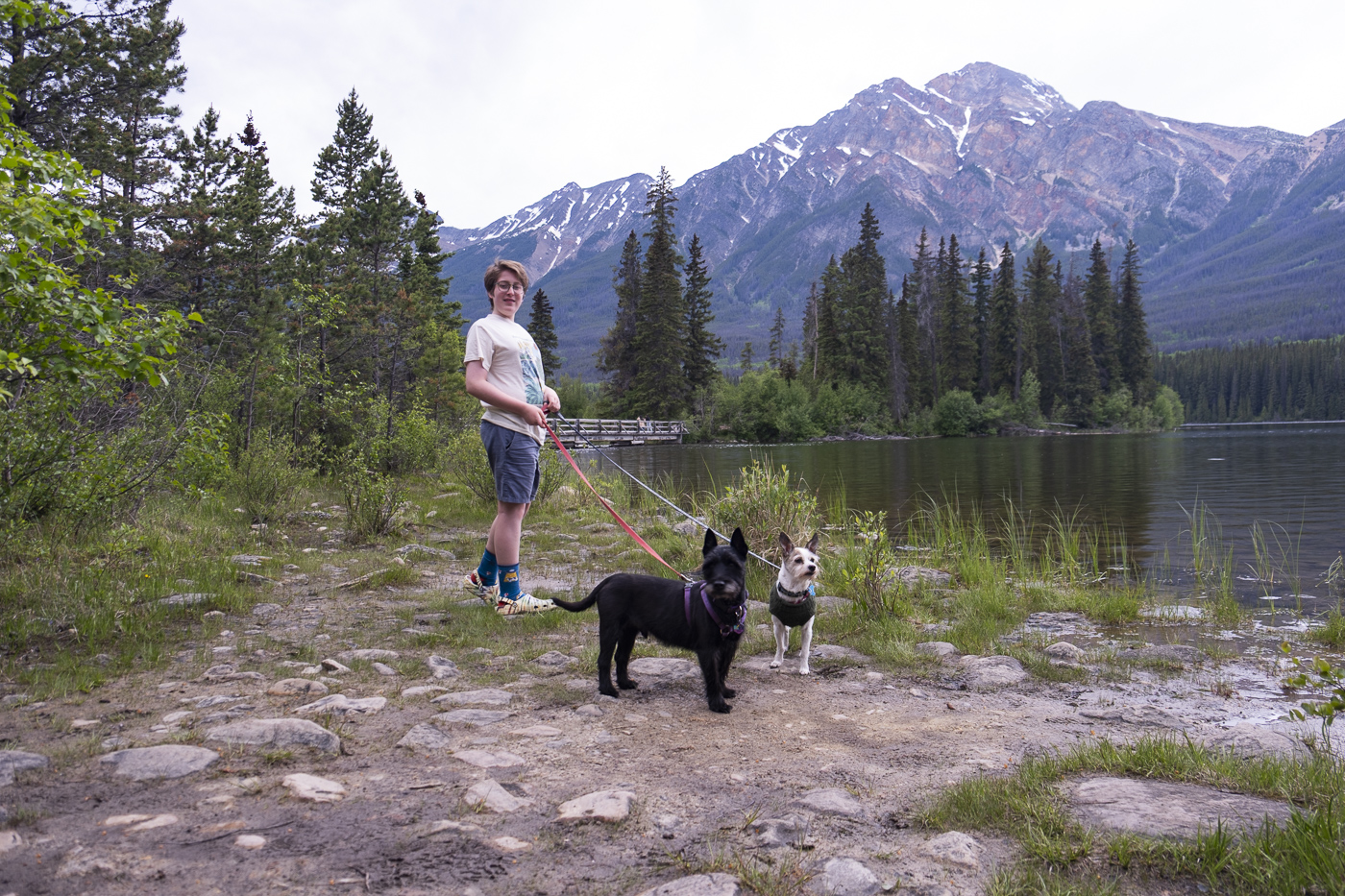
For something slower and easier, consider Pyramid Island.
A bridge connects the mainland with the small island, where short trails provide views of Pyramid Mountain.
The stop was particularly nice for Gretchen’s older dogs because it offered an easy outing without a demanding hike.
It also makes a great photography stop, especially in the evening.
Maligne Lake
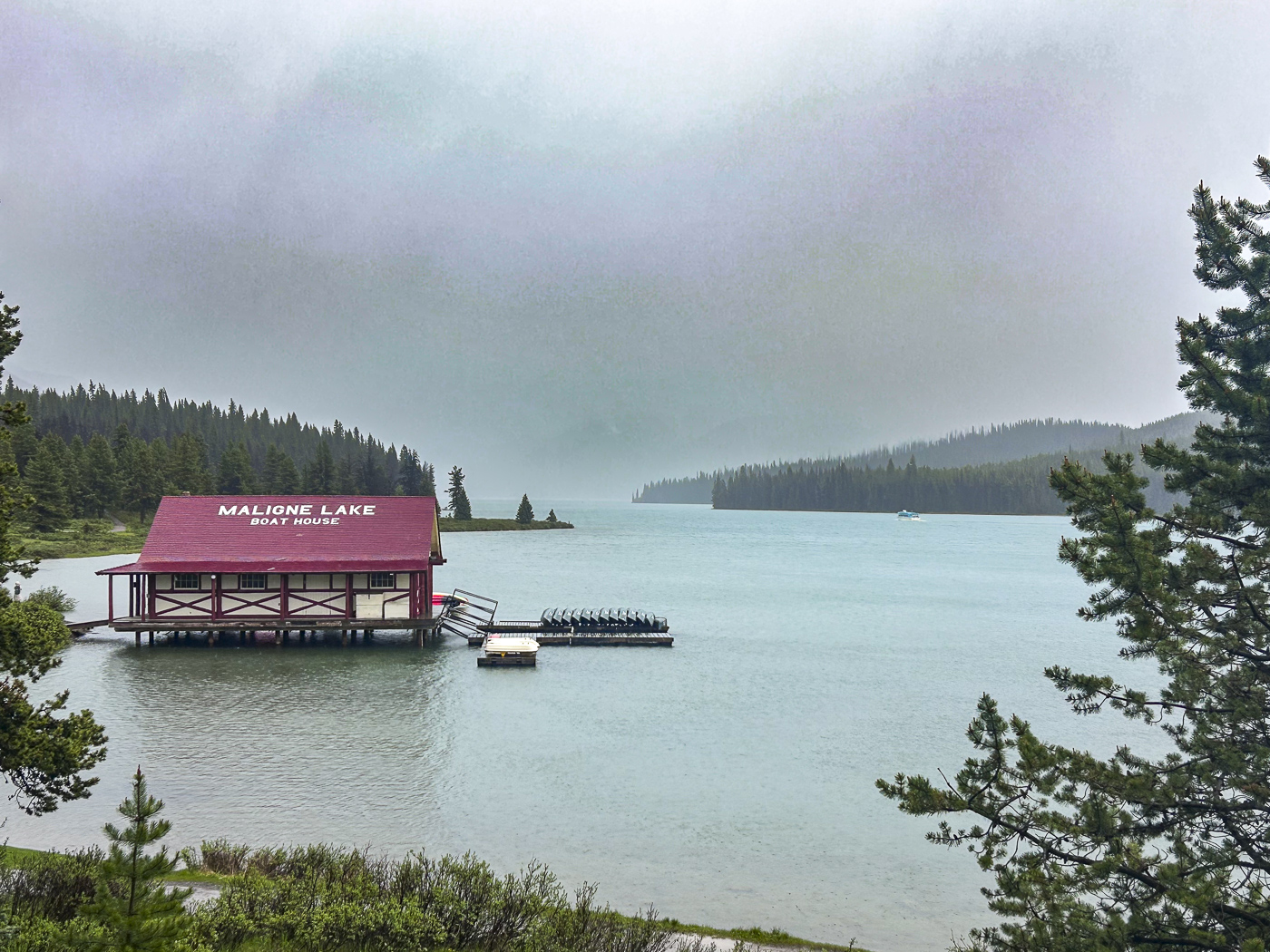
Maligne Lake is one of Jasper’s marquee attractions.
The famous boat tour travels to Spirit Island and gets rave reviews from many visitors.
Gretchen’s family ultimately skipped it.
The cost would have been roughly $100 per person, and they had already spent quite a bit on the Banff Gondola earlier in the trip.
They decided to visit the lake and hike instead.
Then the weather intervened.
By the time they arrived, steady rain had settled in, so they snapped a few photos, escaped into the gift shop and café for hot chocolate, and eventually headed back toward Jasper.
Interestingly, Gretchen’s aunt and uncle happened to visit the area about a week later, took the boat tour, and loved it.
Choose Expensive Activities Carefully
This led to an important family travel discussion.
When you’re traveling with several people, ticketed attractions add up quickly.
A scenic hike might cost nothing.
A waterfall might cost nothing.
A family boat tour can suddenly add hundreds of dollars to your day.
That doesn’t mean you should skip paid experiences.
The Banff Gondola, for example, became one of Gretchen’s favorite memories from the earlier portion of the trip.
But choosing the right splurges for your particular family can help keep a long RV vacation financially manageable.
How Long Should You Stay in Jasper?
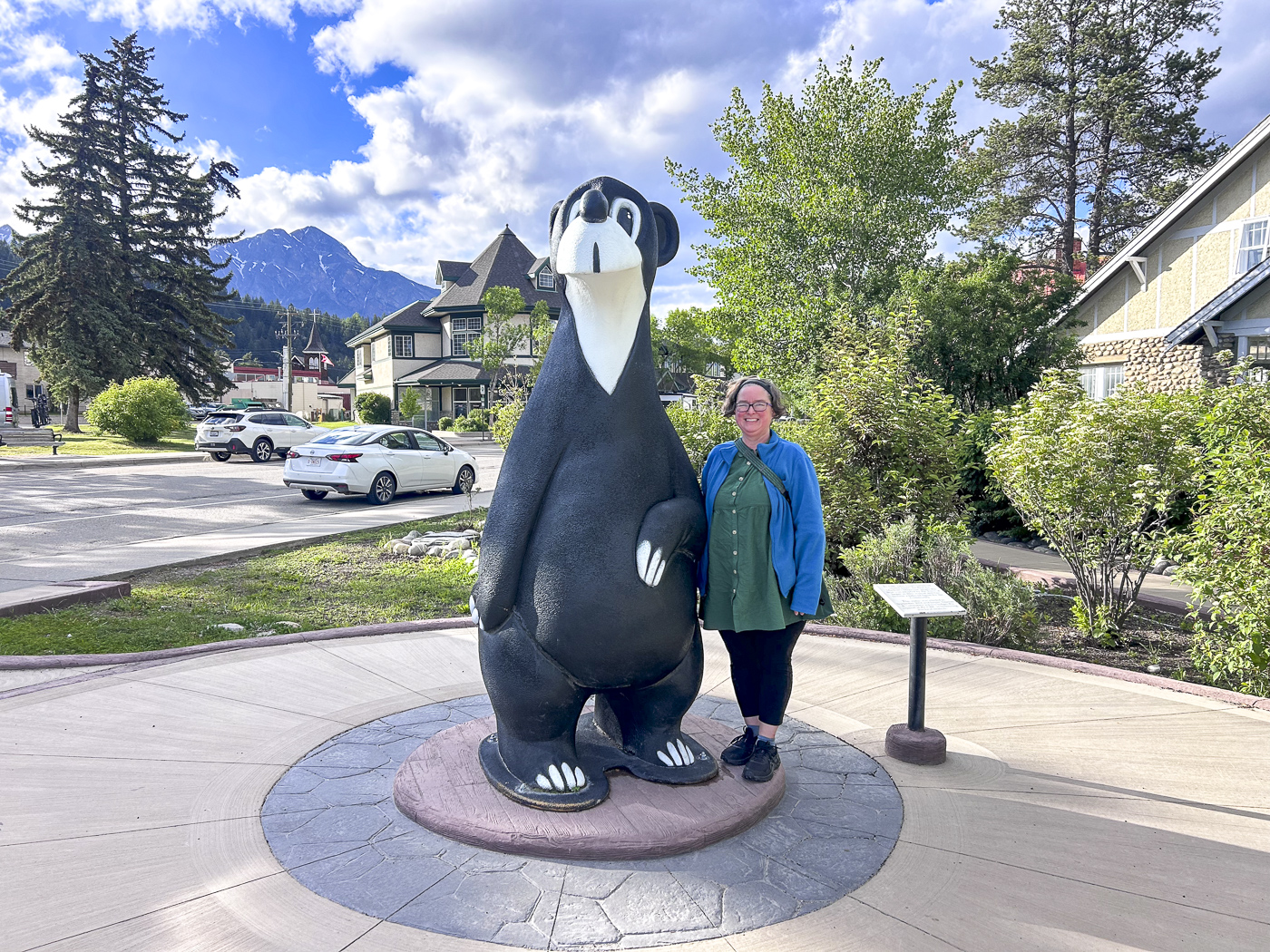
Gretchen’s family spent three nights at Whistlers Campground.
Was that enough?
Mostly.
They packed an impressive amount into those three nights, although rain interrupted some plans.
Gretchen felt they easily could have filled another day, but for a larger itinerary covering Banff, Jasper, Lake Louise, Yoho, and eventually Vancouver, three nights felt reasonable.
If Jasper is a major focus of your trip, we’d certainly consider adding another night.
But three nights gives you enough time for a substantial introduction.
Returning to the Lake Louise Area
After Jasper, the family headed back down the Icefields Parkway toward Banff National Park.
Yes, that meant backtracking.
But there are worse roads to drive twice.
Seeing the Icefields Parkway in the opposite direction simply offered another perspective on one of the most spectacular drives in North America.
Their next base camp was the Lake Louise hard-sided campground.
Hard-Sided Versus Soft-Sided Camping at Lake Louise
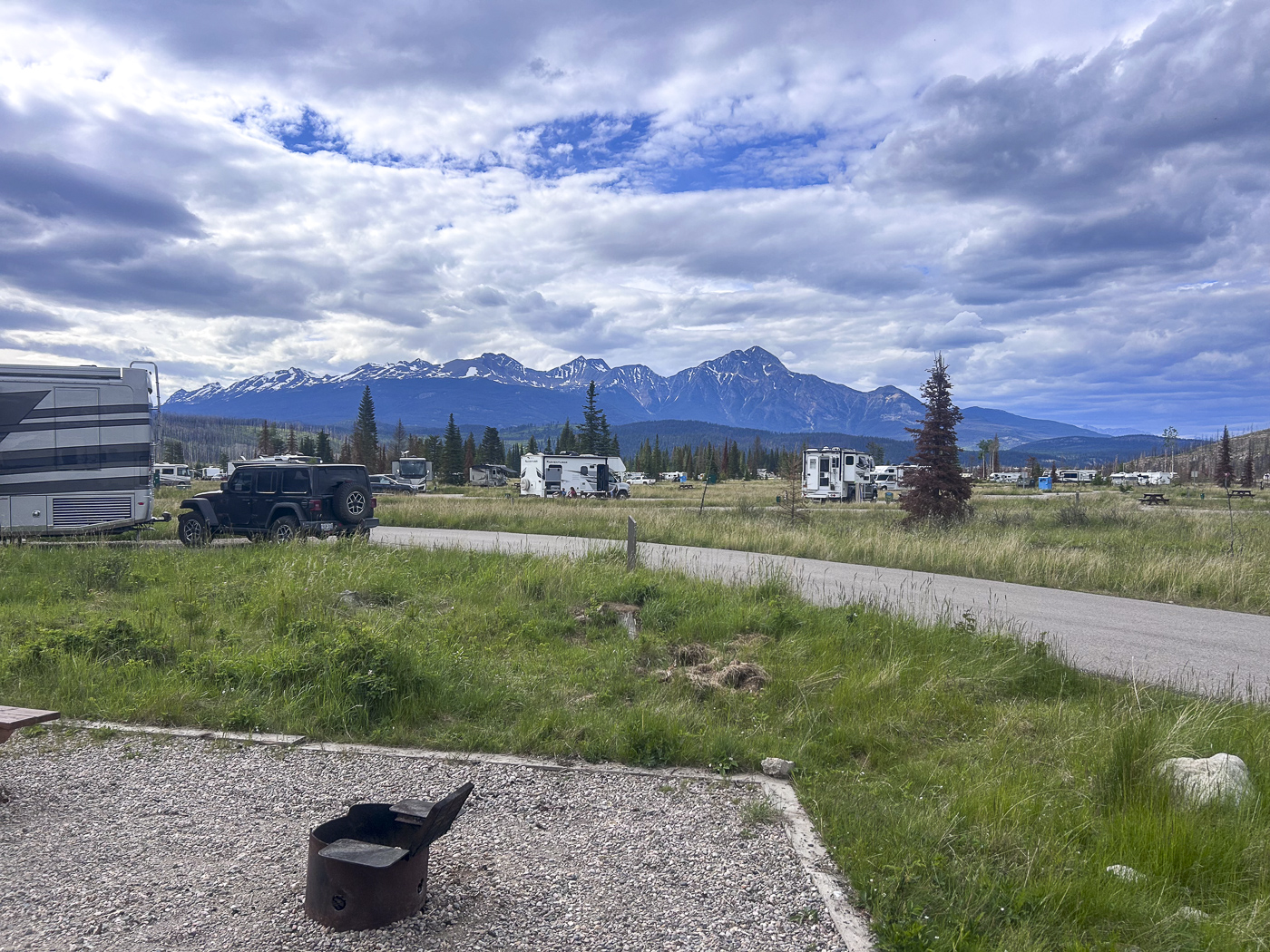
Lake Louise has neighboring campground areas designated for hard-sided and soft-sided camping.
The distinction exists because of bear activity.
Tent campers, pop-ups, and other soft-sided accommodations use the soft-sided campground, which is surrounded by an electric fence.
The soft-sided campground is more wooded and offers greater privacy, but it is generally better suited to smaller rigs.
Gretchen’s family stayed in the hard-sided campground.
One unusual feature is that many campsites use long pull-through driveways shared by two RVs.
It sounds odd on paper, but Gretchen didn’t find it particularly bothersome.
Most campers position their RVs so their non-door sides face one another, leaving the outdoor living areas pointed toward the woods.
The only minor inconvenience is that you may need to run your electrical cord underneath the camper to reach the pedestal.
Be Prepared for Trains and Weak Cell Service
There are two practical drawbacks worth knowing before booking.
Cell service is extremely limited.
You may be able to find a signal by walking around, and there is Wi-Fi available in places such as the visitor center.
The second issue is noise.
Freight trains run extremely close to the campground at all hours.
Gretchen could see the tracks from their campsite.
If you’re a light sleeper, bring earplugs.
Fortunately, the campground also offers easy access to beautiful walking trails along the Bow River.
A Surprisingly Fun Bear Safety Program
The adjacent soft-sided campground has an amphitheater where park staff offer interpretive programs.
Gretchen’s family attended a bear safety presentation expecting a fairly traditional ranger talk.
Instead, it included games, team competitions, drawing activities, and stories about individual bears that live in the park.
They even learned about a well-known local bear nicknamed The Boss.
It was educational, funny, and especially well suited to families with kids.
Visiting the Lake Louise Village
The small commercial area near the campground includes shops, restaurants, and a visitor center.
“Village” might be a slightly generous term.
But it provides useful services, Wi-Fi, and trip-planning information.
The visitor center even tipped Gretchen’s family off to a geocaching adventure in the campground, which became another fun activity for their son.
For a meal, they recommend Bill Peyto’s, located at a nearby hostel.
They enjoyed the food, local beers, and—very importantly during a trip where connectivity was often limited—the comfortable upstairs seating area with Wi-Fi.
You Need a Plan for Moraine Lake
Two of the biggest attractions in this region are Lake Louise and Moraine Lake.
You absolutely should try to see both.
But don’t assume you can simply drive to Moraine Lake.
Private vehicles are no longer permitted.
Visitors need to use a shuttle.
And those shuttle tickets can be extremely difficult to get.
Gretchen had four nights in the Lake Louise area and several possible days available, yet she was only able to secure one late-afternoon shuttle reservation.
Alternative private shuttles are available, including some that permit dogs, but they can become expensive.
Book Shuttle Reservations Early
Parks Canada releases some reservations when the season opens and another portion shortly before travel dates.
That second release sounds helpful until you realize you may be sitting in a national park campground with weak Wi-Fi trying to compete for tickets.
Gretchen recommends thinking about Moraine Lake transportation at roughly the same time you’re making campground reservations.
The more flexible your itinerary, the better your chances of finding a workable time.
The Advantage of a Late Moraine Lake Shuttle
Their late-afternoon shuttle actually turned into a blessing.
Crowds were lighter.
At Moraine Lake, they first tackled the short, steep Rockpile Trail, which leads to the iconic elevated view over the lake.
Even later in the day, they shared the viewpoint with plenty of other visitors.
Then they did something we highly recommend.
They kept walking.
The Lakeshore Trail follows the edge of Moraine Lake, and the crowds disappeared almost immediately once they moved beyond the busiest area.
They followed the lake toward a waterfall where glacier and snowmelt feed the water.
It was a perfect example of how you can be standing among hundreds of tourists one minute and feel completely alone in the Canadian wilderness ten minutes later.
Carry Bear Spray—Even Around Busy Attractions
That ability to escape the crowds comes with another reminder.
Carry your bear spray.
Even at extremely popular destinations, you can turn onto a trail and quickly find yourself alone.
Jeremy compared it to hiking in Glacier National Park, where crowds can disappear surprisingly quickly once you move beyond a major viewpoint.
As he joked during the episode, suddenly you’re thinking:
“I’m really glad I have my bear spray…because I’m the only snack here.”
Funny?
Yes.
But also true.
Visiting Lake Louise
Unlike Moraine Lake, you can still drive your own vehicle to Lake Louise.
Parking is limited and expensive.
Gretchen’s family arrived around 6:45 a.m. in June and still found plenty of spaces.
Staying at the nearby campground made that early start much easier than it would have been if they were driving from Banff.
Hiking to the Lake Agnes Tea House
Their main goal at Lake Louise was the Lake Agnes Tea House Trail.
This popular hike is approximately 4.5 miles round trip and climbs around 1,300 feet.
It is a workout.
Gretchen’s 13-year-old made his feelings about the uphill slog quite clear.
But there’s an excellent reward at the top.
The trail ends at Lake Agnes, where a mountain tea house serves tea, coffee, soups, sandwiches, biscuits, cake, and other food.
There is no electricity at the tea house.
Supplies must be brought up the mountain, making the experience feel even more special.
If you’ve ever wanted to finish a mountain hike in the Canadian Rockies with tea and chocolate cake, this is your moment.
Keep Going to Little Beehive
One of Gretchen’s biggest pieces of advice is don’t stop at the tea house.
Continue another kilometer toward Little Beehive.
Lake Agnes is lovely, but the additional climb offers much better elevated views back toward Lake Louise.
If you’ve already done the hard work of climbing to the tea house, that extra push is worth it.
Another Tea House Option: Plain of Six Glaciers
The family had also considered the Plain of Six Glaciers trail.
It’s longer than the Lake Agnes hike and leads to another tea house.
Gretchen liked the idea because it reportedly offers more views throughout the hike.
However, they were visiting early enough in the season that lingering snow made the trail less appropriate without specialized hiking gear.
If you visit later in the summer, it may be worth comparing the two tea house hikes and choosing whichever best matches your interests and abilities.
Take a Side Trip to Yoho National Park
Lake Louise is also an excellent base camp for visiting Yoho National Park.
Yoho sits only about 20 minutes away along the Trans-Canada Highway.
You can easily spend a day here—or even just an afternoon or evening.
Gretchen’s family squeezed it into the same day as their Lake Agnes hike.
That’s an ambitious itinerary.
But they’re professionals at packing a lot into a travel day.
Stop at the Spiral Tunnels
One unusual Yoho attraction is the Spiral Tunnels.
The tunnels were engineered to reduce the steep railway grade through Kicking Horse Pass.
A roadside viewpoint provides interpretive signs explaining the construction and allows visitors to watch trains navigate the tunnels.
If you’re lucky, a train will appear while you’re there.
Gretchen’s family waited roughly ten minutes.
No train.
After seeing approximately a million trains elsewhere on this trip, they decided they had experienced enough railroad excitement and moved along.
Eat at Truffle Pigs Bistro in Field
The tiny town of Field is home to one of the more unexpected dining recommendations from this trip.
Truffle Pigs Bistro offers a much more interesting menu than you might expect from a small mountain town with relatively few restaurants.
Gretchen’s family enjoyed local beer and creative dishes, making it a worthy food stop during a Yoho day trip.
Emerald Lake Without the Lake Louise Crowds
If Lake Louise and Moraine Lake start to feel overwhelmingly busy, head to Emerald Lake.
You still get brilliant blue mountain water.
You still get spectacular scenery.
But the atmosphere can feel far more relaxed.
Visitors can hike, rent canoes, or simply walk along the shoreline.
Gretchen’s family only made a quick stop, but she noted that you could easily make Emerald Lake the centerpiece of an entire day if you wanted more time in nature and less time navigating crowds.
Avoiding “Another Beautiful Lake” Fatigue
There is such a thing as too much spectacular scenery.
At least if you’re 13.
During a long Canadian Rockies trip, Gretchen’s son occasionally reached the point of:
“Oh look…another beautiful lake.”
It’s a useful reminder for family travelers.
Adults might happily stare at glacier-fed lakes for two straight weeks.
Kids may appreciate some variety.
Gretchen’s family mixed hiking and scenery with things like comedy shows, gondola rides, audio tours, restaurants, geocaching, and interpretive programs.
The GuideAlong app was particularly helpful because the narrated stories gave their drives more structure and kept their son engaged.
The goal is not to make every moment educational or expensive.
Just mix things up enough that everyone still enjoys the trip.
Takakkaw Falls
The final big Yoho stop was Takakkaw Falls.
The waterfall is roughly 800 feet tall and incredibly dramatic.
Getting there requires driving a road with some tight hairpin turns.
Even Gretchen’s approximately 18-foot van required a multipoint turn at one of the switchbacks.
Once you arrive, however, access is easy.
A short paved trail leads toward the base of the waterfall.
As you get closer, the roar grows louder and the scale becomes increasingly impressive.
The Bear Encounter They’ll Never Forget
Then things got interesting.
After visiting the falls around 9 p.m., Gretchen’s family turned around to walk back toward their vehicle.
A bear was standing on the trail between them and the parking lot.
They believed it was a black bear.
And they did not have their bear spray.
They had assumed this short, paved, popular attraction didn’t really require it.
But by that time of evening, the crowds were gone.
Another small group was still near the waterfall, so Gretchen’s family warned them and suggested everyone walk back together.
The bear disappeared.
Then reappeared.
Then disappeared again.
They spotted it several more times while carefully keeping their distance.
Eventually, both groups made it safely back to their vehicles.
The bear never showed aggression or much interest in them.
But the experience reinforced one of the biggest lessons of this entire trip:
Wildlife precautions aren’t only for remote backcountry hikes.
Busy places become quiet.
Popular trails empty out.
And wildlife does not care that you’re only half a mile from your car.
Their son later insisted that they call the wildlife reporting line to report the bear.
Which they did.
Then they went back to the campground and went to bed.
Just another peaceful night in the Canadian Rockies.
Final Thoughts on Jasper, Lake Louise, and Yoho
This portion of Gretchen’s Western Canada RV trip demonstrates exactly why the Canadian Rockies belong on so many RVers’ bucket lists.
The scenery is spectacular.
But the real magic is in the variety.
You can drive one of the world’s most beautiful highways in the morning, hike past turquoise lakes in the afternoon, eat dinner in a tiny railroad town, watch elk wander through your campground, climb to a mountain tea house, and end the evening standing beneath an 800-foot waterfall.
Then a bear might appear.
Because apparently the Canadian Rockies don’t believe in boring vacations.
Our biggest takeaway from this episode is that planning matters, but flexibility matters just as much.
Reserve campgrounds as early as possible.
Think ahead about Moraine Lake shuttles.
Prepare for real mountain driving.
Carry bear spray.
Choose your expensive ticketed experiences carefully.
And give yourself enough time to occasionally abandon the plan and follow something interesting.
Gretchen’s trip continues west from here, eventually reaching Fort Langley and Vancouver, and we’ll cover that final chapter in Part Three.
We’ll see you at the campground.
Meta Description
Plan an epic Jasper National Park RV trip with stops along the Icefields Parkway, Whistlers Campground, Lake Louise, Moraine Lake, Yoho National Park, Emerald Lake, and Takakkaw Falls.