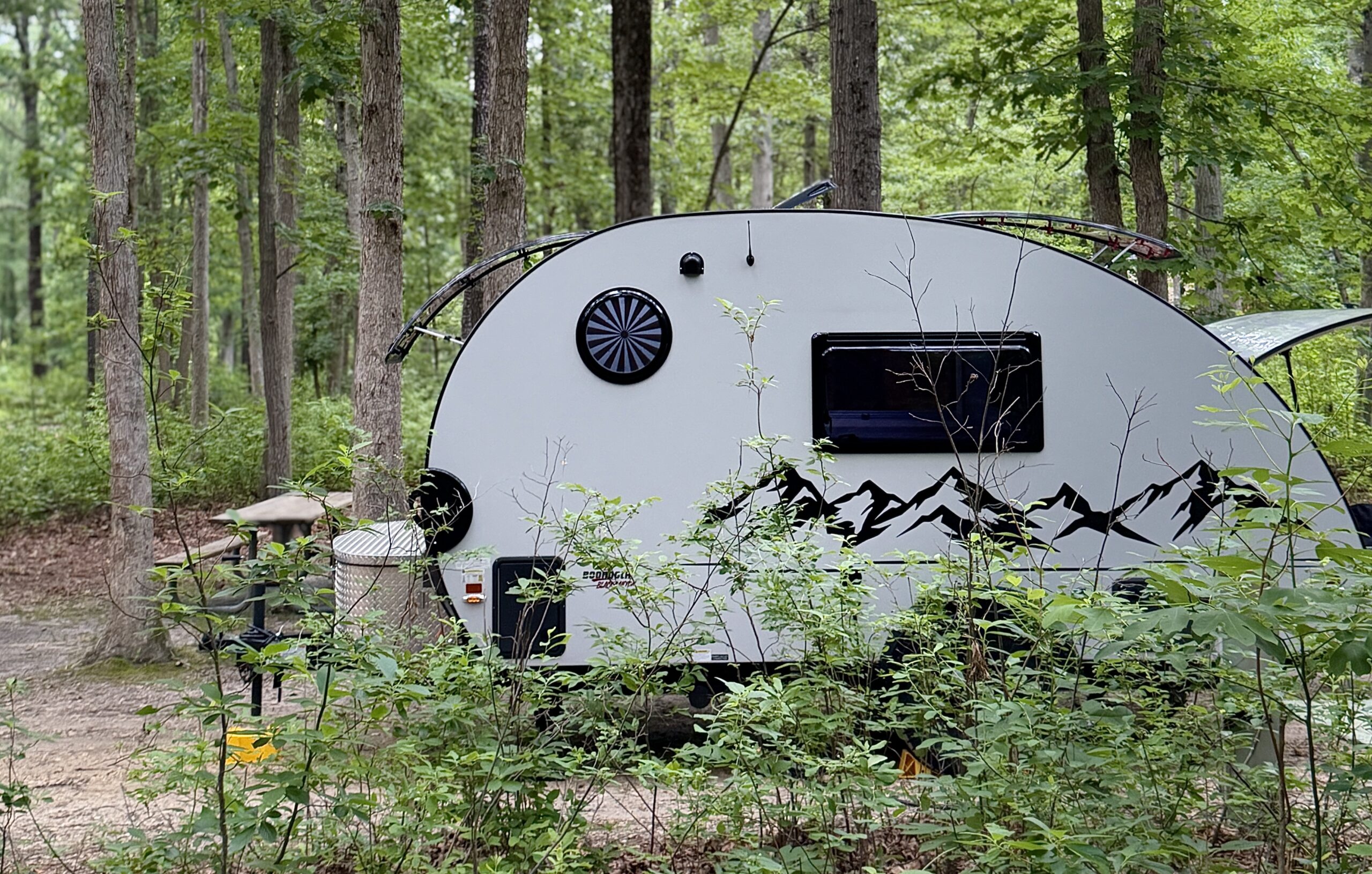
After all of these experiences with Truma products, one thing has become very clear: their appliances can dramatically change how an RV feels at the campground when it comes to comfort and convenience.
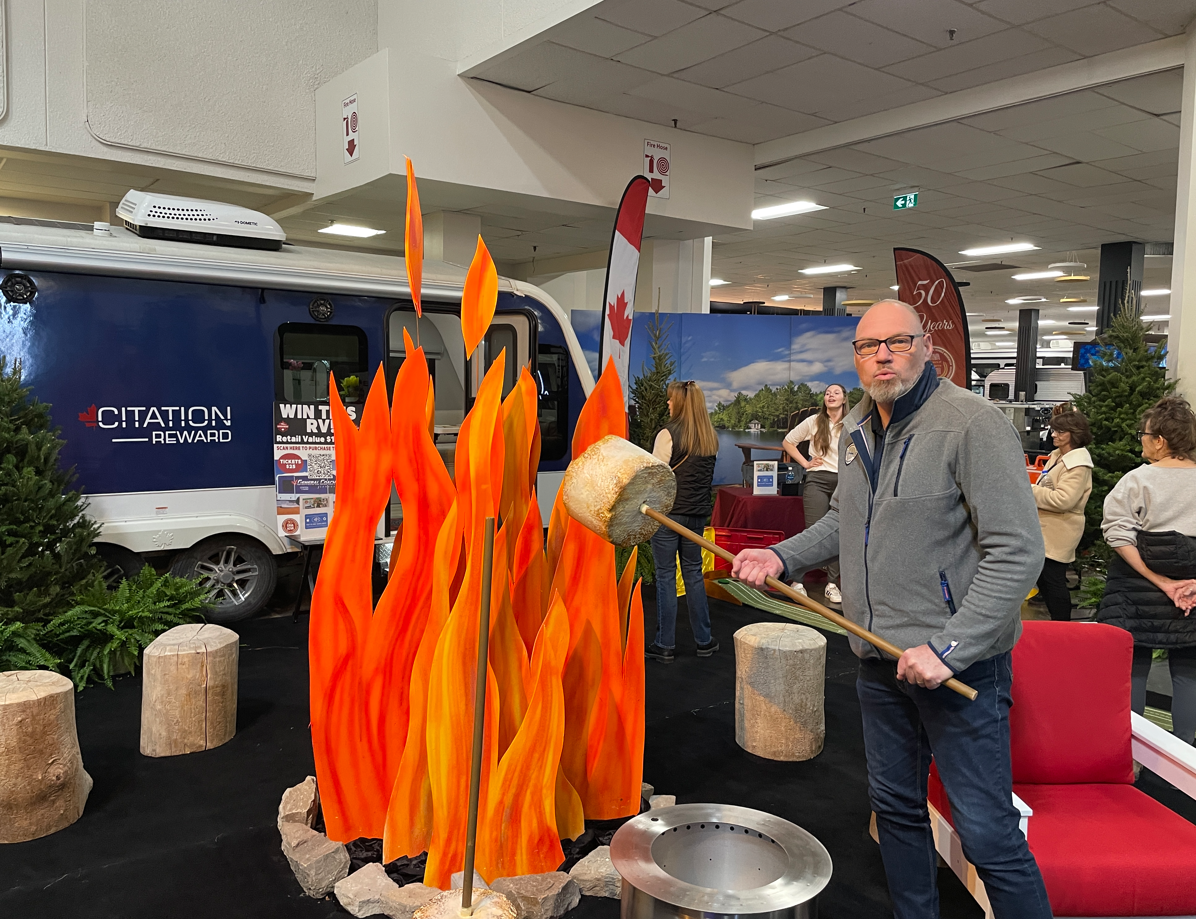
On this week’s episode of The RV Atlas Podcast, Jeremy sits down with Mark Howlett, President and CEO of Truma North America, for a deep dive into the company’s history, the differences between European and North American RV design, and the major Truma products available to RV owners today.
To listen to our interview with Mark, click on the media player above or subscribe to the RV Atlas podcast wherever you get your favorite shows.
Why We Pay Attention to the Appliances Inside an RV
When people shop for an RV, it’s easy to focus almost entirely on the floor plan.
Where is the bed? How big is the refrigerator? Does the dinette convert into a sleeping space? How much storage is there?
Those things absolutely matter. But after years of RV ownership, we’ve learned to pay close attention to the components a manufacturer chooses as well.
What furnace is installed? What water heater? What air conditioner? What suspension? What solar products are being used?
Those choices can tell you quite a bit about what kind of ownership experience the manufacturer is trying to create.
That is why Jeremy believes that when an RV manufacturer chooses Truma products they are making a statement about the quality of their RVs.
That doesn’t mean every RV with a Truma appliance will automatically be perfect.
But after using these products ourselves, we understand why so many premium manufacturers select them.
Truma’s History Starts With Harry S. Truman

One of the most surprising parts of our conversation with Mark was learning the history behind the Truma name.
The company was founded in Germany in 1949 by Philipp Kreis, and the name was inspired by President Harry S. Truman.
After World War II, Kreis benefited from the Marshall Plan as Germany rebuilt. He later wrote to Truman to thank him for that support and asked to name the company in his honor—dropping the final “n” to create Truma.
The original signed correspondence with Truman is still preserved at Truma’s facility near Munich.
Even more surprising is how the company actually started.
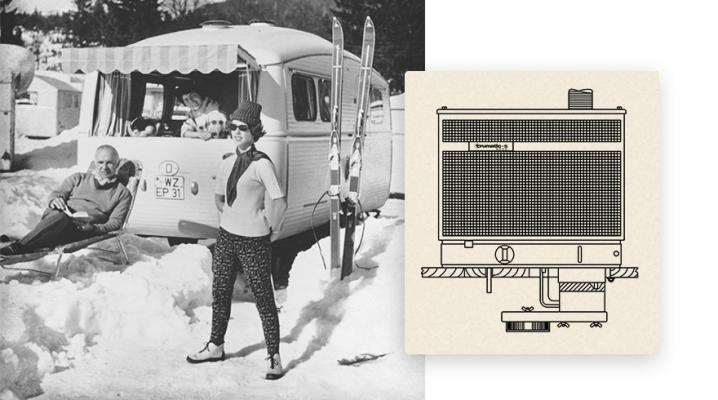
Kreis began repairing and selling gas lanterns in postwar Munich, where street lighting was still badly damaged. By the 1960s, Truma had moved into RV heating systems that allowed European caravan owners to extend their travel season and even take their rigs on winter ski trips.
Today, Truma has operations across Europe, North America, Australia, and Asia.
Why European RV Design Matters in North America
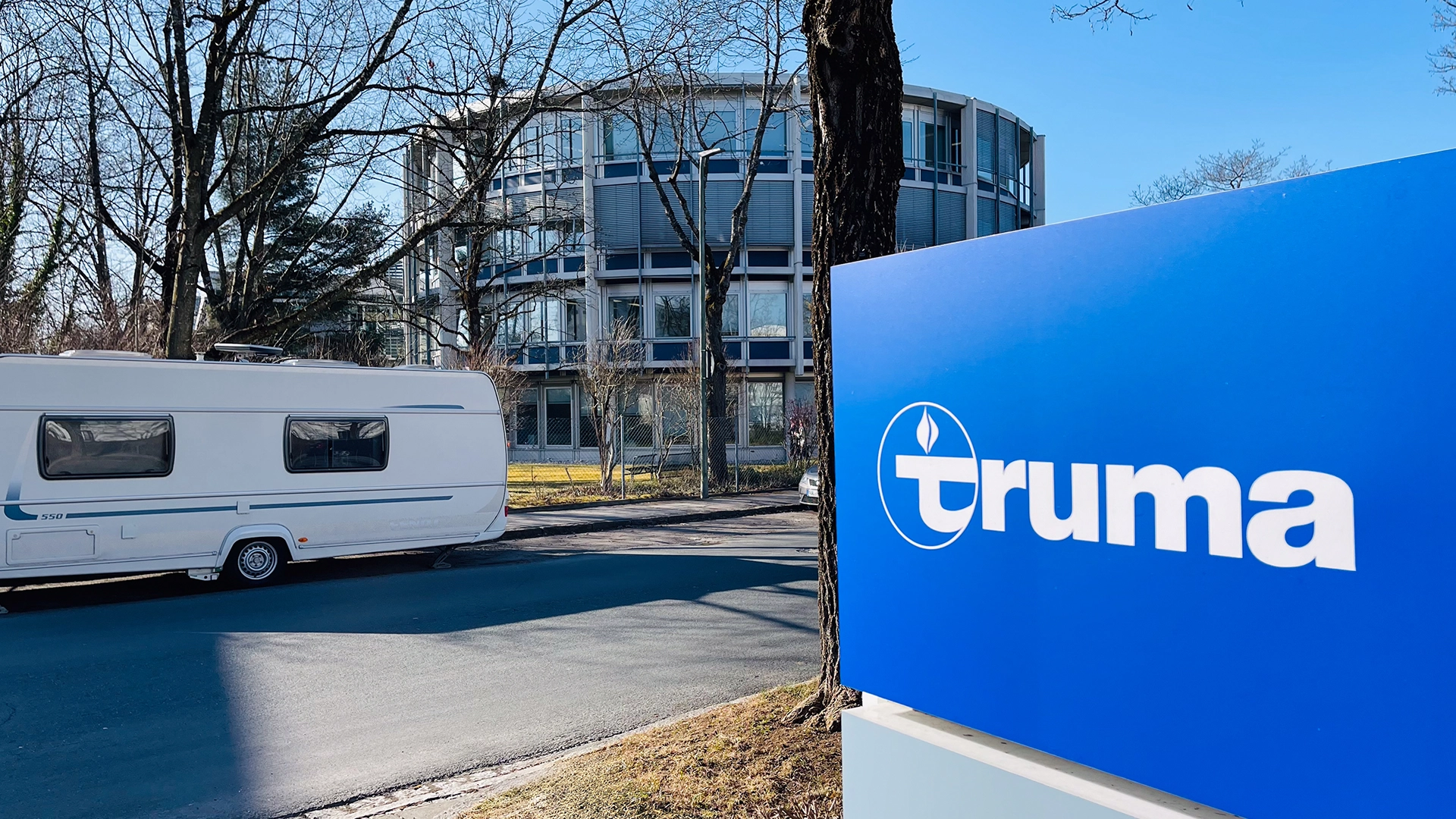
To understand Truma products, it helps to understand the RVs they were originally designed for.
European caravans and motorhomes are generally smaller than the massive travel trailers, fifth wheels, and Class A motorhomes many Americans picture when they hear the word RV.
Roads are narrower in Europe.
Campsites can be tighter.
Weight restrictions are often stricter.
Fuel efficiency matters.
Space matters.
And noise really matters.
Those constraints have encouraged European manufacturers to become extremely thoughtful about compact appliances.
The Truma Combi is a great example. It combines the furnace and water heater into a single appliance roughly the size of a slightly oversized carry-on suitcase.
Instead of dedicating separate spaces to a furnace and a water heater, one compact unit performs both jobs.
That kind of engineering becomes especially valuable in the small-RV categories that continue to grow in North America: Class B vans, teardrops, truck campers, and overlanding rigs.
The Hidden Luxury of a Quiet RV
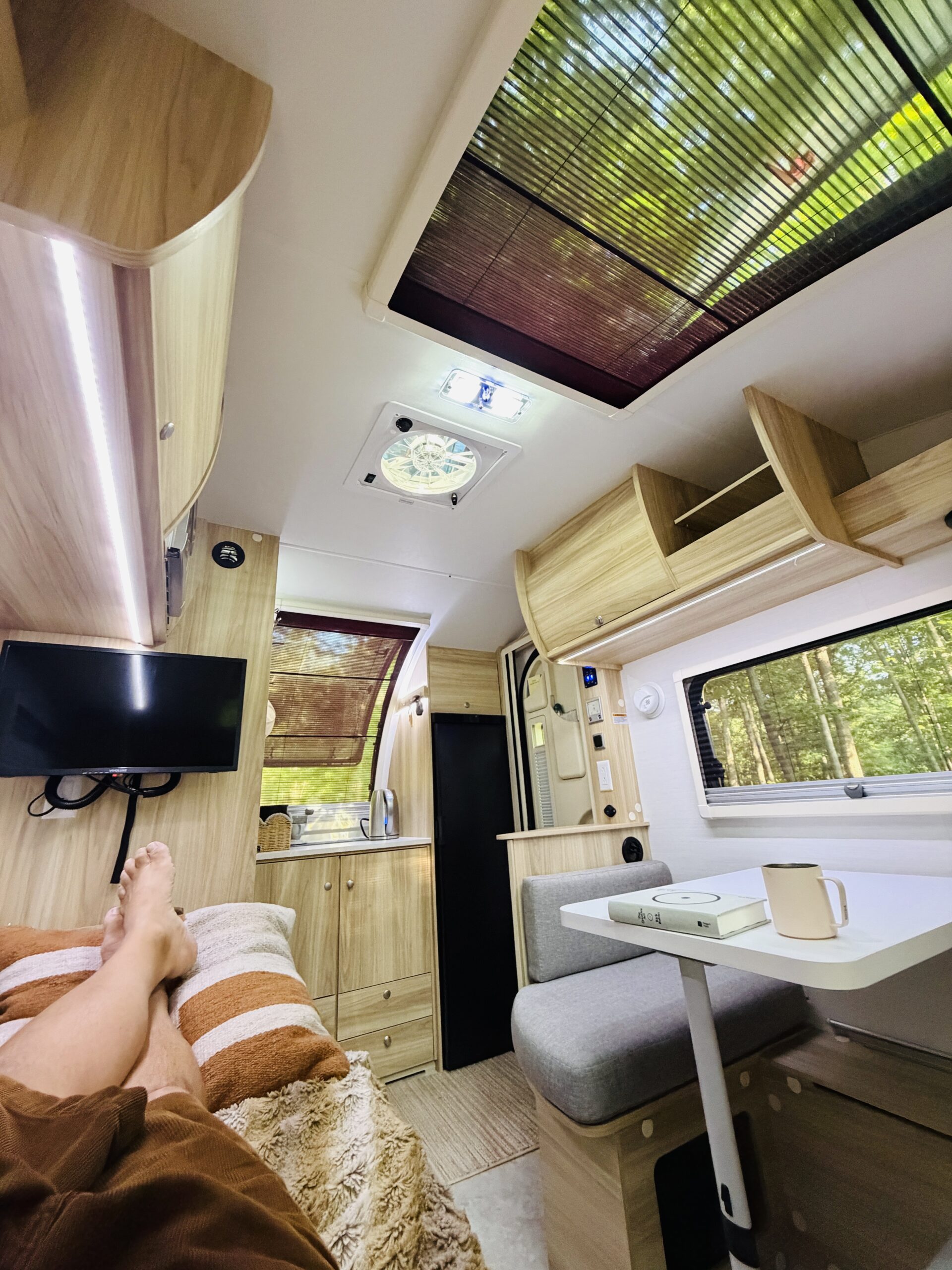
One of the themes that kept surfacing throughout our conversation was noise.
Most RV shoppers do not walk through a dealership thinking, “How loud will this furnace be at 2:00 a.m.?”
But they probably should.
We’ve owned RVs where the furnace kicking on in the middle of the night would wake us up every time.
We’ve used air conditioners so loud that once they were running, there was almost no point trying to watch television.
Once you experience a quieter system, you realize how much those sounds affect the camping experience.
Mark shared a great story from Truma’s early years in North America.
The company had installed a Combi in a North American travel trailer and brought the RV to an OEM during a cold February visit. The engineering team stepped inside and immediately noticed that the trailer was warm.
But they couldn’t hear the furnace.
They asked whether it was actually running.
Mark told them it was.
Then he pointed out that they were literally sitting on top of it.
The furnace was operating directly beneath them, and they still could barely hear it.
That story perfectly captures something we’ve noticed ourselves.
Sometimes you don’t realize how disruptive a traditional RV appliance is until you experience an alternative.
Truma AquaGo: Continuous Hot Water Perfect for Family RVers
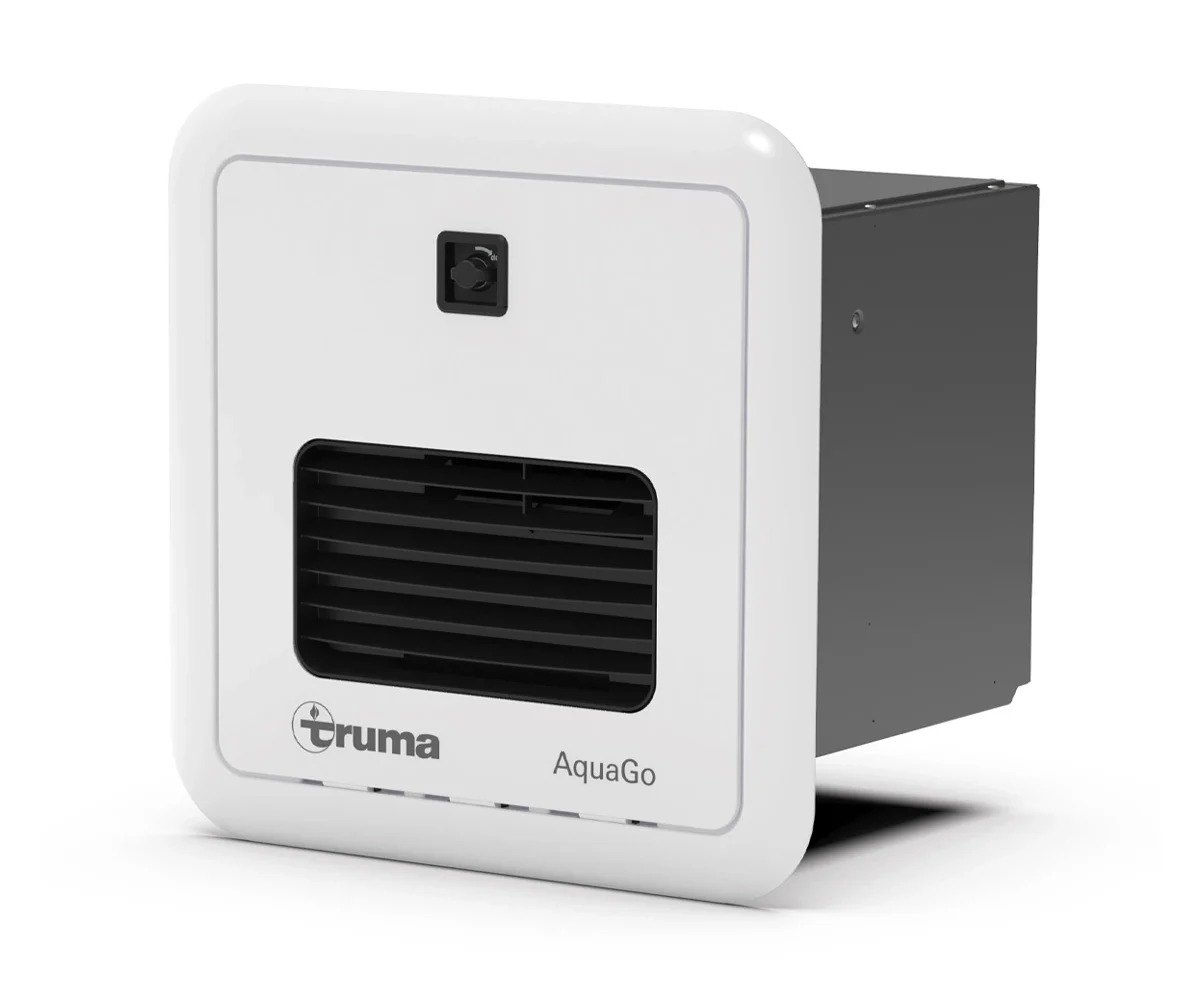
The Truma AquaGo was our introduction to the brand, and it remains one of our favorite RV appliances.
Traditional RV water heaters commonly use a six- or ten-gallon tank.
That can work perfectly well—until several people need hot water in a row.
When our boys were young, Stephanie would sometimes bathe all three kids and discover there was very little hot water left afterward for her to take a shower.
The AquaGo completely changed that experience.
With an on-demand system, we no longer had to carefully schedule showers or wonder who was going to get stuck with cold water.
Everybody could get cleaned up, and Mom and Dad could still take a hot shower afterward.
For a family of five, that felt luxurious.
What Makes the AquaGo Different?
One interesting detail Mark explained is that the AquaGo is not simply a traditional tankless heater.
It includes a small temperature-stabilizing tank.
That tank helps smooth out the temperature fluctuations that can occur when water pressure changes.
Anyone who has camped at a busy campground has probably experienced that moment in the evening when everyone suddenly starts washing dishes and taking showers.
Water pressure drops.
With some on-demand heaters, the lower flow rate can make it difficult for the burner to operate consistently.
Truma designed the AquaGo to function at very low flow rates—Mark said the system has been tested down to approximately 0.25 gallons per minute. The small internal tank also buffers temperature changes so you don’t suddenly get blasted with extremely hot or cold water when pressure fluctuates.
AquaGo Maintenance
Like other on-demand water heaters, the AquaGo does require maintenance.
Hard water can create mineral buildup over time. Truma recommends annual decalcification as preventative maintenance and offers tablets designed for the cleaning process. Mark compared it to cleaning a coffee maker.
That might sound like one more thing to add to your RV maintenance list, but it also helps explain why some AquaGo units installed more than a decade ago are still operating today.
Can You Add a Truma AquaGo to an Existing RV?
Yes.
This is one of the most important distinctions in the Truma lineup.
The AquaGo was designed with replacement installations in mind.
It can generally replace common six- or ten-gallon RV water heaters, and Truma offers adapter solutions for larger existing openings.
Installation should be handled through Truma or one of its trained authorized dealers.
That approach is intentional. Truma wants the entire system—not just the appliance itself—to be installed correctly.
For RV owners who love their existing rig but want a significantly better hot-water experience, the AquaGo is one of the most realistic Truma upgrades to consider.
Truma Combi: Furnace and Water Heater in One Compact Package
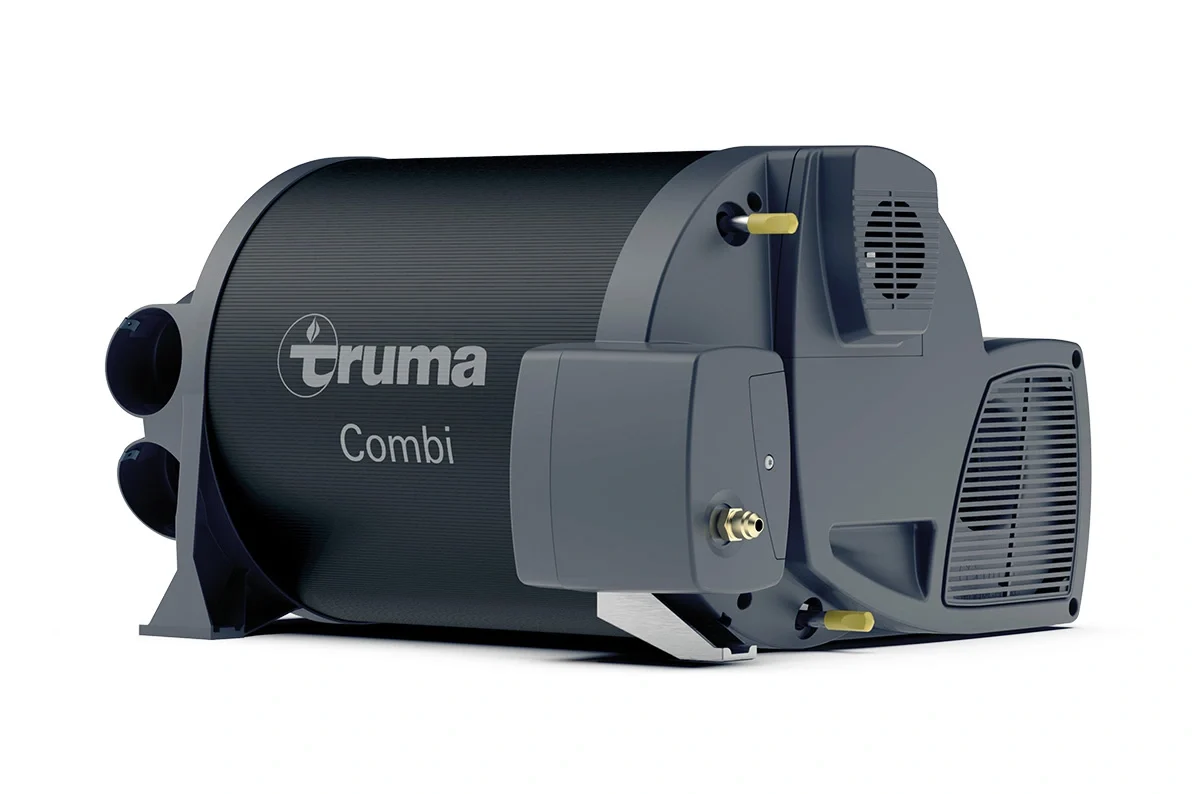
If the AquaGo is about maximizing the hot-water experience, the Truma Combi is about making extremely efficient use of space.
The Combi combines:
- A furnace
- A water heater
- Variable-speed heating
- Multiple fuel options depending on the application
All in one compact appliance.
It can operate on propane, and depending on the model and vehicle, Truma also offers diesel and gasoline configurations.
Unlike the AquaGo, however, the Combi uses a tanked water-heating system.
That means owners should not assume that every appliance with the Truma name automatically provides endless hot water.
The Combi experience is closer to a traditional tanked water heater—but with the furnace and water heater packaged together in one highly engineered system.
Why Manufacturers Like the Combi
Space savings are only part of the appeal.
Truma works extensively with manufacturers to test how the heating system performs throughout an RV.
At its Elkhart facility, Truma uses a climate chamber to evaluate many RVs before they go into production.
Engineers can look at how warm air moves from front to back and side to side, then make recommendations about duct placement and overall system performance.
That matters because a furnace isn’t very useful if one end of the RV is roasting while the bedroom stays cold.
The goal is to create a more consistent interior temperature with less noise and fewer dramatic cycles.
Truma’s Strong Presence in Class B Vans
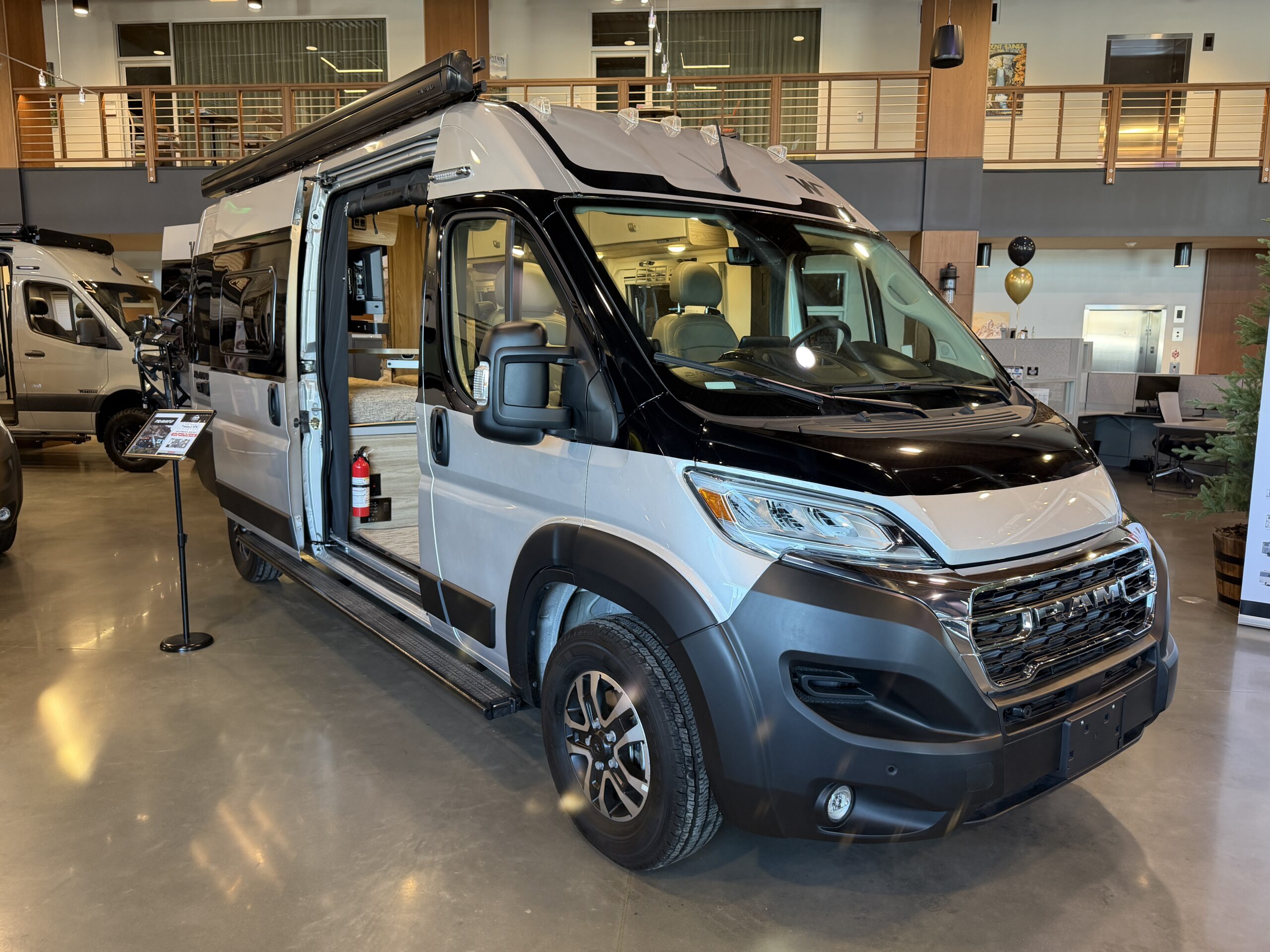
The Combi was an especially natural fit as Truma entered the North American market.
Class B vans have limited interior space, so combining two appliances into one compact unit makes tremendous sense.
One of Truma’s early North American partners was Winnebago, particularly with the Travato.
Mark estimates that more than half of the Class B vans built in North America now typically use a Truma Combi system.
That’s a remarkable shift for a company that officially established its North American operation only 13 years ago.
VarioHeat: A Small Furnace for Small RVs
Not every camper needs the combined furnace-and-water-heater setup of a Combi.
That is where Truma VarioHeat comes in.
The VarioHeat is a compact standalone furnace designed for small RV applications.
Mark offered perhaps the best size comparison possible: he wears a size 14 shoe, and the furnace is roughly comparable to the box those shoes come in.
That compact footprint gives manufacturers much more flexibility when designing truck campers, teardrops, small travel trailers, and overland rigs.
VarioHeat also offers the same emphasis on low noise and efficiency that characterizes the broader Truma lineup.
For certain direct-discharge furnace applications, Truma is also exploring VarioHeat as a retrofit option.
Alde Hydronic Heat: A Completely Different Heating Experience
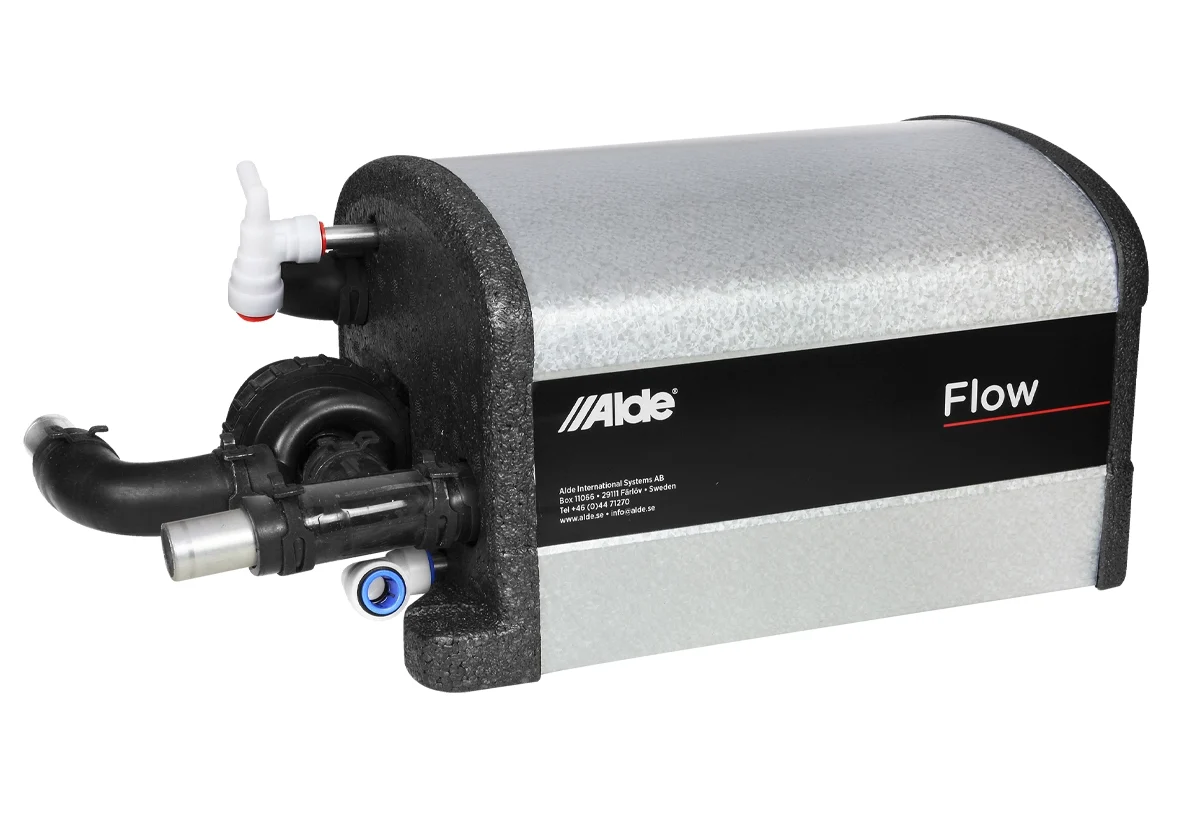
Of all the systems we’ve used recently, Alde may provide the most distinctive experience.
Unlike a forced-air furnace, Alde uses hydronic heating.
A glycol solution circulates through the system and heats radiators located around the RV.
Instead of blasting hot air through ducts, the system creates convection currents that gradually and evenly warm the interior.
The result is an entirely different kind of heat.
It feels more even.
It feels less dry.
It is incredibly quiet.
And there is no traditional furnace blowing dust, pet hair, or other particles around the RV.
After using Alde in our nüCamp TAB campers, we understand why European RV owners have embraced this type of system for years.
Why We Love Having the Alde in Our TAB
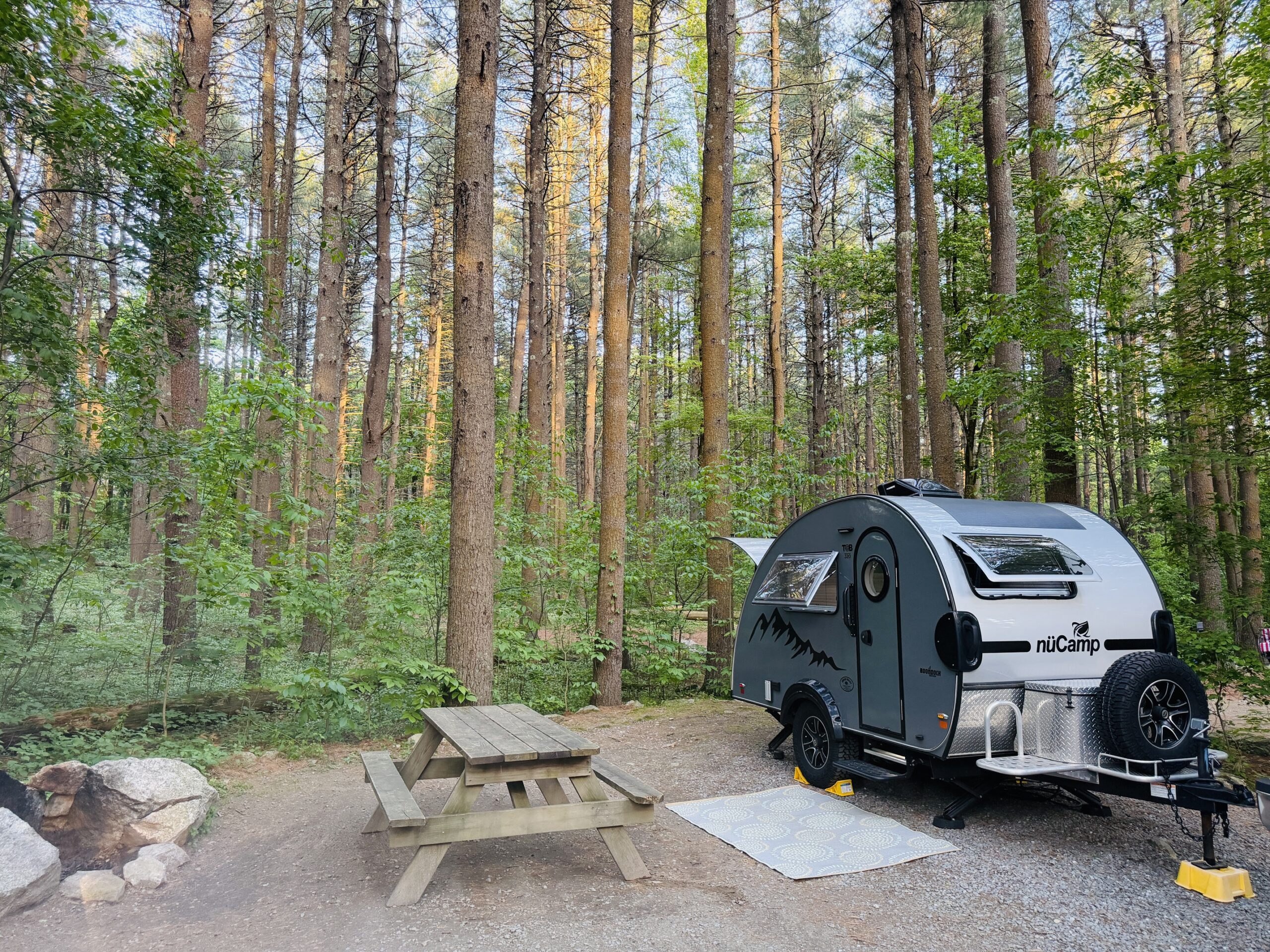
Jeremy describes the Alde almost like a little magic machine.
The first time you turn it on, you may find yourself wondering whether anything is happening.
There’s no loud furnace roar.
There’s no sudden rush of air.
Then several minutes later, you realize the entire interior is becoming warm.
Another benefit we appreciate is the ability to use electric heat at a campground with hookups.
That means we can maintain the interior temperature without burning through propane.
The latest Alde 3030 Plus can also incorporate a continuous hot-water feature through a plate heat exchanger.
For cold-weather campers, it is an exceptionally comfortable system.
Truma Aventa: Quiet Rooftop Air Conditioning
Heating isn’t the only place where Truma focuses on noise.
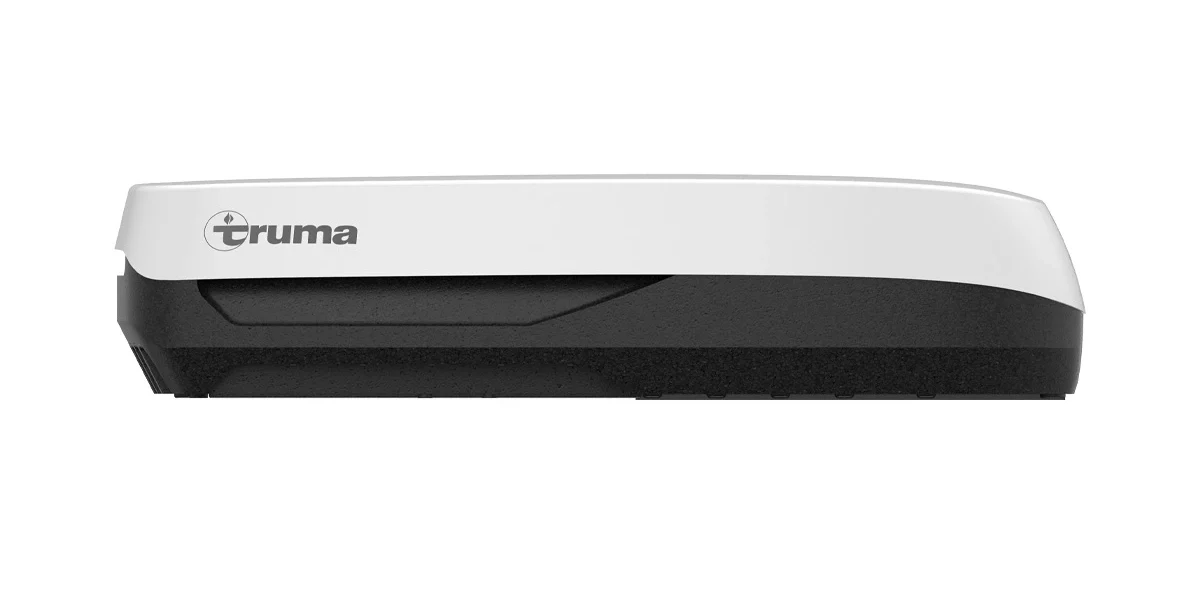
The company currently offers the Aventa rooftop air conditioner in North America.
It is available in both 13,500 BTU and 15,000 BTU versions, and newer models incorporate heat-pump functionality.
The Aventa is designed to be:
- Low profile
- Energy efficient
- Quiet inside the RV
- Remarkably quiet outside the RV
That last point is especially interesting.
European campsites tend to place RVs closer together, so engineers think not only about what an appliance sounds like inside your camper but also about what your neighbor hears outside.
That cultural difference influenced the product design.
And once you start noticing noisy campground air conditioners, it’s difficult to stop noticing them.
Truma Saphir: Moving the Air Conditioner Off the Roof
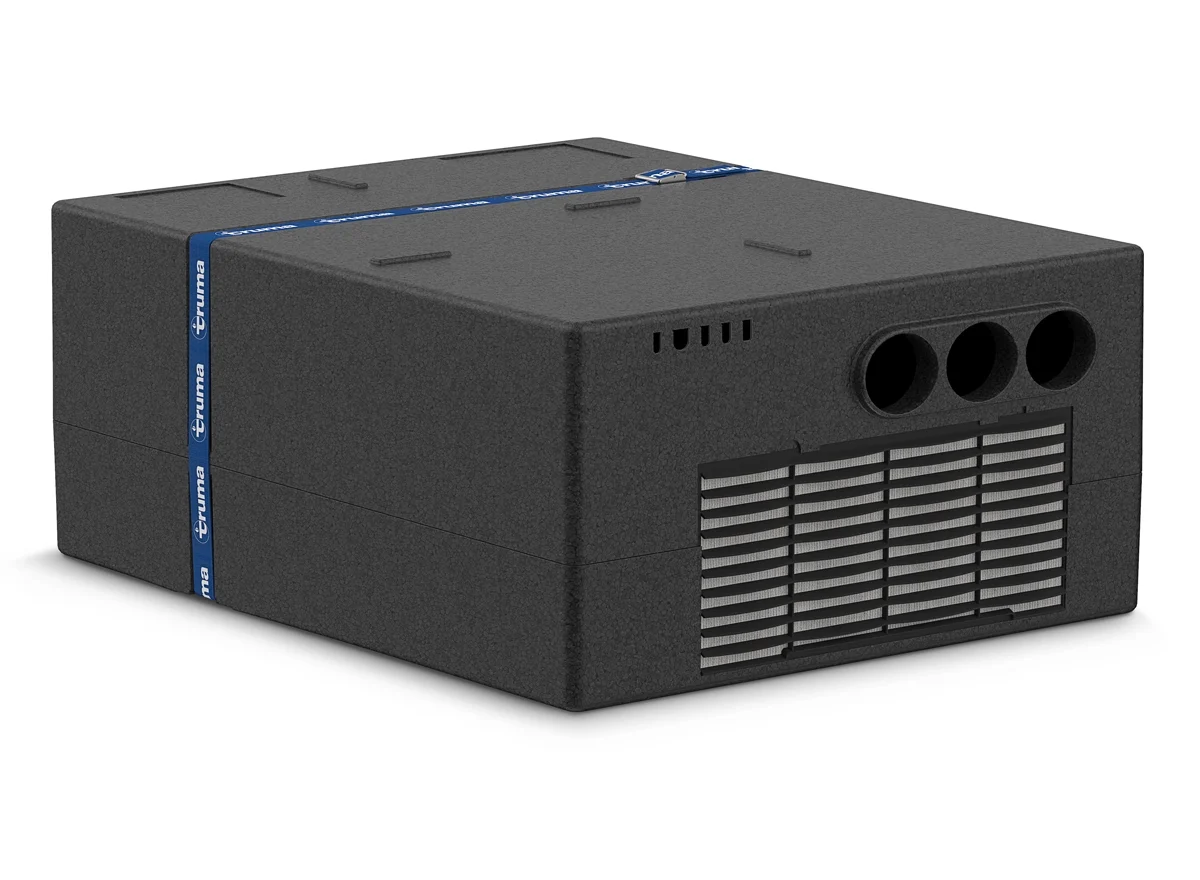
The Truma Saphir takes an entirely different approach to air conditioning.
Instead of mounting the AC on the roof, the Saphir is installed inside the RV, typically beneath a bed, dinette, bench, or floor area.
Ductwork then distributes the conditioned air throughout the camper.
That offers several advantages.
For a teardrop like a TAB, putting a bulky air conditioner on the curved roof can be awkward.
An interior-mounted system preserves the exterior profile.
It can also free up valuable roof space for solar panels.
And as more people begin towing with EVs or looking for better aerodynamics, keeping equipment off the roof may become even more valuable.
The Saphir also provides heat-pump functionality in addition to air conditioning.
Jeremy has been using the Saphir this summer in the TAB 360 CS and has been extremely impressed with its performance.
Which Truma Products Can Be Retrofitted?
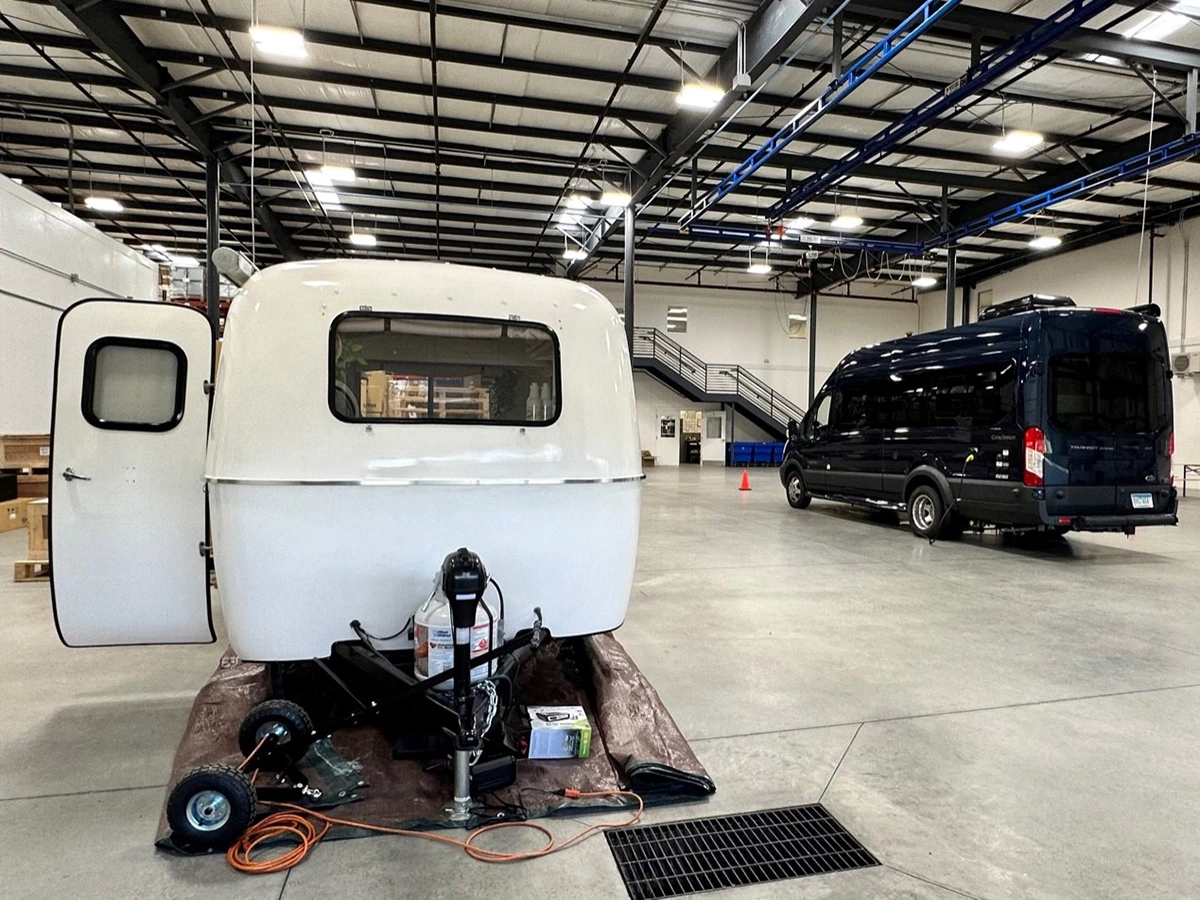
This was one of the most practical parts of our conversation with Mark.
Not every Truma product can simply replace an appliance in your existing RV.
Here is the basic breakdown:
- AquaGo: Yes. Specifically designed to replace many standard RV water heaters.
- Aventa: Sometimes. Roof dimensions, vents, solar panels, and other equipment have to be evaluated first.
- VarioHeat: Possible in certain applications, particularly direct-discharge furnace installations.
- Combi: Generally OEM installation only.
- Alde: OEM installation only.
- Saphir: Generally not offered as a retrofit because of the extensive interior ducting required.
The Combi and Alde systems integrate multiple utilities and components throughout the RV, which makes retrofitting them far more complicated than replacing a single water heater.
Why Small RVs and Overlanding Are Such a Natural Fit
Truma’s European heritage increasingly looks like an advantage in the North American market.
Class B vans continue to be popular.
Truck campers are attracting new attention.
Overlanding companies continue to introduce smaller, more rugged campers.
Many of those customers want exactly what Truma has spent decades designing:
- Compact equipment
- Low fuel consumption
- Low electrical demand
- Quiet operation
- Strong reliability
- Equipment capable of handling extended time away from hookups
Mark said truck campers have become one of Truma’s growing segments.
Overland manufacturers are also increasingly incorporating Truma systems as they move from small garage operations into larger-scale production.
The “Truma On Board” Symbol Is Worth Noticing
We spend a lot of time telling RV shoppers not to judge a camper solely by what they can see during a 15-minute walkthrough.
The shiny countertops and big television are easy to notice.
The quality of the hidden systems is harder to evaluate.
That is why we think there is real value in looking at the brands a manufacturer chooses for those systems.
Mark mentioned the Truma On Board symbol, which indicates that a manufacturer is using Truma equipment.
For us, that badge is worth noticing.
When a manufacturer spends more money on a furnace, water heater, or air-conditioning system because it wants a quieter, more efficient, and more reliable experience, that tells us something about its priorities.
Reliability Matters Because Vacation Time Matters
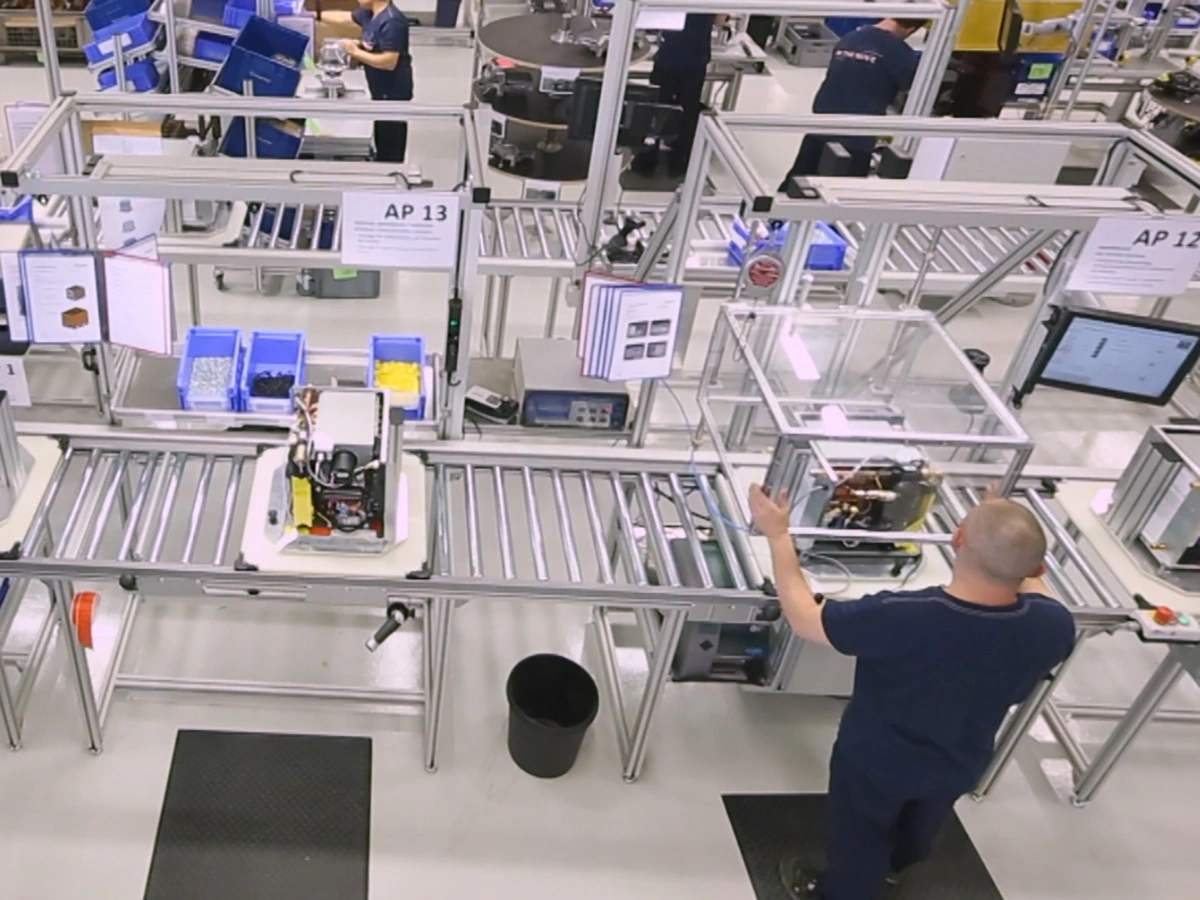
One of Mark’s comments near the end of the conversation really stuck with us. Many North American RV owners have limited vacation time.Maybe you have one major two-week trip with your family every summer. The last thing you want during that trip is a furnace that won’t heat the RV or a water heater that stops working.
We sometimes talk about RV quality as though it’s purely a technical issue. But ultimately, quality is about protecting the experience. The hot water should work when you come back muddy from a hike. The furnace should work when the temperature drops. The air conditioner should cool the RV without making everyone miserable from the noise. When appliances quietly do their jobs, you almost forget they’re there.
And that might be the best compliment we can give them.
Final Thoughts
We have used Truma products long enough that our enthusiasm is based on far more than a showroom demonstration.
We’ve bathed three little kids with the AquaGo. We’ve slept through cold nights with a Combi that didn’t wake us up every time the furnace cycled. We’ve experienced the remarkably even hydronic heat of the Alde. And we’ve enjoyed how quiet and unobtrusive the Saphir air conditioning can be inside a small teardrop trailer.
Those experiences have changed what we notice when we walk through a new RV.
A premium RV isn’t just about beautiful cabinetry or attractive upholstery.
Sometimes the most important upgrades are the ones hidden underneath a bench, tucked behind a cabinet, or mounted where you barely notice them.
When they’re engineered well, they don’t demand your attention. They simply make camping more comfortable.
And that’s exactly what great RV equipment should do.
We’ll see you at the campground.