On this week’s episode of The RV Atlas Podcast, we kicked off Season 12 (and celebrated the podcast’s 12th anniversary!) by talking directly to the newest members of the RV community—the RV Newbies. who just bought their first rig, are staring at it in the driveway with equal parts joy and trepidation, and are realizing that RVing has a real learning curve.
We love the excitement of the newbie stage. We remember being RV Newbies quite vividly. That enthusiasm is part of the magic. It’s also the thing that can lead to some stressful decisions if you are not prepared.
So we put together 28 Tips for RV Newbies, spread across two episodes. This week we’re sharing the first 13 tips—and we want you to think of these as your “calm, practical, take-a-deep-breath” checklist for getting through your first season with more confidence and less chaos.
Tip 1: Start with only what you need (and add items with intention)
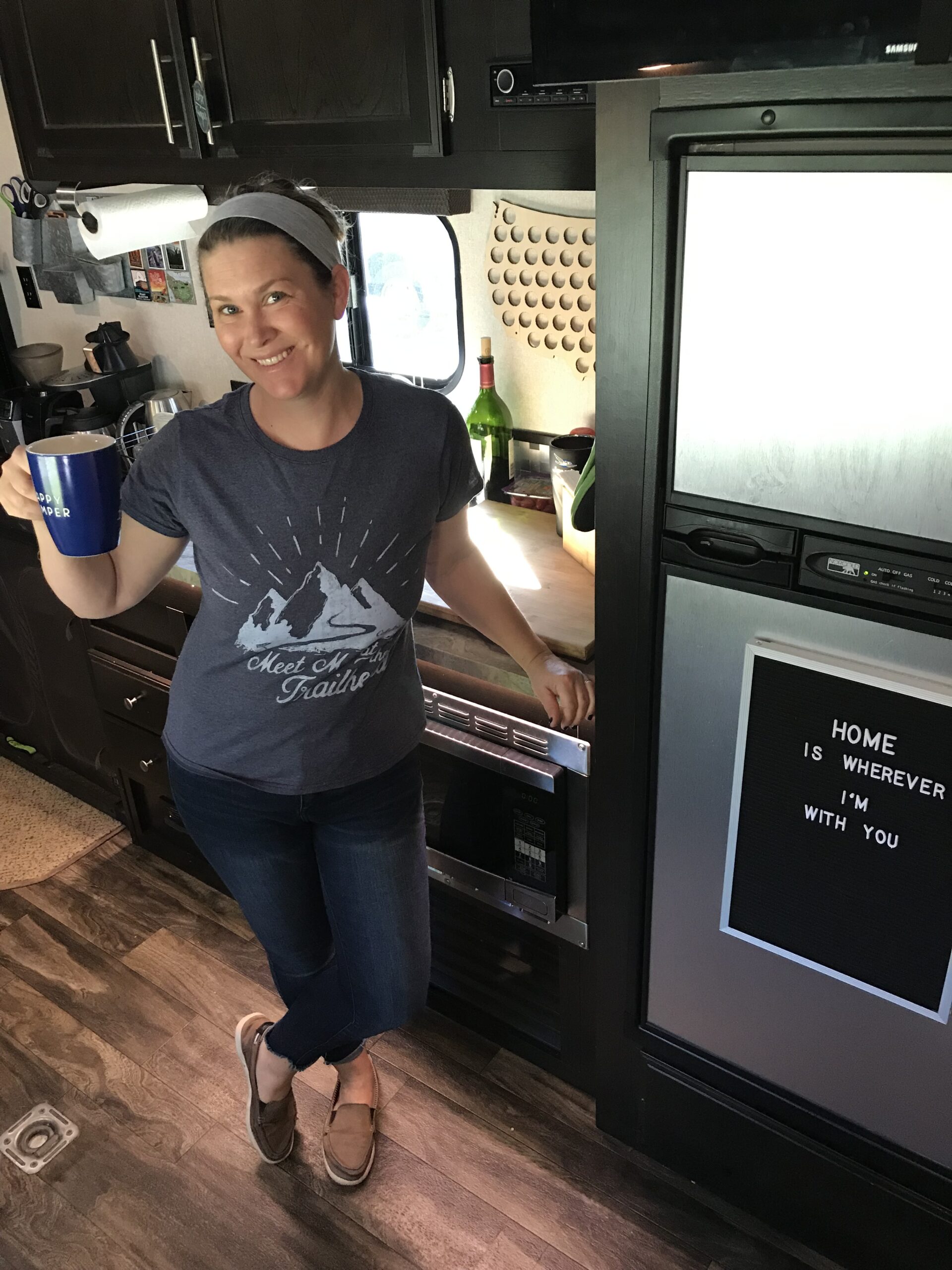
This first tip for RV newbies came straight from Janet Piedmont in the RV Atlas Facebook Group, and it’s so perfectly stated that we’re adopting it as official policy: follow the “Stephanie School of Thought” and begin with only the essentials. Too much stuff makes loading and unloading stressful, and the “buy everything at once” approach is a guaranteed way to waste money—because, as an RV. newbie, you don’t actually know what you’ll use until you’ve camped a few times.
There are true non-negotiables—things like a sewer hose, chocks, drinking water hose, and water pressure regulator. But beyond that, it’s easy to get sucked into a shopping spiral because every video and post makes it seem like you need a dedicated camping version of everything you already own. In reality, most RVers eventually build a hybrid setup that includes a few camping-specific pieces and a whole lot of “our favorite stuff from home.” Give yourself time to learn what your camping style really is before you buy the “nice-to-haves.”
Tip 2: Camp close to home on your first trip (and treat it like a systems test)

Your first trip is not the time to drive ten hours to the Great Smoky Mountains because the campground has a stone fireplace you saw on Instagram. The goal of trip #1 is to test everything: furnace, water, plumbing, electric, air conditioning, and all the “how does this work again?” systems that feel obvious after you’ve lived with them for a while.
Camping close to home makes troubleshooting less stressful for an RV Newbie. If something leaks, breaks, or wasn’t winterized correctly, you’re not stuck far away from your house, a store, or your dealer. We’ve had that “water on the bathroom floor” moment. We’ve had the “pipe isn’t tightened” moment. And we’ve also taken a rig straight to a big destination only to discover something major was wrong—meaning we spent vacation time working around a problem instead of relaxing. Your first trip should be purposeful and forgiving.
Tip 3: For your first trip, choose a private campground
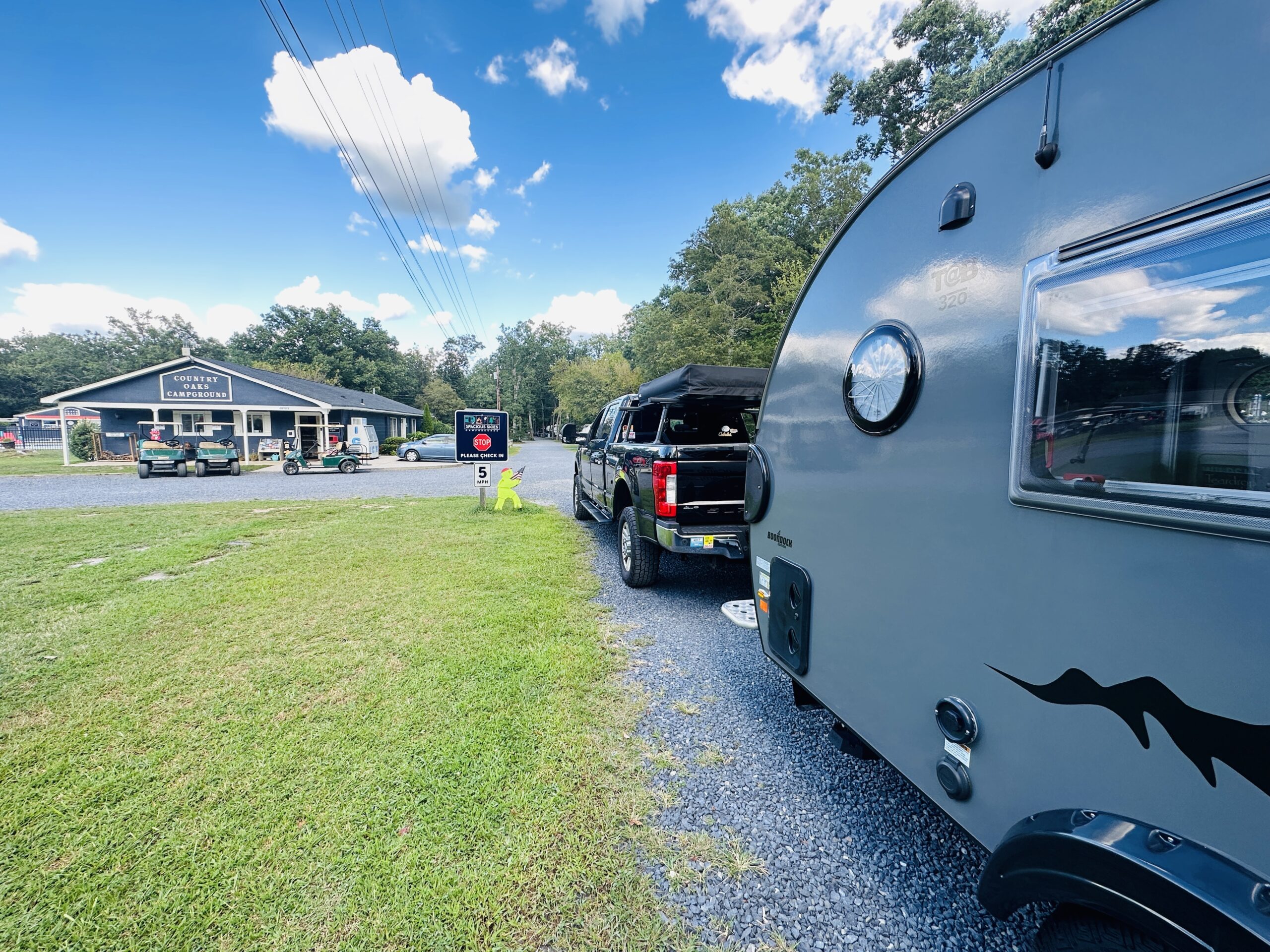
We love public campgrounds, but for trip #1, we strongly recommend a private campground (think KOA, Jellystone Park, Spacious Skies, or a solid mom-and-pop park). Private campgrounds are more likely to have full hookups (which you need for testing systems), wider roads, friendlier turning radiuses, and staff who actually expect to help RVers troubleshoot basic problems.
At many public parks, you might have a wonderful camp host—or you might not. Rangers and staff at public parks aren’t necessarily RV experts, and helping you get your propane system to cooperate may not be in their wheelhouse. Private parks are built for RV customers, and that convenience is a big deal when you’re learning.
Tip 4: Book a pull-through site for your first few trips
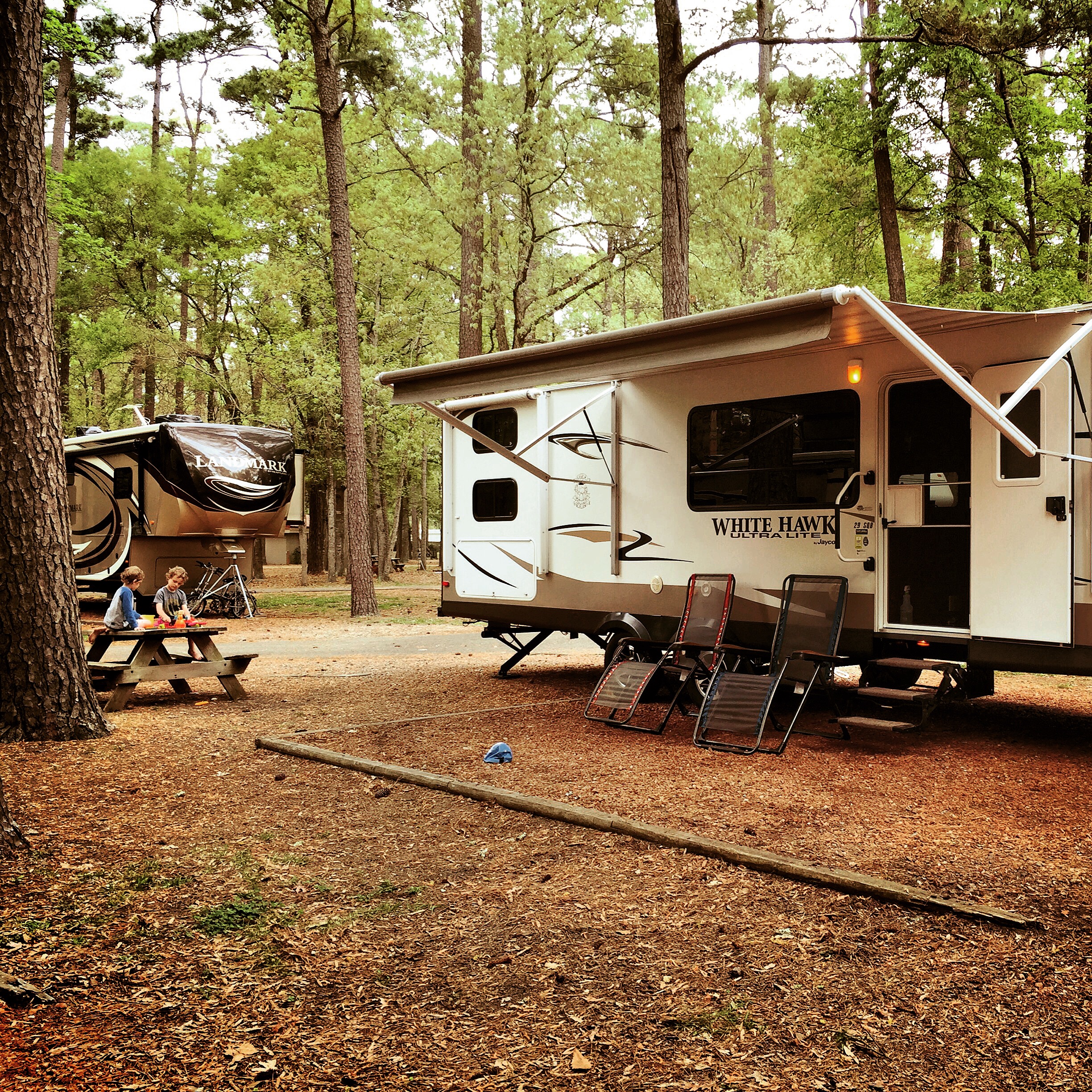
We know back-in sites are often prettier. We also know back-in sites can be a source of stress on your very first trip. Pull-through sites take one huge anxiety factor off the table: backing up.
If you’re one of the many RV newbies out there, give yourself the win. Pull in, breathe, get set up, and focus on learning your rig instead of having your first campground experience revolve around a high-stakes backing situation. You’ll get there. And yes, you absolutely should practice backing later (parking lot practice is your friend). But trip #1 isn’t the time to learn everything at once.
Tip 5: Use pull-throughs for overnights (and avoid unhitching if you can)
Roger in the RV Atlas Group made a great point: pull-throughs are especially valuable for overnight stops. If you can book a site long enough for your full setup (tow vehicle + trailer), you can sometimes skip unhitching altogether. That means you wake up, make coffee, and roll out—no morning hitching stress. This is one of those “once you discover it, you never go back” strategies. It’s not about being lazy—it’s about reducing the number of complicated steps on travel days.
Tip 6: Divide and conquer during setup (especially if you have kids)
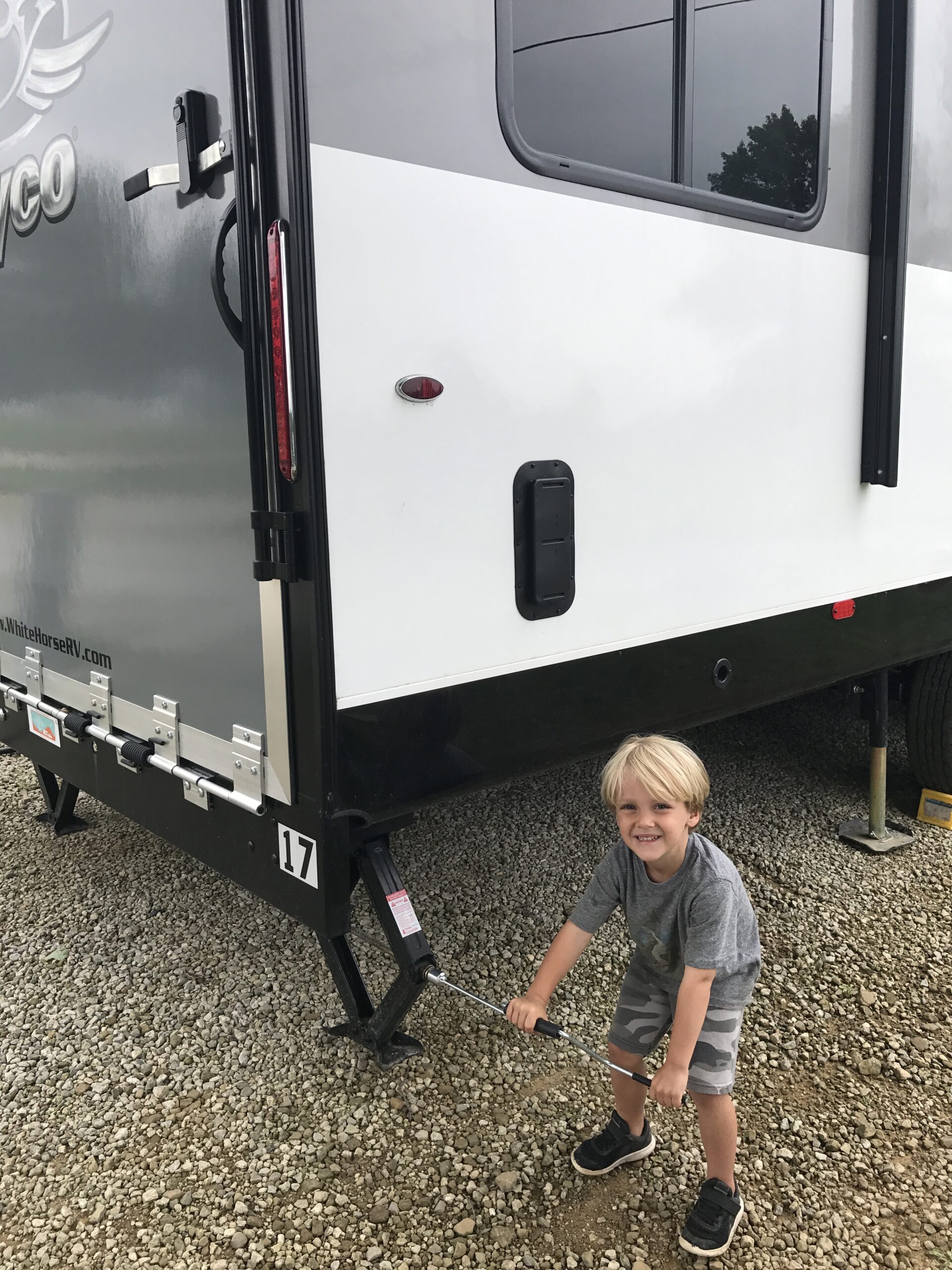
Kids are amazing. Kids can also be extremely distracting during RV setup—and distraction is how expensive mistakes happen. Early on, we learned that we needed a system: one person sets up while the other takes the kids to the playground or keeps them safely out of the way. Over time, that evolves into kids having real jobs: chairs, rugs, door mat, whatever fits your routine.
The point is to avoid the “everyone crowds the door while you’re trying to level” moment. Create roles. Keep it calm. And remember: you’ll get faster and smoother as you learn.
Tip 7: Ask for help (and ignore the gatekeeping)
This is the tip that sparked one of our most honest conversations of the episode: asking for help can feel harder than it should—especially for men who feel judged by “know-it-all RV guys.” But here’s the truth: most RVers are friendly, community-minded, and genuinely want to help you love RVing as much as they do.
We still remember a night in the early pop-up years when we were RV newbies and couldn’t get the furnace running and the temperature was dropping fast. Experienced campers walked over and solved it quickly—by teaching us to bleed the propane lines (and one common trick: lighting the stove first). Today, that’s second nature. Back then, it was the difference between a cozy night and packing up. Asking for help is how you learn faster.
Tip 8: Don’t let strangers help you back in
Yes, we know we just said RVers are helpful. But there’s one area where “help” can make things worse: backing into your site.
When strangers gather (sometimes with coldies cracked open like it’s live entertainment), it adds pressure. It makes you flustered. And it can interfere with the way you and your partner communicate. Our recommendation: have your own spotter for safety, but politely decline the crowd. You need practice and calm—not an audience.
Tip 9: Find great camping buddies
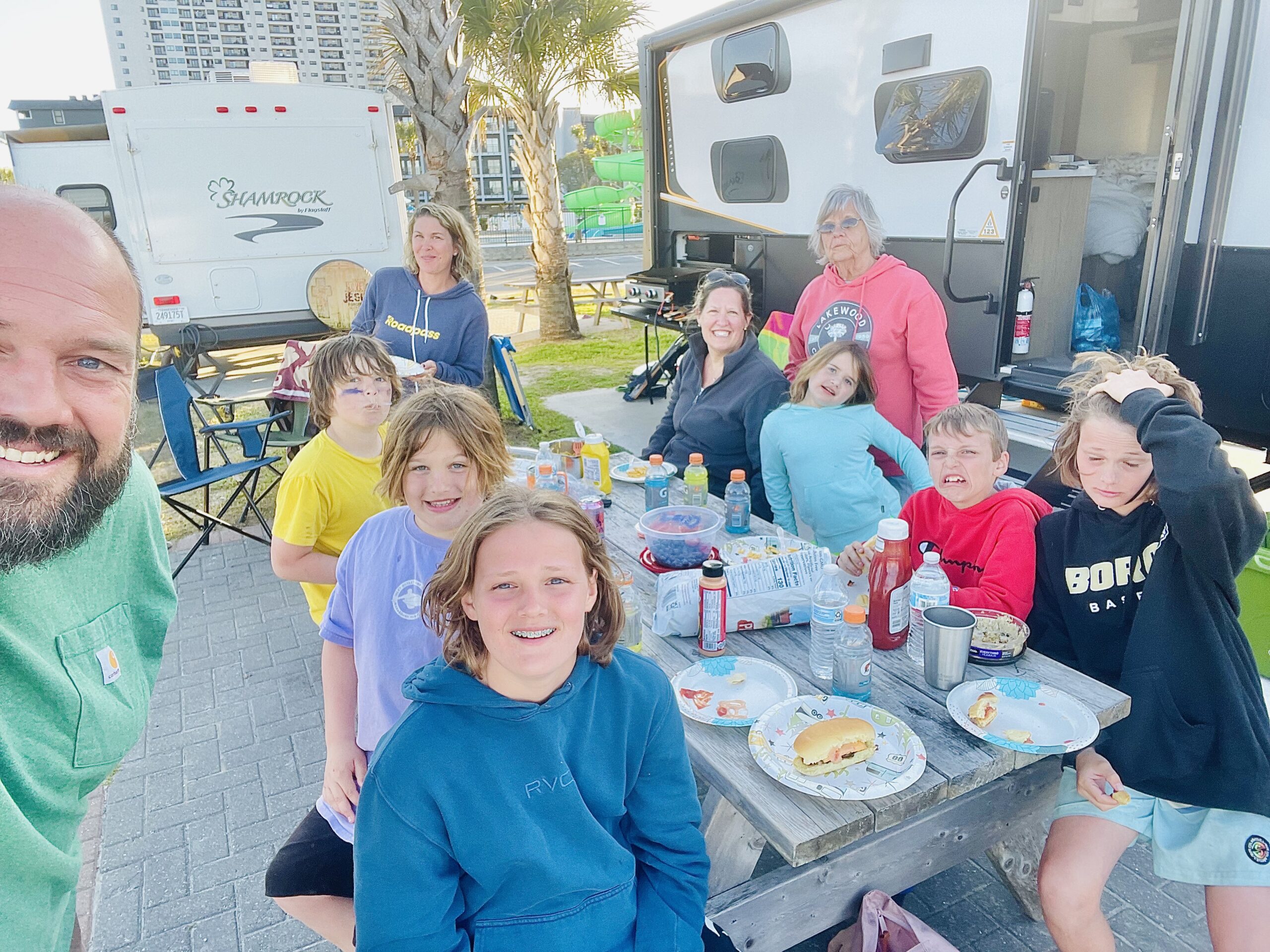
Camping is better with friends—especially friends who “get” your phase of life. Over the years we’ve been incredibly lucky to camp with families who became true camping buddies. The magic isn’t just social; it’s practical. When you camp together, you can share meals, share responsibilities, and make the whole weekend easier.
If you have kids, camping with another family with similarly aged kids is like flipping a switch. The kids disappear into play, and parents get to exhale. And if you don’t have camping friends yet, don’t assume that’s permanent—people meet camping buddies through work, through campgrounds, and yes, through Facebook groups all the time.
Tip 10: Find your towing “max” and respect it
Everyone has a different towing limit. Some people can tow 16 hours and feel fine. Others are done at six. The key is to learn your personal max before you build an itinerary that depends on pushing past it.
This can be a real tension point for families, especially when vacation days are limited and it feels like every extra stop “wastes” time. But exhaustion is expensive, too—fatigue leads to mistakes, frustration, and a trip that starts with stress instead of excitement. Start slow. Build confidence. You can always go farther later.
Tip 11: Use your RV at rest stops (it’s one of the best perks of RVing)
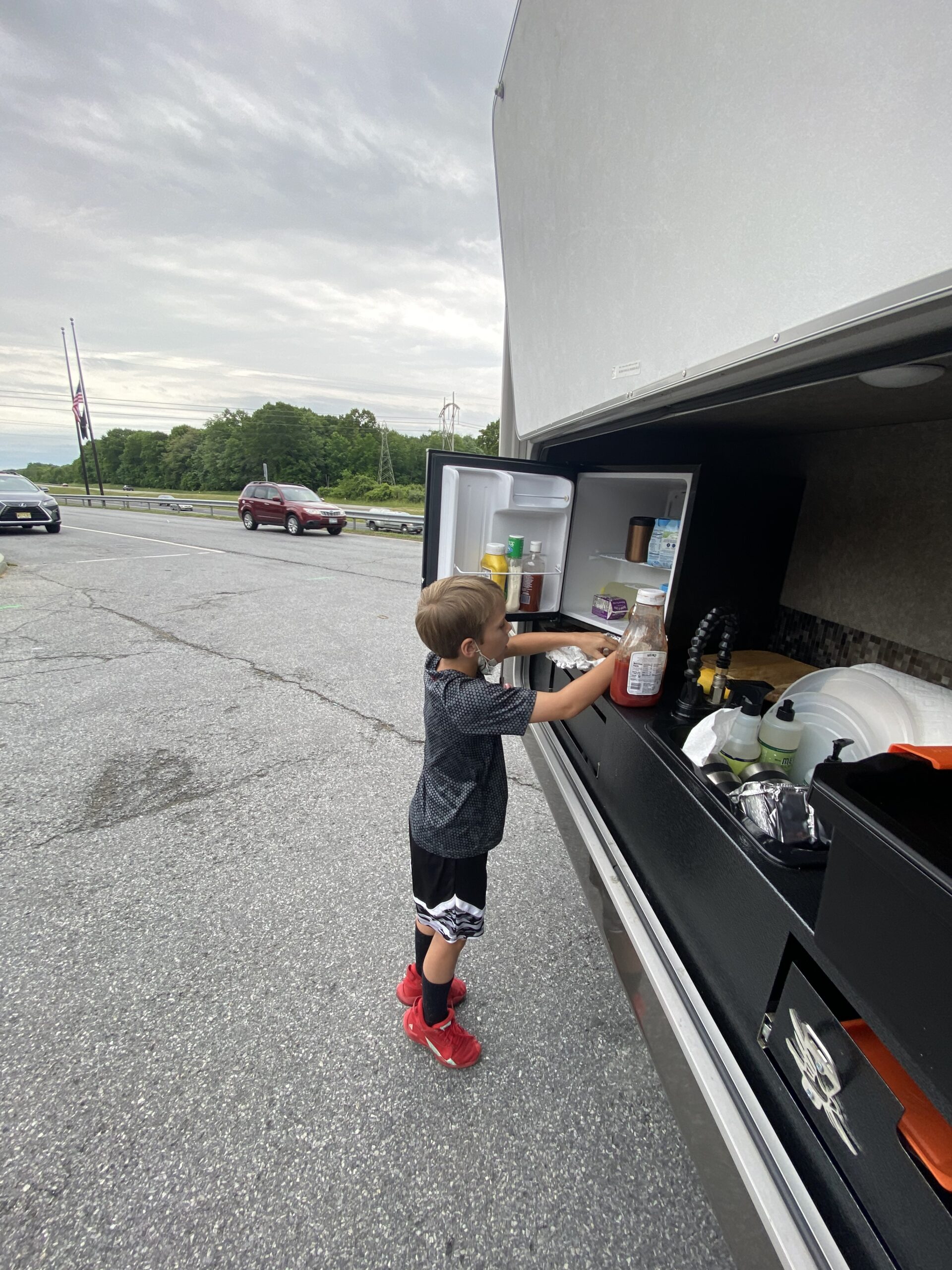
Roger’s tip here is simple but powerful: rest stops are better when your kitchen and bathroom are always with you. Instead of dragging kids into a gross bathroom, you can pull into a safe spot, use your own facilities, and eat snacks you already packed.
It’s one of those moments where RVing feels like a cheat code: you’ve got a clean bathroom, your own table, and your own food—no lines, no chaos, no dirty rest stop bathrooms!
Tip 12: Arrive before dark when you can
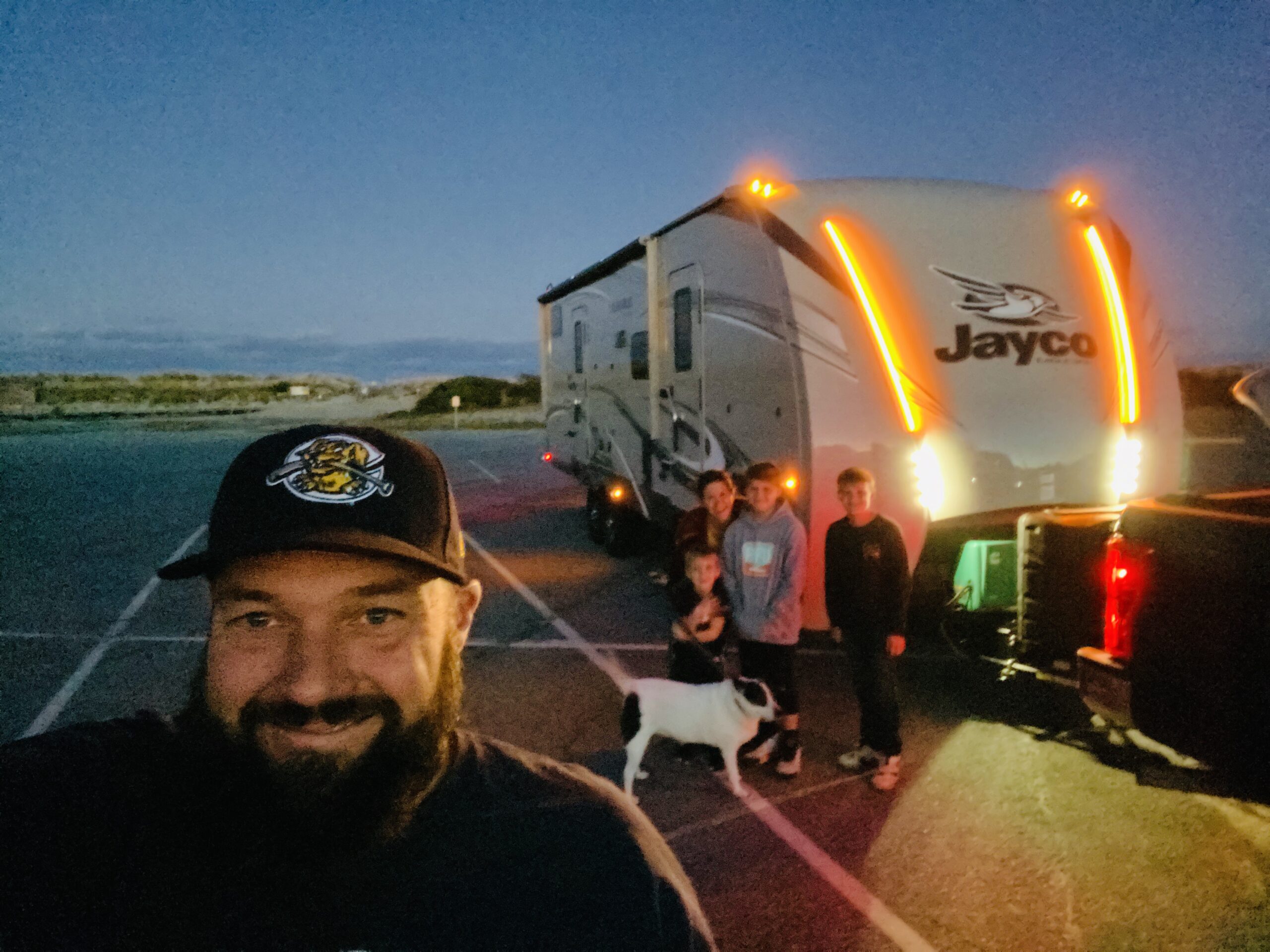
We have arrived after dark many times. We do not recommend it—especially when you’re new. Finding your site can be harder than you expect, and everything takes longer in the dark: leveling, hookups, checking your surroundings, and just getting settled.
If you can take a half day off, do it. Use the PTO. Arriving in daylight reduces stress and makes your first campground experience feel manageable.
Tip 13: Find low-stress options within each trip
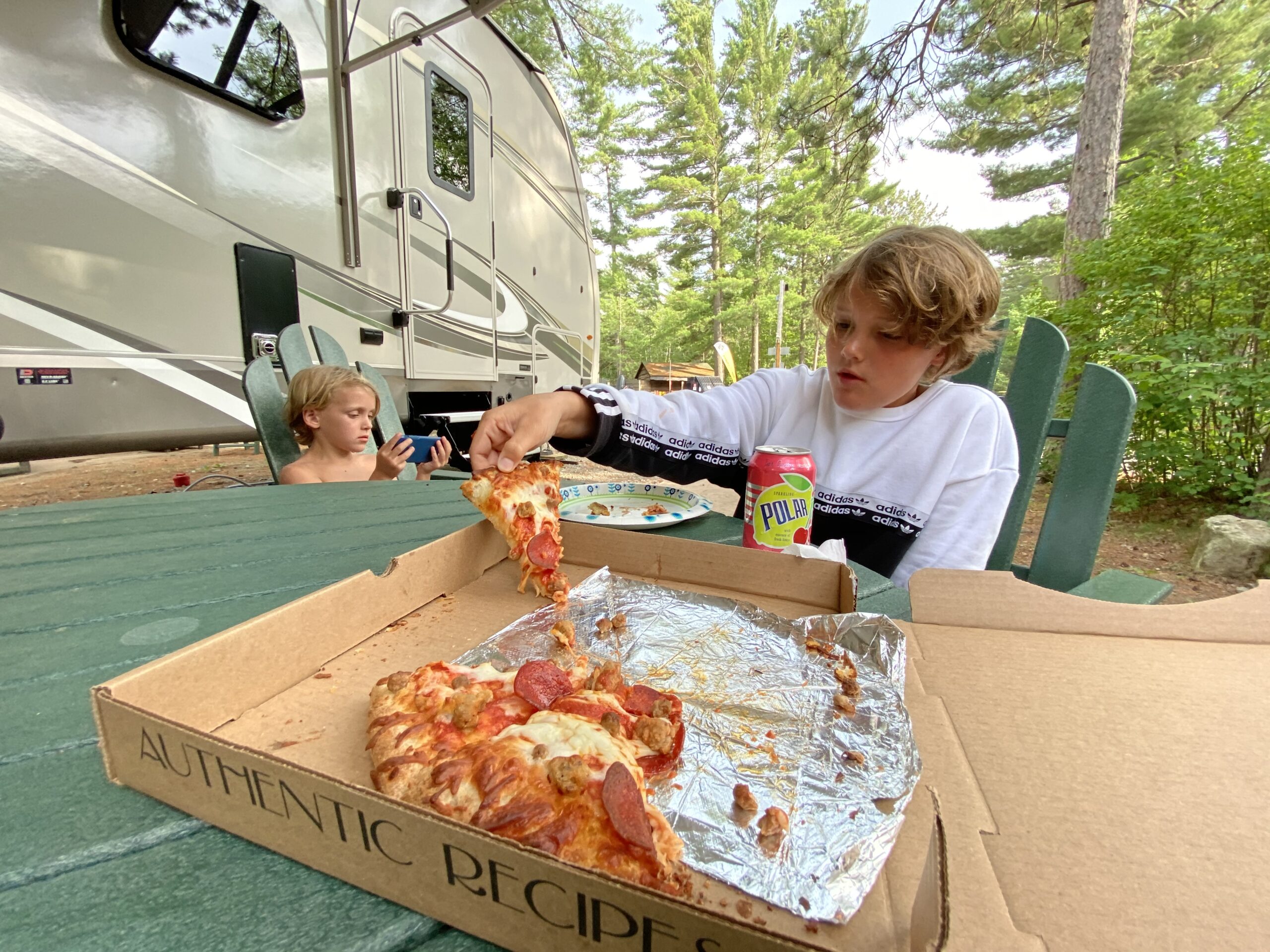
This tip from Eric Hollis is one of the most important “long game” lessons in RVing: don’t overcomplicate everything. RVs make it possible to do a lot—full outdoor living room setup, gourmet meals, elaborate campfire cooking. That’s fun sometimes. But it shouldn’t be the baseline expectation every weekend.
Some of the best camping advice we ever learned was giving ourselves permission to keep it simple. Pizza on Friday night is still camping. Subs on the way in still counts. Tossing down chairs and calling it a night is sometimes the most realistic path to actually enjoying the weekend. Your goal isn’t to impress anyone—it’s to have fun together and build memories.
Wrapping Up
Those are our first 13 tips for RV newbies, and we’re coming back in part two with the remaining 15. If you’re new to RVing, we’re genuinely excited you’re here—and we want to make sure your first season feels doable, not overwhelming.
Join us in the RV Atlas Facebook Group for support, troubleshooting, and the friendliest RV community on the internet—and if you want an even deeper roadmap for getting started, check out Where Should We Camp Next? Camping 101.
We’ll see you at the campground.