An epic RV trip through Western Canada doesn’t have to be all mountains, lakes, and national parks. After exploring Calgary, Banff, then Jasper, the Icefields Parkway, and several other spectacular destinations in the Canadian Rockies, Gretchen Holcombe and her family headed west toward Vancouver for the final leg of their adventure.
This stop offered a completely different experience from the first two parts of the trip. Instead of filling every day with mountain hikes and scenic drives, the family mixed outdoor adventures with great coffee shops, historic sites, museums, restaurants, and some of Vancouver’s most popular attractions.
They also discovered an excellent campground in the charming community of Fort Langley, found a workable strategy for getting into Vancouver, biked and drove through Stanley Park, crossed the famous Capilano Suspension Bridge, solved a murder mystery in Gastown, and finished their Vancouver adventures with a rainforest hike filled with waterfalls—and a surprising number of banana slugs.
Here’s how to plan the Vancouver portion of an epic Western Canada RV trip.
Driving from the Canadian Rockies to Vancouver
Before arriving in Vancouver, Gretchen’s family spent a couple of days in Revelstoke, a mountain town that didn’t make it into the previous episodes simply because there was already so much ground to cover.
Revelstoke is smaller and less touristy than Banff and Jasper, but it still makes a worthwhile stop on a Western Canada itinerary. The town is best known as a ski destination, but there is plenty to enjoy during the summer as well.
The drive from the mountains toward Vancouver was also an experience in itself. Over roughly six hours, the scenery changed dramatically. The route moved from the mountains through a surprisingly dry, high-desert landscape before eventually entering the lush Pacific Northwest.
It felt a little like compressing the geography of the western United States into a single day of driving.
Where to Camp Near Vancouver
Choosing a campground for a Vancouver RV trip presents an interesting dilemma. RVers can stay close to the city and sacrifice some campsite space, or camp farther outside Vancouver and enjoy a more traditional campground experience.
Gretchen considered both approaches.
Capilano River RV Park
For RVers who want to prioritize easy access to Vancouver, Capilano River RV Park has an impressive location.
The campground is just minutes from Stanley Park, making it an excellent base camp for exploring the city. Reviews of the campground frequently mention tight sites, which initially made Gretchen hesitant to book there.
After visiting Vancouver and realizing just how convenient the location is, however, she reconsidered that decision. For a future visit, she might be willing to trade a little campsite space for such easy access to the city.
Fort Camping in Fort Langley
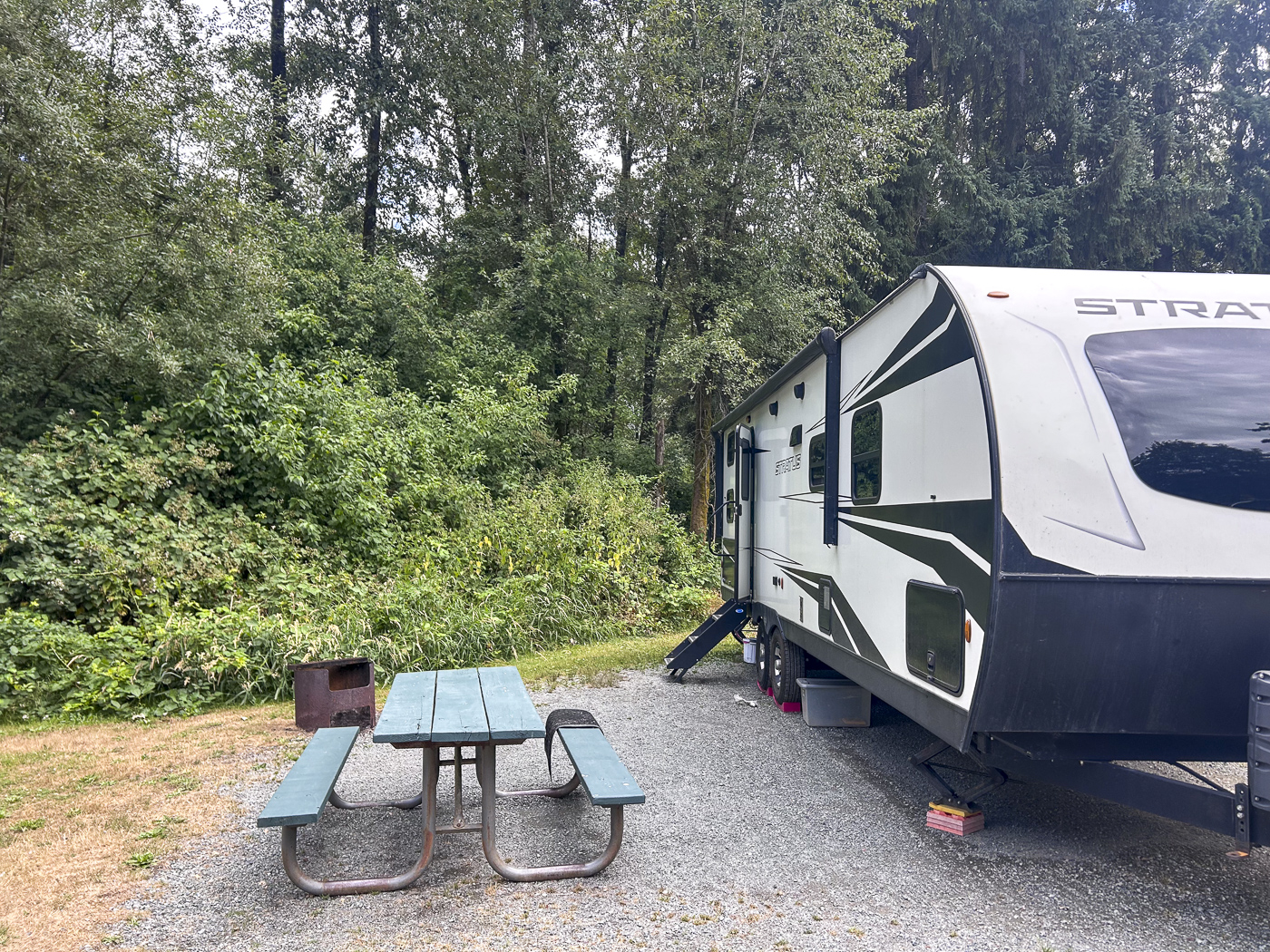
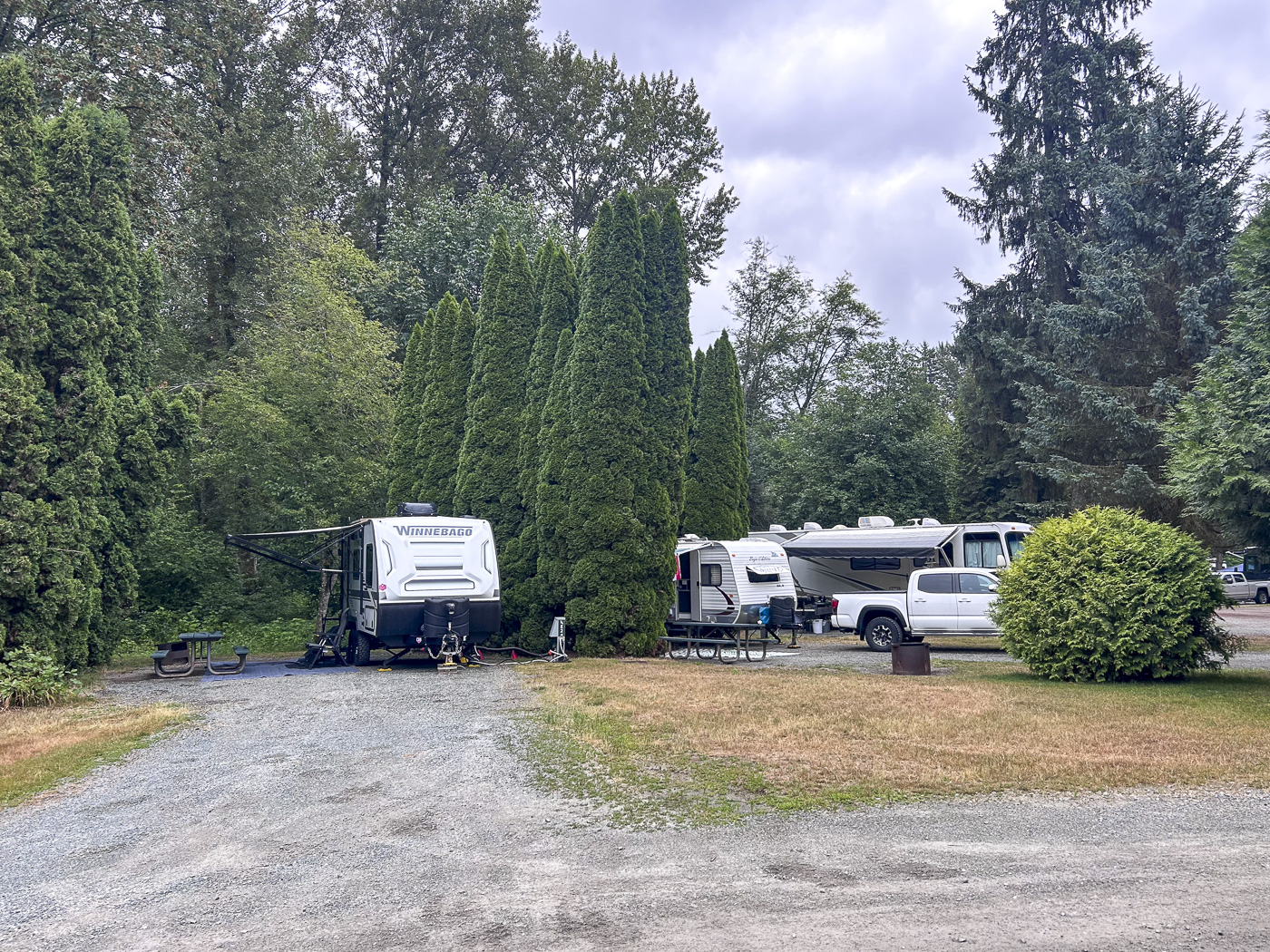
For this trip, the family chose Fort Camping in Fort Langley, about 45 minutes east of Vancouver when traffic cooperates.
That meant a longer trip into the city, but the campground itself became one of the pleasures of the Vancouver stay.
Fort Camping is located directly across the bridge from downtown Fort Langley. From the campground entrance, visitors can reach restaurants, coffee shops, stores, and attractions within minutes on foot.
For RVers who love campgrounds that allow them to park the truck and walk into town, this is a terrific option.
Most campsites are long, back-in gravel sites, although some pull-throughs are available. There isn’t a tremendous amount of privacy between sites, but there is landscaping, along with enough outdoor space for a picnic table and fire pit.
During Gretchen’s stay, full-hookup sites were around $60 Canadian per night, making the campground feel like a particularly good value after accounting for the exchange rate.
Amenities are fairly simple. There are laundry facilities, a small playground, and a seasonal camp store, but no swimming pool or extensive resort-style recreation.
Showers are coin operated, so make sure you have some Canadian currency handy. A loonie is the Canadian one-dollar coin, while a toonie is the two-dollar coin.
The campground also sits alongside a popular walking and biking path that can be followed toward town or farther along the river.
But the biggest amenity here is really Fort Langley itself.
Exploring Fort Langley
Fort Langley is small, charming, and surprisingly packed with things to do.
The family made it a goal to try a different coffee shop nearly every morning, which turned out to be a pretty great way to explore town.
Republica Coffee Roasters
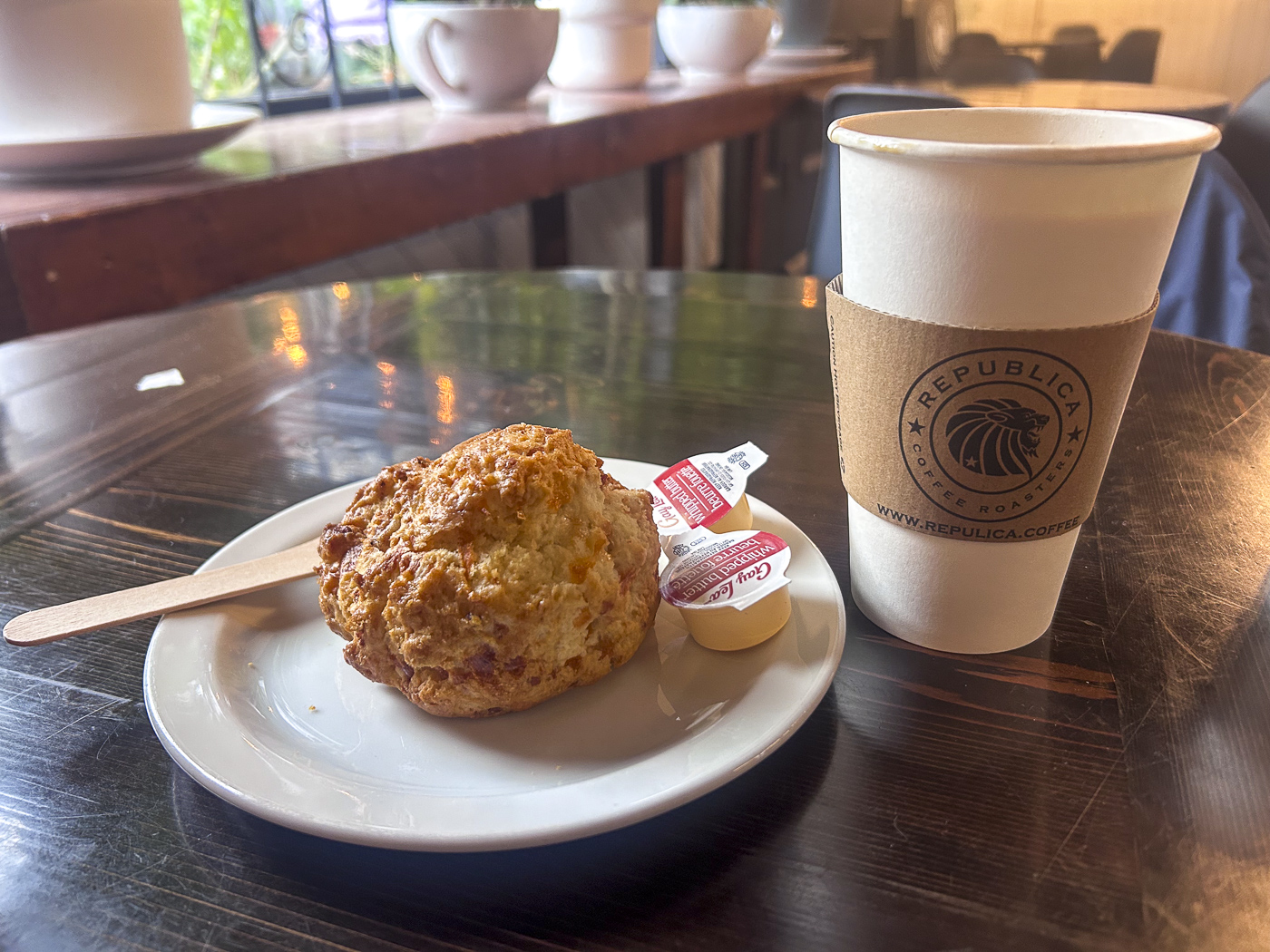
Republica Coffee Roasters was one of Gretchen’s favorite coffee stops. In addition to drinks and a small selection of baked goods, it was a good place to buy coffee to take along for the next leg of the trip.
Blacksmith Bakery
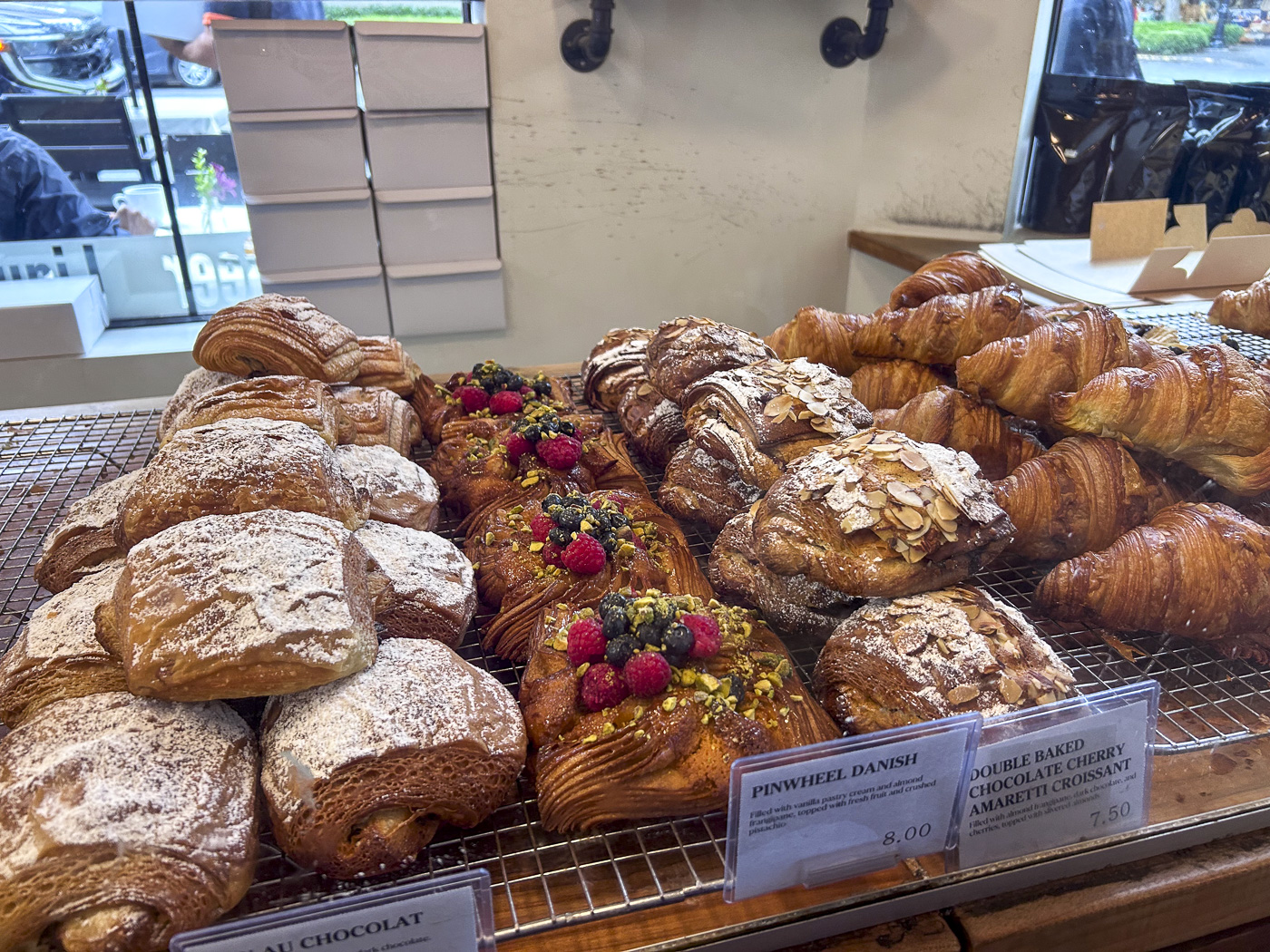
Blacksmith Bakery paired excellent coffee with beautiful pastries and was good enough to warrant more than one visit.
Wendel’s Bookstore & Cafe
Wendel’s combines several of the RV Atlas’s favorite things: books, coffee, and breakfast.
Unlike a simple coffee shop, Wendel’s has a full breakfast menu, and the family enjoyed breakfast outside on the patio one morning.
Trading Post Eatery
For a meal in town, Gretchen recommends Trading Post Eatery. The brewery is based in nearby Langley and has an eatery in Fort Langley with a lovely outdoor patio.
There are plenty of other restaurants around town that Gretchen would like to try on another visit, but trips into Vancouver meant there were only so many meals available for exploring the local dining scene.
Visit Fort Langley National Historic Site
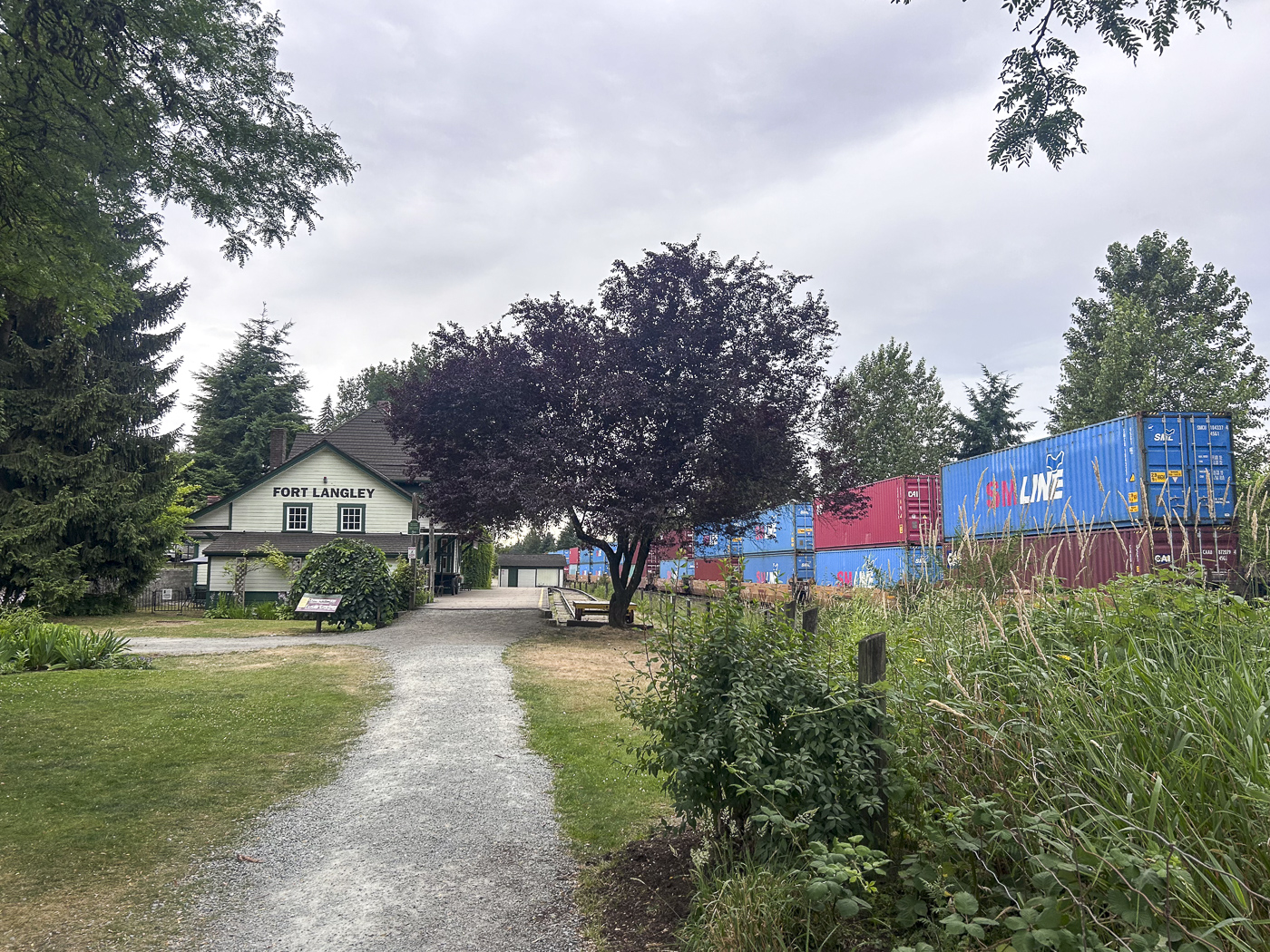
The actual Fort Langley is also within walking distance of the campground.
Fort Langley National Historic Site is a Parks Canada site centered around a 19th-century fur trading post. Visitors can explore historic buildings, visit the blacksmith shop, interact with interpreters, and learn about life at the fort.
Families should look for the kids’ activities available at Parks Canada sites. Children can complete activities and earn an explorer badge, similar in spirit to the Junior Ranger programs at U.S. national parks.
Plan on spending a couple of hours here before wandering back into town—or simply walking back to the campground.
Getting from Fort Langley into Vancouver
The downside of staying in Fort Langley is obvious: you aren’t actually camping in Vancouver.
Gretchen researched public transportation before the trip and hoped there might be an easy way to leave the truck behind at the campground. Unfortunately, getting from Fort Langley to Vancouver entirely by public transit required multiple connections.
Vancouver itself has an excellent rapid-transit system, the SkyTrain, but it doesn’t currently extend to Fort Langley.
The family experimented with two approaches during their three trips into Vancouver.
For one visit, they drove approximately 30–35 minutes to the Scott Road Park & Ride. This worked particularly well because the station had a large surface parking lot, an important consideration for anyone driving a large tow vehicle that doesn’t fit comfortably in parking garages.
From there, they took the SkyTrain approximately 35 minutes to Waterfront Station in downtown Vancouver.
The elevated ride provided views of the water and city skyline and eliminated the hassle of downtown parking. However, the entire process took longer than simply driving.
For the other two visits, they drove into Vancouver.
The lesson? Match your transportation strategy to your plans for the day. The SkyTrain makes sense when you’re heading directly downtown and don’t want to deal with parking. Driving can be more efficient when you’re exploring attractions outside the city center.
And regardless of which option you choose, try to avoid rush hour.
Spend a Day at Stanley Park
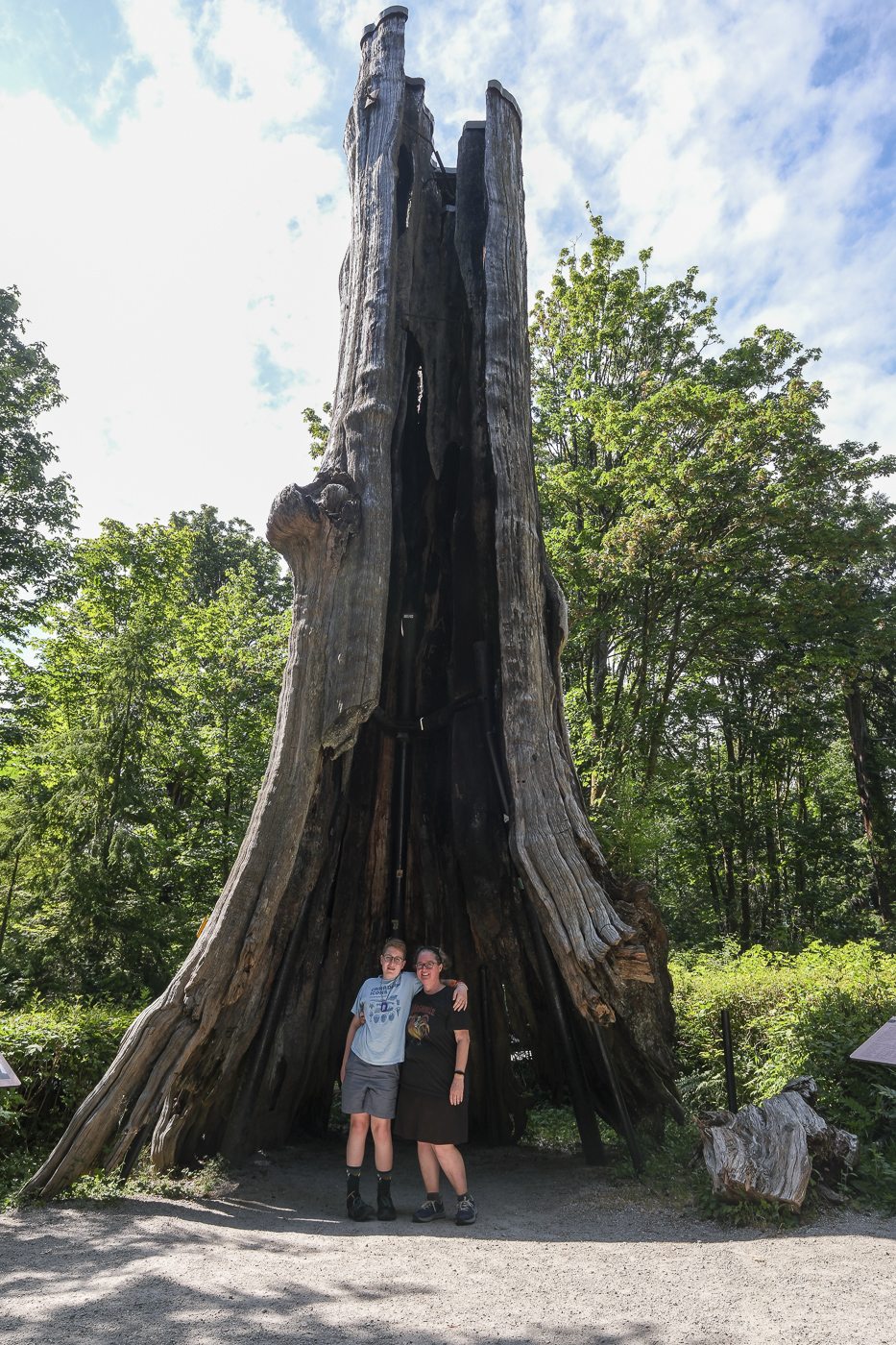
If Gretchen had to choose one Vancouver highlight, it would be Stanley Park.
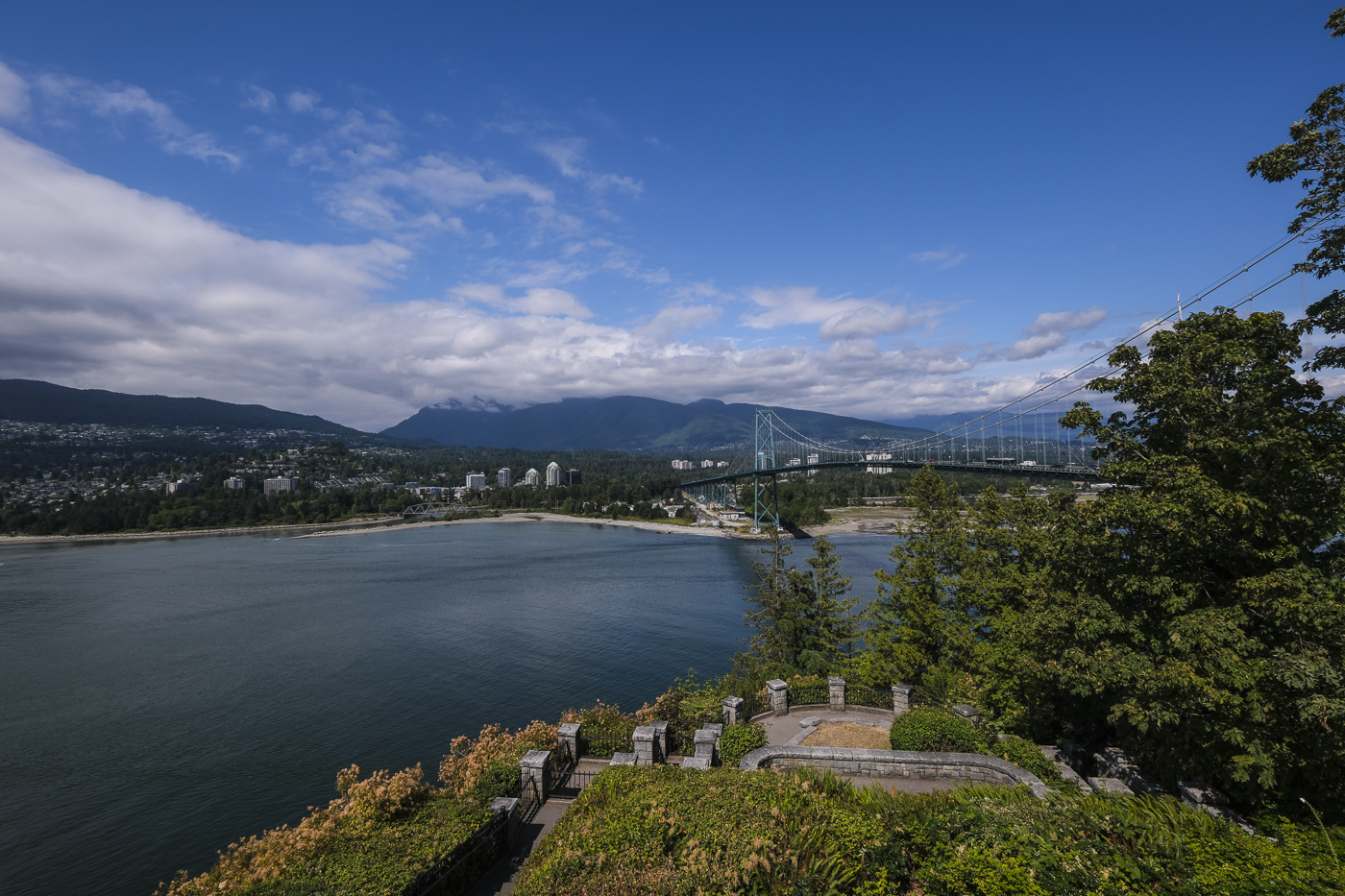
This enormous waterfront urban park combines rainforest, shoreline, trails, gardens, attractions, and the famous seawall into a destination that could easily fill an entire day.
Gretchen’s oldest son Ari and his girlfriend Abby rented bikes and rode around the park, while the rest of the family explored by vehicle.
The complete loop is roughly seven miles, making biking an excellent option for visitors who want to experience the park at a leisurely pace. Driving works well too, particularly if you want to stop at viewpoints and explore different areas along the way.
For the driving tour, Gretchen recommends the GuideAlong app. The narrated tour points out worthwhile stops and also helps visitors decide what they can skip when time is limited.
Stanley Park was one of those places where the family wished they had scheduled even more time. The combination of water, rainforest, and city views makes it feel surprisingly removed from an urban environment.
After exploring, they regrouped at Stanley Park Brewing for pizza and beer.
Gretchen would happily return and devote an entire day to Stanley Park. The Vancouver Aquarium, which they didn’t have time to visit, is already on her list for a future trip.
Pair Stanley Park with Capilano Suspension Bridge Park
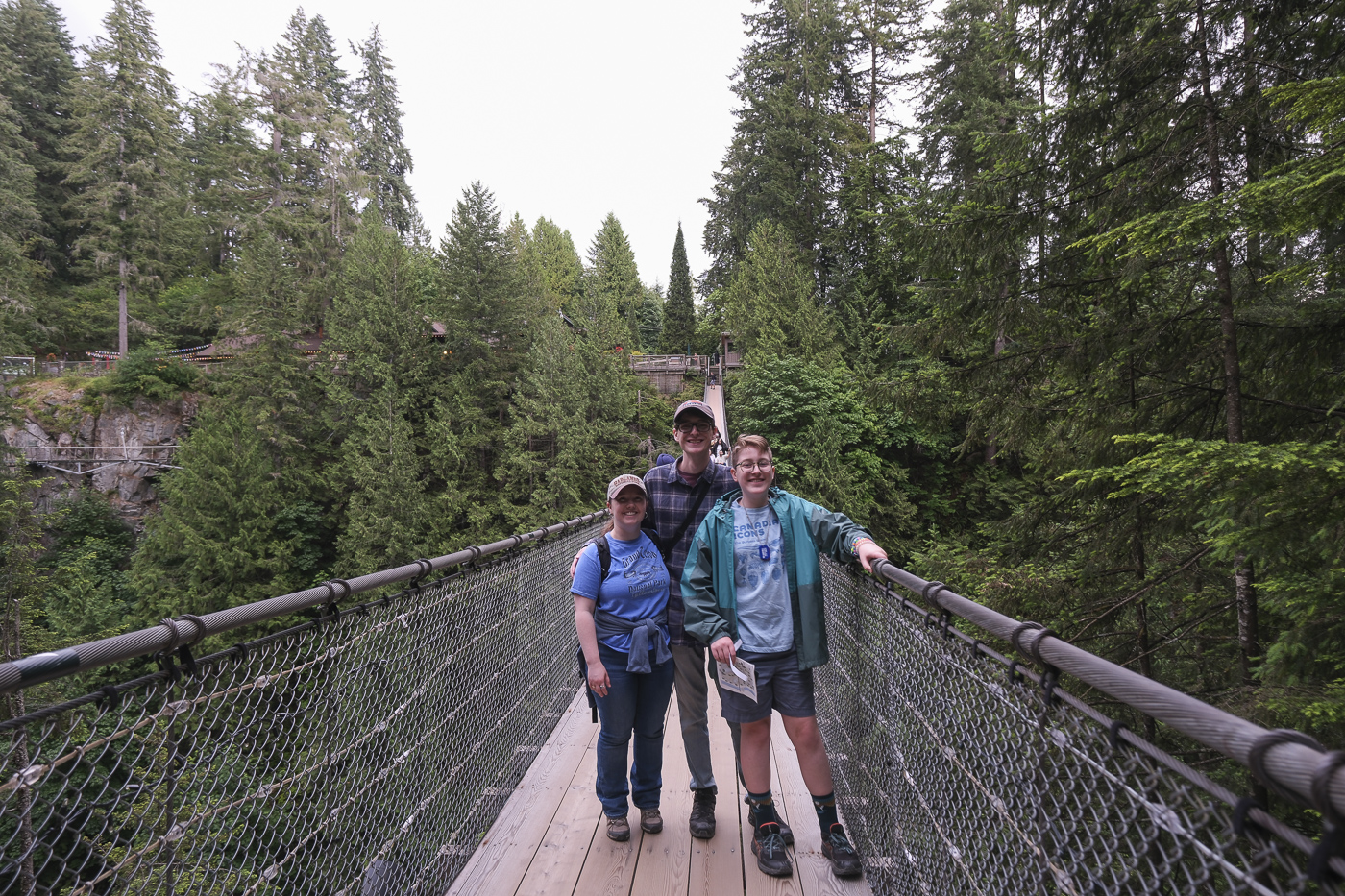
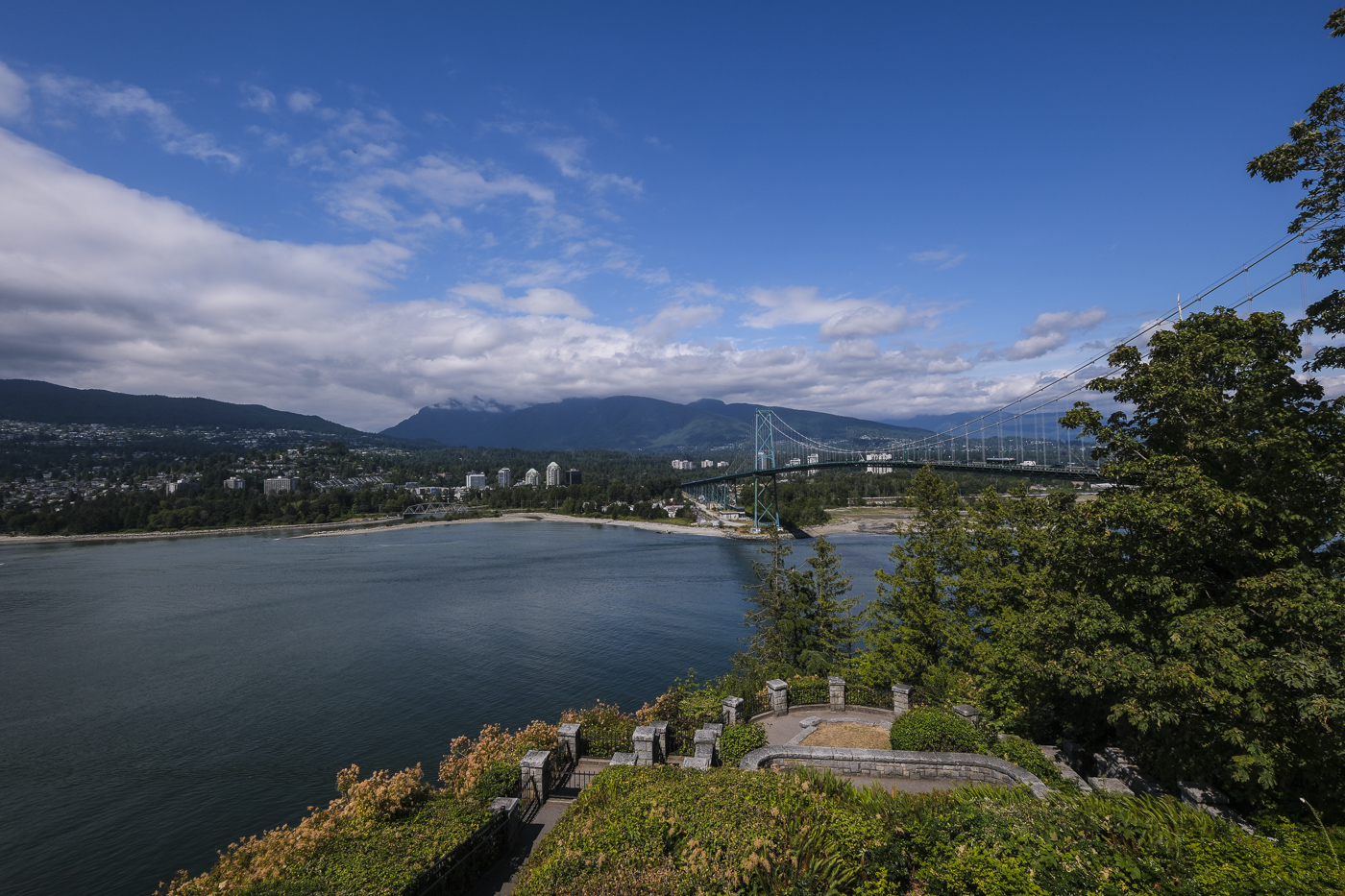
One of Gretchen’s best Vancouver planning strategies was pairing Stanley Park with Capilano Suspension Bridge Park.
Capilano is located just across the iconic Lions Gate Bridge and less than a 10-minute drive from Stanley Park. The family spent the afternoon exploring Stanley Park, ate dinner, and then headed to Capilano after 5 p.m.
That timing had two major advantages.
First, summer visitors arriving after 5 p.m. could take advantage of a 25-percent twilight discount during their visit.
Second—and perhaps even better—the crowds had largely disappeared.
The family could see the ropes and queue areas designed to handle daytime crowds, but during their evening visit there was hardly anyone waiting for the bridge.
The famous suspension bridge stretches about 450 feet across the gorge, roughly 230 feet above the Capilano River. Gretchen found the amount of sway slightly more adventurous than she expected.
But the suspension bridge isn’t the only attraction.
Visitors can also explore elevated walkways through the trees and the Cliffwalk, a series of narrow walkways suspended along granite cliffs above the river.
Allow a couple of hours to explore the property at a relaxed pace. Gretchen felt the experience was worth the admission price—particularly with the twilight discount and significantly smaller evening crowds.
Solve a Mystery in Gastown
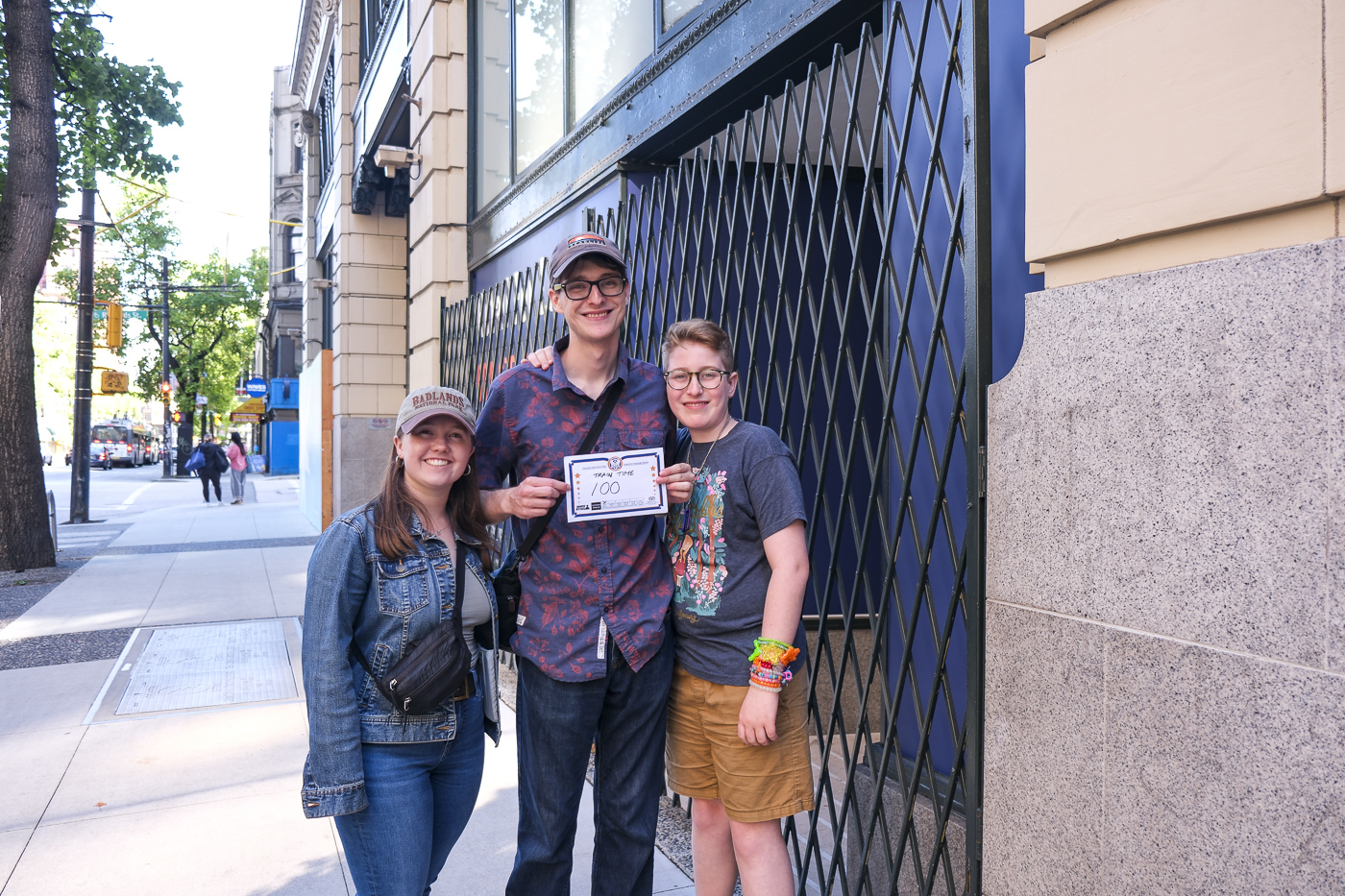
Gastown is one of Vancouver’s most recognizable tourist districts, with cobblestone streets, Victorian-style architecture, shops, restaurants, and its famous steam clock.
But Gretchen sometimes finds that simply walking through a tourist district can feel a little directionless. Once you’ve admired the buildings and watched the clock, what do you actually do?
Her solution was Vancouver Mysteries.
Instead of an app-based scavenger hunt, participants meet a costumed character at a physical location and receive a kit for solving a mystery. Gretchen’s family tackled a murder mystery that sent them around Gastown solving puzzles and looking for clues.
The activity gave the family a reason to explore the neighborhood more carefully while keeping everyone engaged.
And yes, they solved the mystery.
Even better, they were told they had earned the highest score of the day.
For families with older kids or teens who aren’t necessarily thrilled by the prospect of simply wandering through another historic district, experiences like this can be a great travel tool.
Eat at the Old Spaghetti Factory
After solving their Gastown mystery, the family headed to the Old Spaghetti Factory.
This isn’t a recommendation for travelers looking for Vancouver’s most sophisticated culinary experience. It’s a recommendation for people who appreciate a little kitsch.
The restaurant features over-the-top nostalgic decor, including a full-size trolley car inside the Vancouver location. The menu is classic Americanized Italian food, with meals offering multiple courses at a relatively affordable price for a major tourist district.
For visitors from parts of the country without an Old Spaghetti Factory, it can be a fun taste of Pacific Northwest nostalgia—and an entertaining family meal after a day of sightseeing.
Museum of Anthropology at the University of British Columbia
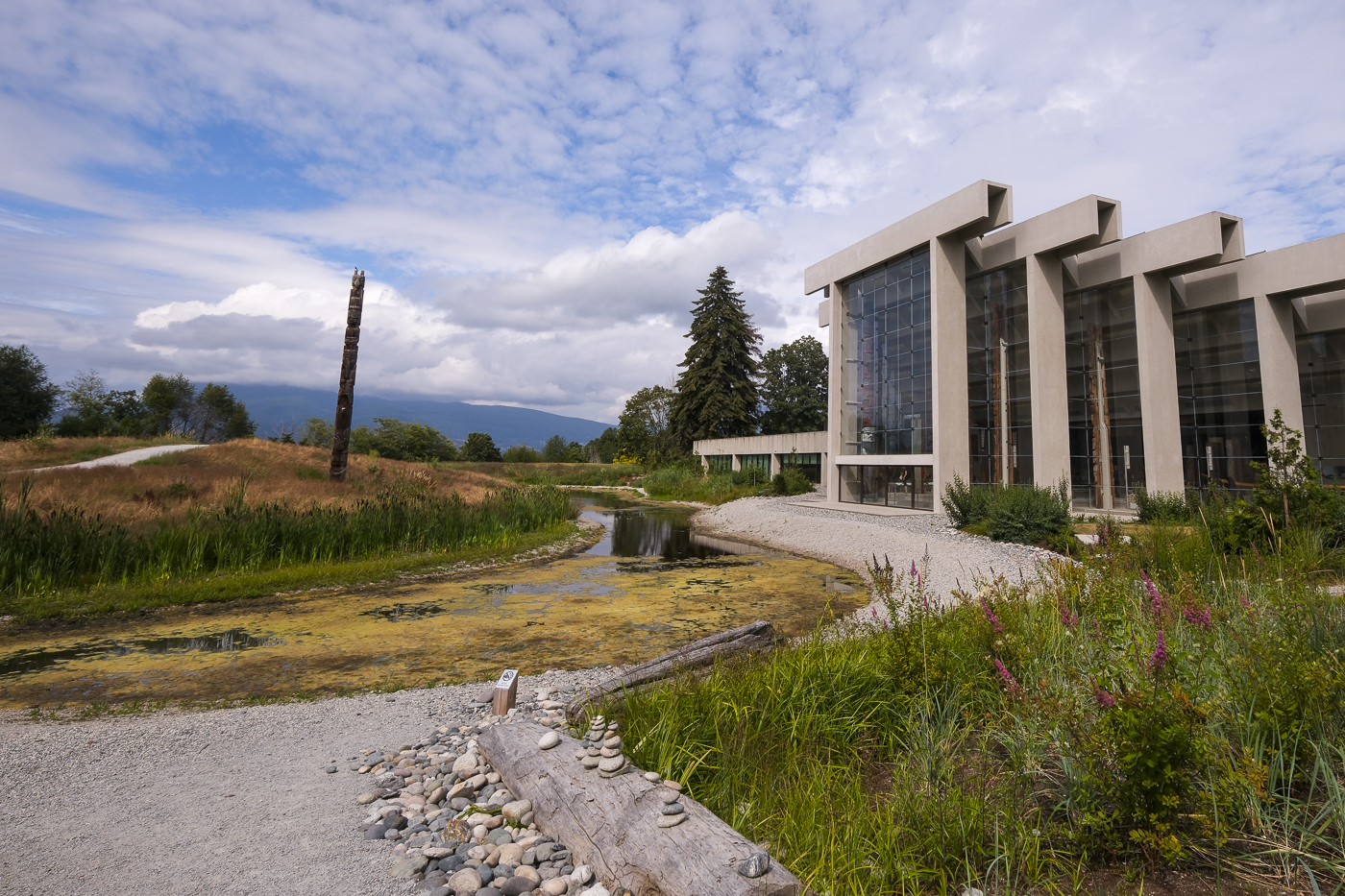
The Museum of Anthropology on the University of British Columbia campus was another standout.
The museum has an enormous collection of anthropological objects from around the world, but the Pacific Northwest collection makes an immediate impression. Large-scale works, including totem poles and other pieces created by Indigenous peoples of the region, are displayed in a dramatic gallery with a wall of glass.
What Gretchen particularly appreciated was the organization of the enormous collection.
Large collections can quickly become overwhelming, but the museum uses regions, themes, and smaller exhibits to give visitors a framework for understanding what they’re seeing. Some interactive elements also work particularly well for families.
This is a museum where visitors could easily spend several hours.
Nitobe Memorial Garden
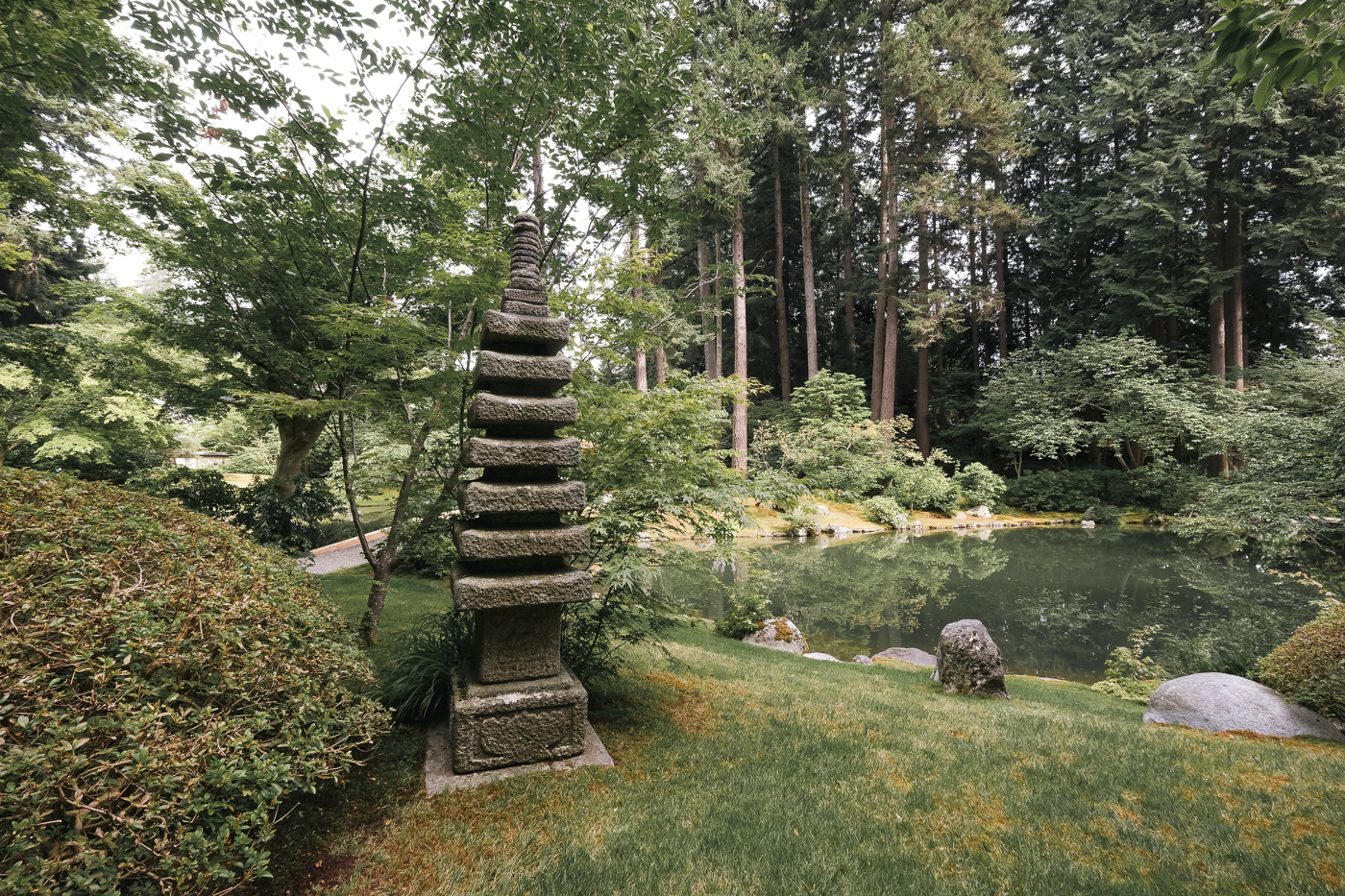
After spending a few hours indoors at the Museum of Anthropology, walk over to nearby Nitobe Memorial Garden.
The small Japanese garden is also located on the University of British Columbia campus and is within walking distance of the museum.
The garden features waterfalls, carefully designed landscaping, and peaceful pathways. It doesn’t require a major time commitment—the family spent roughly half an hour there—but that’s part of its appeal.
After several hours inside a museum, it’s a lovely place to stretch your legs and slow down for a bit.
Take a Day Trip to Golden Ears Provincial Park
For one final dose of Pacific Northwest wilderness, head to Golden Ears Provincial Park.
The park was about a 40-minute drive from Fort Langley and offered one of the family’s favorite hikes of the entire summer.
Abby researched hiking options and chose the Lower Gold Creek Falls Trail, an approximately 3.5-mile out-and-back hike.
The trail travels through towering rainforest alongside the water, with opportunities to walk down to pebble beaches and catch mountain views in the distance. The turnaround point features a double waterfall.
But the waterfall wasn’t what captured most of the family’s attention.
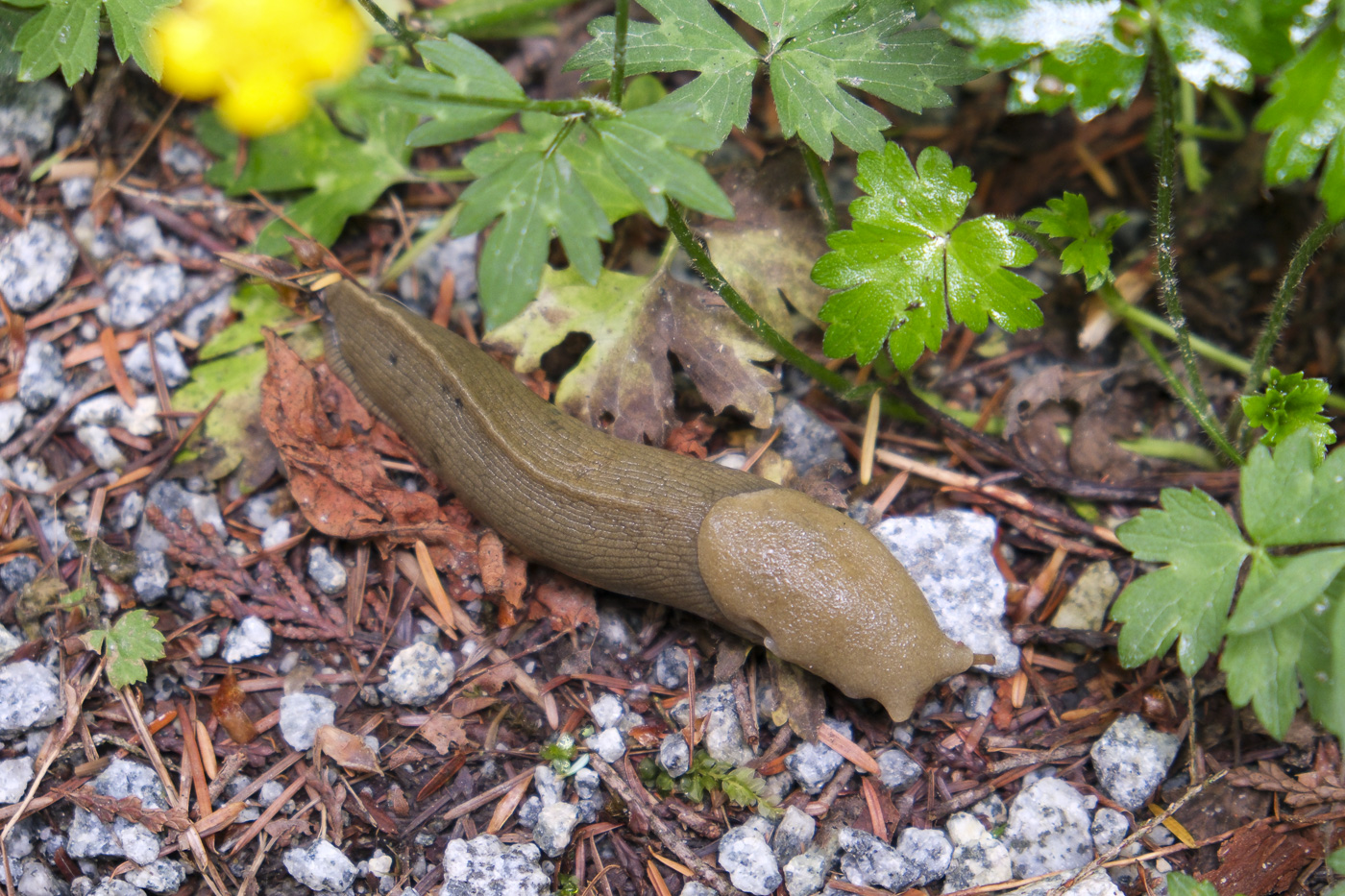
It was the banana slugs.
Dozens and dozens of them.
These enormous yellow slugs were scattered along the trail, along with darker slugs, and the family eventually started counting. Gretchen estimates they spotted at least 90.
The banana slugs might have stolen the show, but the hike itself was beautiful, with rainforest, river scenery, mountain views, and the waterfall making it worthwhile even for visitors who are considerably less enthusiastic about giant slugs.
The family also stopped at a pretty mountain lake on the return trip and briefly considered having a picnic—until they encountered some extremely bold geese who seemed quite interested in sharing lunch.
Why Vancouver Works So Well on a Canadian Rockies RV Trip
One of the biggest lessons from this three-part adventure is the value of variety on a long RV trip.
It can sound ridiculous to imagine getting tired of stunning alpine lakes and mountain views in Banff and Jasper. But on a long family trip, even extraordinary scenery can eventually start to blend together.
Combining national parks and wilderness destinations with cities can reset the rhythm of a trip.
Spend one day hiking beside a glacier and another wandering through a museum. Follow several days of mountain scenery with coffee shops and restaurants. Give older kids and teens a chance to shop, bike through a city park, solve a murder mystery, or eat dinner somewhere fun.
Gretchen admits that this isn’t just a strategy for keeping the kids happy. She enjoys the variety too.
And Vancouver delivered plenty of it.
Looking Back at an Epic Western Canada RV Trip
Asked to choose her favorite Vancouver experience, Gretchen picked Stanley Park. She would happily return and devote an entire day to exploring the park, including the aquarium they missed on this trip.
Looking back across the entire three-part Western Canada adventure, a few other experiences rose to the top.
The Banff Gondola remained one of Gretchen’s favorite ticketed attractions of the trip, thanks largely to the spectacular views. In Jasper, she particularly loved the Valley of the Five Lakes Trail and the From Jasper With Love comedy show.
When asked to choose a favorite campground from the five campgrounds covered during this portion of the larger trip, Jasper took the top spot. Gretchen appreciated the scenery, thoughtful campground layout, newer bathhouse, and convenient location for both exploring town and heading out to area attractions.
There was one experience she wished the family could have tackled: the Plain of Six Glaciers Tea House hike near Lake Louise. Snowpack and avalanche risk made the trail impractical during their visit, but the open views and glacier scenery have put it firmly on the list for a future trip.
And because a great RV trip inevitably leads to planning the next one, Gretchen already knows where her family hopes to head next summer: a Lake Superior circle tour through Michigan’s Upper Peninsula, Wisconsin, Minnesota’s North Shore, and Ontario.
After three episodes covering Calgary, Banff, Kootenay, Jasper, the Icefields Parkway, Lake Louise, Yoho, Revelstoke, Fort Langley, Vancouver, and more, one thing is clear: Western Canada deserves a place near the top of any RVer’s road-trip bucket list.
To hear Gretchen’s complete Vancouver trip report—and all of the stories and planning advice that go along with it—listen to this episode of The RV Atlas. And make sure to check out Parts One and Two of this Western Canada series for everything you need to start planning your own epic Canadian Rockies RV adventure.